Ambaji Venkatesh Shinde

Ambaji Venkatesh Shinde (22 December 1917 – 8 April 2003) was a legendary Indian-origin jewellery designer based in New York City. He is widely regarded as one of the greatest jewellery designers of the 20th century and was famously called the “Jewel behind the Jewel” by his long-time employer, the iconic American jeweller Harry Winston.
He created some of the most exquisite and expensive diamond and gemstone jewellery pieces worn by royalty, Hollywood celebrities, and billionaires.
Early Life and Background
- Born: 22 December 1917 in Mapusa, a small town in Goa, India (then under Portuguese rule).
- He was the son of a bangle maker (his father made traditional Indian glass or metal bangles). The family was of modest means.
- As the only son, he was sent to Mumbai (Bombay) for better education and opportunities.
- He studied fine arts at the prestigious Sir J.J. School of Art in Mumbai, where he trained in painting and design.
- From a young age, he showed exceptional talent in drawing, sculpting, and understanding gemstones.
Career Journey
- Early Career in India (1930s–1950s): He began his professional life at the elite firm of Nanubhai Jhaveri in Mumbai. He quickly gained recognition for his intricate designs. Some of his early notable works include:
- Coronation jewels for the Maharaja of Baroda (Sayajirao Gaekwad III) in 1938.
- Jewellery for the Nizam of Hyderabad and other Indian princely families.
- Diamond bracelets for the Maharaja of Porbandar and many royal households.
- Move to America and Harry Winston (1962 onwards): In 1955, he first met Harry Winston (the famous “King of Diamonds”). In 1962, at the age of 45, he moved to New York and joined Harry Winston Inc. as a designer. By 1966, he became the principal/lead designer and remained with the company for nearly 40 years (until his retirement in the early 2000s). Harry Winston highly praised him and gave him creative freedom to design spectacular pieces using the world’s rarest diamonds and gems.
His designs were inspired by Indian temple sculptures, Mughal jewellery, and classical Indian art, blended with modern Western elegance. He was a master at invisible settings, pavé work, and creating pieces that made diamonds look alive and three-dimensional.
Famous Clients and Creations
Ambaji Shinde’s jewellery adorned some of the most powerful and famous people in the world:
- Queen Elizabeth II of England (a diamond necklace designed by him).
- Oprah Winfrey, Madonna, Sophia Loren, Gwyneth Paltrow (she wore one of his pieces to the 1999 Academy Awards).
- Numerous Hollywood stars, billionaires, and heads of state.
- Many pieces created for Harry Winston’s famous collection, including spectacular emerald and diamond necklaces, tiaras, and brooches.
He was known as the “King of Natural Diamonds” for his expertise in handling and setting rare, large, and flawless diamonds.
Personal Life and Personality
- Despite creating jewellery worth millions (sometimes tens of millions) of dollars, Ambaji Shinde remained extremely humble, soft-spoken, and down-to-earth throughout his life.
- He was deeply rooted in Indian culture and values.
- He had four sons. He entrusted the care of his family in India to his younger brother R.V. Shinde when he moved to New York.
- He lived a simple life in New York and never sought personal publicity — he preferred to let his creations speak for themselves.
Death
His death was mourned in the international jewellery world, with obituaries in The New York Times, The Guardian, and other major publications.
Legacy
- He is remembered as the quiet genius who shaped the signature aesthetic of Harry Winston for four decades.
- Many of his designs are now considered iconic and continue to appear in auctions and exhibitions.
- Though largely unsung in mainstream Indian history, he is celebrated in jewellery circles as one of India’s greatest contributions to global luxury design.
- His story is an inspiring example of rising from humble beginnings in a small Goan town to becoming one of the most influential jewellery designers in the world.
Would you like more details on any specific part — such as his famous jewellery pieces, his working style with Harry Winston, or photos/descriptions of his iconic designs? Just let me know!
Aroor Raja

Aroor Raja (full name: Aroor Venkatachari Srinivasaraghavan Raja, commonly known as AVS Raja or Aroor Raja) was a prominent Indian businessman and one of the key co-founders of the Shriram Group, a major financial services conglomerate headquartered in Chennai, Tamil Nadu.
Born on March 23, 1939, in Aroor, Kerala (India), he passed away on April 14, 2022, due to a lung infection.
Early Life and Career
- He was originally from Aroor in Kerala.
- Before entering entrepreneurship, he worked with Indian Railways in a professional role.
- He shared a common interest in Carnatic music with R. Thyagarajan (one of his co-founders), which helped forge their partnership through cultural platforms like Kalasagaram in Hyderabad.
- A notable early incident involved helping resolve a land dispute and later sharing profits in a way that reflected his principles (e.g., directing gains toward social causes like the Communist Party of India, as per some accounts).
Founding and Role in Shriram Group
- On April 5, 1974, he co-founded Shriram Chits (the origin of the Shriram Group) in Chennai alongside R. Thyagarajan (often highlighted as the driving force and primary founder figure) and T. Jayaraman (Thyagarajan's brother-in-law). The trio is sometimes referred to as the "three musketeers" of the group.
- The venture started modestly as a chit fund business, targeting lower-middle-class and underserved savers who had limited access to traditional banking.
- Raja played a crucial role in the early growth and public-facing aspects:
- He was instrumental in innovative marketing strategies, such as the silver coin medallion campaign in the 1980s, which built trust and differentiated Shriram in the competitive chit fund market across South India.
- He helped expand from chit funds into broader financial services, including commercial vehicle financing (a flagship area, lending to truck/tractor owners often ignored by banks), insurance, retail lending, and more.
- He served in leadership positions, including as Chairman of Shriram Vyapar Credit and as an advisor to the broader group, influencing operations and strategy for decades.
- His efforts contributed to transforming Shriram from a regional chit fund operator into a national powerhouse.
Legacy of Shriram Group
- The group grew massively under the founders' vision, focusing on financial inclusion for low-income and unbanked segments (e.g., proving that lending to those without credit history wasn't inherently risky).
- Key milestones include expansions into non-banking financial services, insurance (Shriram Life and General Insurance), asset management, wealth management, and properties.
- In 2023, major entities merged to form Shriram Finance Limited, with assets under management (AUM) exceeding ₹281,000 crores (as of September 2025), serving ~9.56 million customers via over 3,000 branches, and employing around 78,000 people.
- Shriram Chits remains a core part of the ecosystem, operating as India's largest chit fund entity with millions of subscribers.
Other Contributions
- Beyond business, he was involved in community and cultural initiatives, including social programs that boosted the group's reputation.
- He played a role in the acquisition of Amudhasurabi, a well-known Tamil literary magazine focused on poetry, creative literature, and cultural essays.
Aroor Raja is remembered as a visionary entrepreneur who helped democratize financial services in India, emphasizing trust, innovation, and serving the common man. While R. Thyagarajan often receives the spotlight in recent narratives for his humility and leadership, Raja's foundational contributions—especially in marketing, early expansion, and public trust-building—were vital to the group's success.
Ashish Makwana

Ashish Makwana (often credited as Ashish K. Makwana or Dr. Ashish K. Makwana) is an Indian academic and researcher specializing in dairy business management, rather than a traditional entrepreneur running a private dairy business. He is affiliated with the SMC College of Dairy Science at Kamdhenu University (formerly Anand Agricultural University), Anand, Gujarat—one of India's premier institutions for dairy education and research, closely linked to the Amul model and Gujarat's cooperative dairy ecosystem.
He is not a Dalit entrepreneur in the business ownership sense (unlike figures like Devjibhai Makwana or others in your previous queries), but a scholar contributing significantly to the understanding and development of dairy enterprises, cooperatives, and milk production systems in India.
Professional Background
- Position: Associate Professor and Head (or key faculty) in the Department of Dairy Business Management, SMC College of Dairy Science, Anand, Gujarat.
- Expertise: Dairy cooperatives, milk producer economics, consumer behavior in dairy products, business models in the dairy sector (especially Gujarat's cooperative system like Amul), value-added dairy products, and rural economic development through dairy.
- Education/Qualifications: Holds advanced degrees (likely PhD or equivalent) in dairy business/management or related fields, enabling him to publish extensively and guide research.
Key Contributions and Research
His work focuses on empirical studies of India's dairy sector, which is the world's largest milk producer (led by Gujarat via cooperatives like Amul/GCMMF). Notable publications and themes include:
- Comparative analysis of dairy business models in Gujarat — Examining cooperative models (e.g., Amul pattern) vs. others, focusing on milk producers' perspectives, income, and efficiency (published in The Pharma Innovation Journal, 2021).
- Economic development of milk producers through dairy cooperatives — Special reference to Banaskantha district (a major milk-producing area under Banas Dairy/Amul), showing how cooperatives improve income, asset ownership, and living standards for farmers (Economic Affairs journal, 2022).
- Consumer perception and behavior toward value-added dairy products (e.g., flavored milk, yogurt, cheese) and plant-based alternatives.
- Impact of branding (e.g., Amul) on purchase decisions, retailer insights in milk supply chains, and market potential for high-protein dairy beverages.
- Broader topics like demand for dairy technologists, infrastructure in retail dairy outlets (Anand/Vidyanagar areas), and India's dairy sector evolution toward global leadership.
His research often uses surveys, statistical analysis, and field data from Gujarat's cooperative network, highlighting how dairy farming supports rural livelihoods, especially for small/marginal farmers.
Significance in Dairy Sector
- Gujarat's dairy model (Amul/cooperatives) is a global success story for collective farming and marketing.
- Ashish Makwana's studies provide academic backing for policy, training, and improvements in this sector.
- He contributes to seminars, industry interface meets, and publications that bridge academia and practitioners (e.g., Kamdhenu University events).
No evidence suggests he owns or runs a commercial dairy farm/business himself; his "dairy business" involvement is through research, teaching, and analysis rather than entrepreneurship. If this query refers to a different Ashish Makwana (e.g., a private dairy farmer or businessman not in academic records), there are no prominent public profiles matching that description in dairy entrepreneurship (unlike other Makwanas in unrelated sectors). Provide more context (e.g., location, company name, or source) if it's a specific individual!
Avinash N. Jagtap

Avinash N. Jagtap (also referred to as Avinash Jagtap) is a prominent Indian businessman and entrepreneur from Pune, Maharashtra. He is the CEO/Managing Director of Everest Spun Pipe Industries (also known as Everest Spun Pipes Pvt. Ltd. or similar variants), a long-established manufacturer of precast concrete products. He is also a key leader in the Dalit Indian Chamber of Commerce and Industry (DICCI), where he serves as President, West India.
Business Profile: Everest Spun Pipe Industries
- Established: Around 1980 (SSI-registered since then; some sources note formal operations from 2006 in certain entities).
- Location: Pune, Maharashtra (factory at Gat No. 574/1B, Sortapwadi (Naigaon), Pune-Solapur Road, Taluka Haveli, District Pune - 412202; office in areas like Shankarseth Road or Muthas Commerce House).
- Core Products:
- RCC (Reinforced Cement Concrete) pipes (pressure and non-pressure, NP2/NP3/NP4 classes, diameters from 100 mm to 1800 mm).
- Cement pipes, water storage tanks, septic tanks, chamber covers (heavy-duty, medium-duty, light-duty; rectangular and circular).
- Half-round pipes, guard stones, route indicators, dust bins, and other allied precast concrete products.
- Focus on infrastructure applications: Irrigation, drainage, water supply, sanitation, and civil engineering projects.
- Achievements and Scale:
- Over 40+ years of experience in the sector.
- Supplies to major clients including government bodies (e.g., PMC, PCMC, TMC, BMC, KDMC, Mira Bhayandar MC), MES (Military Engineering Services—sole supplier in India), and private firms (e.g., Shapoorji Pallonji, Tata Projects, BG Shirke, Afcons, Aurotech).
- Historical turnover: Around Rs 35 crore (approximately $7–8 million USD at 2011 rates) as reported in early 2010s profiles.
- Holds ISI certification (license CM/L7286685) for quality standards.
- Well-equipped factory with testing labs for raw materials and finished products.
- Related entities: Associated with Sharada Cement and Asu Concrete Products (Chairman in some references); family-linked companies like Everest Cement Pipe Industries Pvt. Ltd. (directors include family members like Namdeo Krishnaji Jagtap, Sanjay Namdeo Jagtap).
- Contact/Online Presence:
- CEO: Avinash N. Jagtap (mobile: often listed as 9422086781 or similar in older brochures).
- Website: everestspunpipe.com (or variants; lists products and contact info).
- Listed on platforms like IndiaMart, ExportersIndia, Tata Nexarc, H2O Bazaar.
DICCI Leadership and Dalit/SC Identity
- Community Affiliation: Yes, Avinash N. Jagtap belongs to the Scheduled Caste (SC/Dalit) community.
- DICCI Role:
- President, West India (DICCI's regional leadership for western states including Maharashtra).
- Active in DICCI since at least the early 2010s: Participated in meetings, conclaves, delegations (e.g., with Tata Motors, vendor development programs), and regional coordination.
- Featured in DICCI annual reports (e.g., 2023–24), events (e.g., birthday tributes from founder Milind Kamble, regional council meets), and advocacy for SC/ST business inclusion.
- Involved in initiatives like supplier diversity (e.g., Milind Kamble's companies sourcing from Everest Spun Pipes).
- Recognition:
- Highlighted in Economic Times (2011 article on Dalit traction and government preferential purchases): Noted as running a Rs 35-crore Pune-based company supplying to DICCI networks.
- Included in 2011 Outlook India and similar lists of "Dalit crorepatis" (Dalit millionaires/first-generation entrepreneurs).
- Represents Dalit success in manufacturing/infrastructure sectors through self-reliance and DICCI's "Be job givers, not job seekers" ethos.
Personal and Additional Notes
- Leadership Style: Described in company profiles as a visionary mentor (alongside figures like Mr. Joshi) driving three decades of success.
- Family Involvement: Business appears family-oriented (directors include relatives like Prasad Jagtap, Sanjay Jagtap in related entities).
- Current Status: Active as MD/CEO of Everest Spun Pipe Industries and DICCI West India President (per 2023–2024 reports and recent event mentions).
Avinash N. Jagtap exemplifies Dalit economic empowerment in Maharashtra's construction/infrastructure sector. His dual role in business and advocacy through DICCI inspires many in the community.
Abhitabh Meshram

Abhitabh Meshram (also spelled Abhitabh Bihari Meshram) is an Indian entrepreneur and businessman from Nagpur, Maharashtra. He is a successful first-generation Dalit (Scheduled Caste/SC) entrepreneur who leveraged government schemes for SC/ST businesses to build his ventures in the food processing and beverages sector.
Early Life and Background
- Age (as of 2015 reports): Around 37 years old (born circa 1978; approximately 48 as of 2026).
- Education: Electronics engineer from Manoharbhai Patel Institute of Engineering and Technology, Gondia, Maharashtra.
- Early Career: Worked as a software professional in Hyderabad and Bengaluru for 4–5 years after graduation.
- Community: Explicitly identified as Dalit in media profiles on emerging SC entrepreneurs.
Business Journey
- Initial Venture (2005): Left his software job to start a mineral water business under the brand Supreme Aqua.
- Started humbly: Pawned his mother's jewellery for initial capital.
- Used his living room as an office.
- Set up a 6,000 sq ft plant in Jaripatka, Nagpur, producing 1,000 litres per hour.
- Customers included government departments and banks.
- Operated under Prowess Group (or related entities).
- Expansion and Key Project:
- Diversified into food processing.
- Secured funding from the Venture Capital Fund for Scheduled Castes (government scheme via IFCI Venture Capital Funds Ltd.): Rs 4.9 crore (claimed as the first SC entrepreneur to set up such a project with this support).
- Established Prowess Industries Private Limited (or Prowess Ind. Pvt Ltd) — a roller flour mill with a capacity of 120 tonnes per day over 3.5 acres in Saoner, Nagpur.
- Focused on products like maida, tandoori atta, chakki atta, and rava (sooji) for the bakery industry.
- Rationale: Booming demand due to population growth and bakery sector needs; emphasized quality at competitive rates for market success.
- Company Details:
- Prowess Industries Private Limited (CIN: U15122MH2013PTC240333) — active, registered in Mumbai but operations in Nagpur.
- Directors: Abhitabh Bihari Meshram (key promoter), Shubha Abhitabh Meshram (likely family member), Prajal Bihari Meshram, and others.
- Part of Prowess Group (Chairman since March 2005; LinkedIn profile highlights mineral water, health drinks, and flour milling).
- GST registration and operations date back to mid-2010s.
- Employs 26–50 people (per older profiles).
- Growth Philosophy:
- Overcame capital challenges: "The toughest part was to bring money to the table."
- Benefited from concessional loans (10% interest on debt) and up to 25% project cost support via VC fund.
- Planned to leverage government procurement policy (4% from Dalit entrepreneurs for public departments).
Recognition and Context
- Featured in major 2015 media on Dalit entrepreneurship:
- Indian Express ("A new business class: Dalits who turned first-generation entrepreneurs"): Detailed his journey from software job to mineral water to flour mill, highlighting VC fund role.
- Outlook India and similar lists: Included among successful Dalit businessmen.
- Linked to DICCI (Dalit Indian Chamber of Commerce and Industry) networks and SC/ST entrepreneurship schemes.
- His story aligns with post-liberalization trends of Dalit entrepreneurs using government support (e.g., VC funds, procurement policies) to enter manufacturing and food processing.
Current Status (as of available data up to 2026)
- Continues as Chairman of Prowess Group (LinkedIn active; 21+ years in role).
- Company (Prowess Industries) remains operational with family involvement.
- No major recent public news or expansions highlighted in mainstream sources; focus on sustained food processing in Nagpur region.

Avichal Dhiwar (also spelled Avichal Dhivar) is a Dalit (Scheduled Caste/SC) entrepreneur and businessman from Pune, Maharashtra. Born around 1965 (aged about 50 in 2015 reports, so approximately 61 as of 2026), he is recognized as a first-generation entrepreneur who overcame significant socio-economic and caste-related barriers to pursue multiple ventures, culminating in his focus on solar energy and packaged drinking water businesses in the mid-2010s.
Early Life and Background
- From a modest background in Pune, Maharashtra.
- As a Dalit, he experienced typical challenges: difficulty accessing loans ("almost impossible" without schemes), limited networks, and caste discrimination in business dealings.
- He was politically active as a Dalit politician earlier, which informed his understanding of affirmative action's role in entrepreneurship.
- Over 20 years (prior to 2015), he experimented with small-scale businesses with limited success:
- Telephone and photocopier kiosk.
- Selling stationery items.
- Renting out colour TVs and VCRs.
- These ventures struggled due to capital constraints and other barriers common for Dalit entrepreneurs.
Key Business Ventures
- Abhyudaya Green Economic Zone Pvt Ltd (solar energy focus):
- His most notable venture (launched around 2015).
- Sells mini solar power plants to aspiring SC/Dalit entrepreneurs.
- Project details: Planned to break down a 4 MW solar park into smaller 200 KW units (each costing ~Rs 1.62 crore).
- Sold 10 units to individual SC entrepreneurs (as of 2015).
- Secured a power purchase agreement with Telangana State Southern Power Distribution Company Ltd at Rs 6.49 per unit.
- Received in-principle sanction from the Venture Capital Fund for Scheduled Castes (a government scheme launched in January 2015 to finance Dalit-led projects).
- Described as a "first of its kind" initiative in the solar segment for empowering marginalized communities through green energy.
- He aimed to promote self-reliance and economic inclusion via renewable energy solutions (e.g., small-scale solar setups for homes or businesses).
- 20th March Venture Pvt Ltd (packaged drinking water):
- Automated drinking water unit (processing 8,000 litres per hour).
- Named after Dr. B.R. Ambedkar's historic Chavdar Lake march on March 20, 1927.
- Approved for Rs 3.99 crore (out of Rs 7 crore needed) from the VC Fund for SCs.
- Contributed personally (Rs 30 lakh equity), mortgaged land/building, and raised small contributions from 47 people (mostly Dalits).
- Bought land on a 20-year lease; planned commercial production within months of 2015 approval.
- Symbolized empowerment and self-respect for Dalits.
Funding and Support
- Benefited from the Venture Capital Fund for Scheduled Castes (government initiative via IFCI Venture Capital Funds Ltd.).
- This scheme provided concessional financing (e.g., 50% funding in some cases) and was crucial for overcoming traditional banking reluctance toward Dalit borrowers.
- He emphasized fighting for such opportunities: "I will fight for this."
Recognition and Context
- Featured in prominent 2015 media on Dalit entrepreneurship:
- Indian Express (October 11, 2015): "A new business class: Dalits who turned first-generation entrepreneurs" — detailed his transition from small ventures to solar and water projects.
- Financial Express and similar outlets: Highlighted his solar mini-plant sales and VC fund role.
- One of 14 early beneficiaries of the SC VC fund (alongside peers like Praveen Kamble).
- Part of broader narratives on Dalit economic mobility post-liberalization and government schemes.
Current Status
- No major recent public updates or media features (post-2015) appear in widely available sources. His ventures were spotlighted during the early phase of the SC VC fund.
- Companies like Abhyudaya Green Economic Zone and 20th March Venture were in planning/early execution stages in 2015; long-term status (active, scaled, or pivoted) is unclear from public records.
- He remains an inspirational figure in discussions on SC/ST entrepreneurship in renewable energy and water sectors.

Ashok Khade (born around 1955–1956) is a renowned Indian entrepreneur, industrialist, and a prominent Dalit (Scheduled Caste/SC) businessman from Maharashtra. He is the founder, co-owner, and Managing Director (or Chairman in some references) of DAS Offshore Engineering Private Limited, a leading company in offshore oil and gas fabrication, marine engineering, ship repair, and heavy infrastructure projects. His journey from extreme poverty as the son of a cobbler to building a multi-crore empire is one of India's most celebrated rags-to-riches stories, often highlighted for overcoming caste discrimination and inspiring Dalit entrepreneurship.
In 2026, he was conferred the Padma Shri, India's fourth-highest civilian award, in the Trade and Industry category for his contributions to engineering, offshore fabrication, and employment generation in the sector.
Early Life and Background
Ashok Khade was born into a poor Chamar (a Dalit community traditionally associated with leatherwork and cobbling) family in Ped village, Sangli district, Maharashtra. His father, Dagadu Tayappa Khade, was a cobbler who repaired shoes under a tree in Mumbai to support the family, while his mother, Tanubai, worked as a farm laborer in landlords' fields. The family of six children (Ashok and his five siblings) often faced hunger, going without food for days or surviving on minimal meals.
The family moved to Mumbai for better opportunities, living in dire conditions—Ashok sometimes slept under staircases or on streets due to inability to afford rent. Despite caste-based discrimination and poverty, he pursued education, completing schooling and earning a part-time Diploma in Mechanical Engineering while working.
Professional Beginnings
Ashok started as a trainee/handyman at Mazagon Dock Shipbuilders Limited (a government shipyard in Mumbai) in the 1970s, earning a modest stipend of just ₹90 per month. He worked on welding, fabrication, and ship repair by day while studying at night. His skills in drafting, hard work, and networking (with brothers Datta and Suresh) led to promotions. In 1983, he was sent to Germany for a submarine project, where he was shocked to see a German colleague earning more in one month than he did in a year. This experience ignited his ambition: "I knew I could do better than working for someone else."
Founding DAS Offshore
In 1992–1995 (sources vary slightly), Ashok, along with brothers Datta and Suresh, founded DAS Offshore Engineering Private Limited (named after their initials: Datta, Ashok, Suresh). They started small with limited capital (around ₹10,000), no office (operating from a single table), and initial projects from Mazagon Dock, their former employer.
The company specialized in:
- Offshore oil and gas platform fabrication and installation.
- Ship repair and marine engineering.
- Heavy infrastructure (e.g., credited with building Mumbai's first skywalk at Bandra).
- Projects for government entities like ONGC, Indian Navy, and international clients.
From humble beginnings, DAS grew significantly:
- By the 2010s: Turnover around ₹500–550 crore, employing 4,500+ people (one of the largest Dalit-owned employers).
- Completed 100+ projects in oil/gas, marine, and transport sectors.
- Expanded globally, partnering with Arab sheikhs and international firms.
- As of recent reports (up to 2025), revenue around ₹359 crore (with subsidiaries), though older peaks were higher; the company remains a key player in India's offshore industry.
Ashok built networks, resolved challenges through perseverance, and focused on quality and technical expertise.
Key Achievements and Recognition
- Built one of India's most sought-after offshore fabrication firms.
- Major employer, providing dignified jobs and uplifting many from marginalized backgrounds.
- Advisor to DICCI (Dalit Indian Chamber of Commerce and Industry).
- Padma Shri (2026) for contributions to engineering and offshore industry.
- Earlier awards: Udyog Ratna (2011), others for entrepreneurship.
- Featured in media (Economic Times, YourStory, international outlets like CNBC, The National) as a symbol of Dalit capitalism and breaking caste barriers.
Personal Life and Legacy
Ashok is married and has a family, though he keeps a relatively low public profile focused on business. A devout follower of the Warkari tradition (devotional pilgrimage), he credits grit, faith, and education for his success. His story emphasizes: "From village to palace" — transforming from sleeping hungry to driving luxury cars and partnering globally.

Bhagwan Gawai (also known as Bhagwan Dharmaji Gawai, born around the late 1950s) is a prominent Indian-origin entrepreneur, serial businessman, and Dalit (Scheduled Caste/SC) success story. He is best known as the Chairman and CEO of Saurabh Energy DMCC, a Dubai-based company specializing in oil and gas trading, petroleum products, petrochemicals, aviation fuel consultancy, and related support services. His journey from extreme poverty and manual labor in Mumbai slums to becoming a multi-millionaire global trader is one of India's inspiring rags-to-riches narratives, often compared to a "real-life Slumdog Millionaire." He has been active in the international oil and energy sector for over three decades and is recognized for mentoring other Dalit entrepreneurs.
Early Life and Background
Bhagwan Gawai was born in rural Buldhana (or Buldana) district, Maharashtra, into a poor Dalit family. His family migrated to Mumbai seeking better opportunities. As a child and teenager, he worked as a construction laborer alongside his illiterate mother and brothers on various sites (including what became the Mahindra & Mahindra plant in Kandivali). The family lived in slums, facing severe hardship, poverty, and caste-based challenges. Despite these obstacles, his family prioritized education, allowing him to complete school and college.
He later joined Hindustan Petroleum Corporation Limited (HPCL), a government oil company, where he faced caste discrimination from colleagues. He successfully sued HPCL on grounds of discrimination and won the case. HPCL later posted him to Dubai, expanding his exposure to the global oil industry.
Professional Career and Business Journey
- In 1991, Gawai moved to the Middle East, joining Emirates National Oil Company (ENOC) in Bahrain as one of its early employees (fourth employee in some accounts). He built a strong reputation in oil trading circles.
- In 2003, partnering with an Arab businessman, he co-founded his first major venture in oil trading, achieving a remarkable $80 million turnover in the first year. The business reportedly peaked at around $400 million in turnover at one point.
- When his partner exited due to a family tragedy, Gawai independently launched Saurabh Energy DMCC in 2008–2009 in Dubai's Jumeirah Lake Towers Free Zone. The company focuses on:
- Trading petroleum products and petrochemicals.
- Supplying to buyers in Africa, East Asia, and other regions.
- Consultancy and support in the aviation fuel sector.
- Related activities in chemicals, biofuels, marine engineering, logistics, telecom, and BPOs (through equity stakes or interests).
- Early reports (around 2011) cited Saurabh Energy's turnover at $20 million, with a $50 million line of credit from banks recognizing his potential. Later accounts describe it as a multi-million-dollar operation with significant global reach.
- He has held directorships and managing roles in multiple companies (at least 7 reported in corporate records), including Maitreya Developers (a holding/investment company to support Dalit entrepreneurs), Maitreya International Private Limited, and others in India and the UAE (e.g., Emerald Star Shipping and Logistics LLC).
Key Achievements and Contributions
- Built a business empire worth crores (earlier estimates around ₹100 crore for his ventures; higher in peak periods).
- Served as a mentor and supporter of Dalit entrepreneurship: Identified and encouraged around 30 young Dalit achievers to become investors/business owners through Maitreya Developers.
- Delivered talks and orations on entrepreneurship, business opportunities, and socio-economic empowerment (e.g., keynote addresses at events like those by professional bodies).
- Featured in media as a symbol of Dalit capitalism and breaking caste barriers, alongside figures like Kalpana Saroj and Ashok Khade (from your previous queries).
Personal Life and Legacy
Gawai is married (wife Sanjivani Bhagwan Gawai is involved in some family businesses as a director). He maintains a presence in Dubai/UAE while staying connected to India. A dynamic leader, he emphasizes education, professional ethics, networking, and giving back to society. His story highlights how economic liberalization post-1991 created opportunities for marginalized communities to thrive through skill, perseverance, and global exposure.
Balu

Balu (he uses only this first name, without a surname, to avoid potential caste-based discrimination in business dealings) is a first-generation Dalit entrepreneur (from the Scheduled Caste/SC community) based in Bangalore (Bengaluru), Karnataka, India.
He was profiled in 2011 media reports as an example of the emerging wave of successful Dalit businessmen post-economic liberalization, but he deliberately kept a low public profile due to fears of backlash.
Key Details from 2011 Reports
- Age: 39 years old at the time (born around 1972).
- Business: Owns and runs a manufacturing company that produces soldering equipment (tools and machinery used in electronics soldering, assembly, and related industrial applications).
- Built over 15 years of hard work in cosmopolitan Bangalore.
- Annual turnover/revenues: Approximately Rs 2–2.5 crore (roughly $400,000–500,000 USD at 2011 exchange rates).
- Challenges and Fears:
- Despite his success, he feared revealing his Dalit background could lead to loss of clients (primarily upper-caste buyers), who might stop placing orders.
- Explicitly requested media (e.g., Economic Times interview) not to publish his company name, full identity, or photograph.
- Quote: “They [upper-caste clients] will stop placing orders with me if they learn of my background.”
- Earlier personal struggles: 32 girls rejected him for marriage due to poor prospects in his early business days.
- Expansion Plans (as of 2011):
- Paperwork completed for a new company.
- Factory expected to come up in Ramnagar (outskirts of Bangalore) within a year.
- Broader Context:
- Welcomed proposals for venture capital funds targeted at Dalit/SC entrepreneurs (e.g., DICCI-backed initiatives), noting access to capital as a major barrier.
- His story was part of series on Dalit enterprise rise (Economic Times 2011, Swaminomics blog, Cato Institute policy papers), highlighting how economic reforms enabled Dalits to enter manufacturing and break traditional occupational ties, though social stigma persisted.

Bijendra Singh (also spelled Bijender Singh Kabeera or Brijender Singh) is an Indian businessman and entrepreneur from Faridabad, Haryana. He serves as the CEO/Managing Director (MD)/Proprietor of Kabeera Printo Graphics (also known as Kabeera Printo Graphic or Kabira Pressline Associates), a printing and graphics company in the Delhi-NCR industrial belt.
Business Profile: Kabeera Printo Graphics
- Location: MCF-191, Arya Nagar, Milk Plant Road, behind Maharaja Ice Factory, Ballabgarh, Faridabad, Haryana - 121004.
- Core Activities:
- Manufacturer and supplier of printing machinery and related products.
- Specializes in offset printing machines, colour satellite printing units, quarter page folders, half page folders, file folders, independent reel stands, super quarter page folders, and other print/graphics items (e.g., stationery, packaging, folders).
- Involved in web offset printing machines and associated equipment.
- Scale: Turnover reported at approximately Rs 6 crore (around $1–1.2 million USD at historical exchange rates) in early 2010s profiles.
- Participation: Exhibited at industry events like Printpack India 2015 (represented by Mr. Bijender Singh Kabeera).
- Online Presence:
- Listed on platforms like IndiaMart (as Kabira Pressline Associates), TradeIndia, Kompass, Justdial, and Dial4Trade.
- Facebook profile: Bijender Singh Kabeera (lives in Faridabad; self-described as businessman at Kabeera Printo Graphic).
- Current Status: The company appears in older directories and trade listings (active around 2010–2015 era), but limited recent public updates (no major expansions or news post-2015 in available sources). It remains a mid-sized player in Haryana's printing/graphics sector.
Dalit/SC Community Affiliation
- Yes, Bijendra Singh is identified as belonging to the Scheduled Caste (SC/Dalit) community.
- Featured in prominent 2011 media coverage on Dalit entrepreneurship:
- Outlook India ("The Other Temple Entry," May 2011): Listed among 30 "Dalit crorepatis" (first-generation Dalit millionaires who overcame caste prejudice), under "20 Emerging ‘Dalpatis’" with Kabeera Printo Graphic, Faridabad, Haryana at Rs 6 crore turnover.
- Sourced from the Dalit Indian Chamber of Commerce & Industry (DICCI), which spotlighted him alongside other SC entrepreneurs (e.g., Rajendra Gaikwad, Pradeep Nagrare, Nand Kishor Chandan, Madan Lal Khinder).
- His inclusion highlights the post-1991 economic reforms wave enabling Dalits to enter manufacturing/printing sectors through self-made businesses.
Personal Notes
- Limited additional public details beyond business profiles (e.g., no extensive interviews or recent media features).
- Represents resilience in Dalit economic mobility in Haryana's industrial areas like Faridabad/Ballabgarh.
Bijendra Singh's story is a typical example of self-made success in India's printing industry among Dalit entrepreneurs. For the latest company status, contacts, or products, check listings on IndiaMart, TradeIndia, or his Facebook profile. If this refers to a different Bijendra Singh (e.g., not the Faridabad printing one, or someone from Bareilly), provide more details like location or specific context!
Bharat Makwana

Bharat Makwana is a name shared by several individuals in India, primarily in Gujarat, with varied business and professional profiles. There is no single prominent or widely recognized "Bharat Makwana" as a high-profile businessman or Dalit entrepreneur in major sources (e.g., no matches in Dalit crorepatis lists, DICCI spotlights, or books like Defying the Odds). The closest notable figure is Ratibhai Makwana (sometimes referenced in Dalit business stories), a Dalit industrialist from Gujarat who built a large empire—likely a name confusion or variant.
Below is a summary of the main Bharat Makwana profiles from business contexts (based on public records, LinkedIn, company filings, and media):
1. Bharat Yogendra Makwana (Political/Business Figure from Ahmedabad)
- Background: Contested Lok Sabha election from Ahmedabad West (SC reserved seat) in 2024 as Indian National Congress (INC) candidate (lost). Assets declared: ~Rs 25.58 crore (2024 affidavit).
- Business/Profession: Self and spouse listed as business (sources of income: business, interest, dividend). No specific company named in affidavits, but wealth from business activities.
- Community: Contested from SC-reserved seat, indicating Scheduled Caste (SC) affiliation (explicitly SC constituency). Likely Dalit.
- Other Details: No criminal cases; graduate professional education.
2. Bharat Makwana – Chairman at Mac Impex Private Limited (Ahmedabad)
- Role: Chairman of Mac Impex Private Limited (Gujarat-based company; details on trade/commerce not fully public).
- Skills/Background: Listed with expertise in venture capital, business strategy, management.
- Community: No SC/ST or Dalit mention in profiles.
3. Bharat Makwana – Proprietor/Business Owner (Various Small Ventures)
- Examples:
- Proprietorship firm (registered 2022 in Ahmedabad): Taxi operation/trading for priority sector lending benefits (micro enterprise).
- Prabhat Hardware Mart (Instagram: businessman, family-focused profile).
- Other LinkedIn mentions: Shop owner (Jodhpur), Meera Fabrication (Ahmedabad), Shreeji Corporation (possibly CEO/COO family business in fabrication/machines).
- Community: No SC/ST indication in these profiles.
4. Possible Confusion with Ratibhai Makwana (Dalit Industrialist)
- If the query intends Ratibhai Makwana (common mix-up with "Bharat"), he is a well-known Dalit entrepreneur:
- Founder/Chairman of Gujarat Pickers Industries Limited (Ahmedabad; plastics/chemicals intermediaries).
- Turnover: ~Rs 380–400 crore (2010s reports).
- From farm labourer family; faced caste discrimination; built empire from leather pickers business started by his father.
- Featured in Economic Times (2011) and YourStory as a Dalit success story (broke caste barriers; employs thousands, including Dalits).
- Awarded/recognized for overcoming odds.
Summary
- No single "Bharat Makwana" stands out as a famous Dalit businessman in major lists (unlike Milind Kamble, Ashok Khade, or Ratibhai Makwana).
- The political candidate Bharat Yogendra Makwana has SC affiliation (via reserved seat) and business income.
- Most other Bharat Makwana profiles are small/medium businessmen in Gujarat (hardware, fabrication, taxi, etc.) without public SC/ST or Dalit mentions.

Chaitanya Kanojia (commonly known as Chet Kanojia) is an Indian-American technology entrepreneur, innovator, and executive in the media, broadcasting, and broadband sectors. He is best known for founding disruptive companies that challenged traditional industries, particularly cable TV and internet service providers.
Early Life and Background
- Born in India (exact date and place not widely detailed in public profiles, but he is of Indian origin with a technical/engineering foundation).
- Education: Attended Northeastern University (Boston, USA) for higher studies; his early career focused on cable/communications tech.
- He moved to the United States and built his career in Boston and New York, becoming a key figure in tech entrepreneurship.
Major Business Ventures
- Navic Networks (Founder and CEO, ~1999–2008)
- A company addressing fragmented media landscapes with advanced TV advertising solutions.
- Grew to become the industry leader in targeted advertising for cable/satellite TV.
- Acquired by Microsoft in 2008 (a major exit; details of deal value not publicly emphasized, but successful).
- Aereo, Inc. (Founder and CEO, 2011–2014)
- Groundbreaking online TV platform that allowed users to watch and record live HD broadcast television over the internet using cloud-based over-the-air (OTA) antennas and DVRs.
- Aimed to provide affordable access to free broadcast TV on any device (smartphones, tablets, computers).
- Backed by prominent investors; raised significant funding.
- Highly controversial: Faced lawsuits from broadcasters (e.g., ABC, CBS, Fox) claiming copyright infringement.
- Supreme Court ruled against Aereo in 2014 (6-3 decision), calling it equivalent to a cable system without licenses—leading to shutdown.
- Kanojia was disappointed but viewed it as a fight for consumer choice and innovation.
- Starry, Inc. (Co-Founder and CEO, 2014–present/ongoing as of recent data)
- A Boston- and New York-based company revolutionizing broadband access using wideband hybrid fiber-wireless technology (fixed wireless access).
- Provides competitive, affordable, high-speed internet (e.g., 50 Mbps+ entry plans) in underserved areas, bypassing traditional cable monopolies.
- Focuses on licensed fixed wireless deployment to deliver gigabit-level speeds wirelessly via small antennas.
- Aims to serve homes/businesses with alternatives to incumbent providers (e.g., Comcast, Spectrum).
- Expanded to multiple US cities; positioned as a next-gen ISP challenger.
- Kanojia continues leading Starry (now part of Starry Group Holdings Inc.), with emphasis on innovation in 5G/fixed wireless and broadband equity.
Current Role and Recognition
- As of recent profiles (2024–2026): CEO/Co-Founder of Starry Group Holdings Inc. (and related entities).
- Speaker and thought leader: Frequently speaks on broadband, 5G, internet access equity, media disruption, and entrepreneurship (e.g., Startup Grind, WiFi NOW Global, AMA sessions).
- Known for challenging incumbents (broadcasters, cable giants) to improve consumer access and competition.
Community Background
- There is no public evidence that Chaitanya Kanojia belongs to the SC/ST (Scheduled Caste/Scheduled Tribe) community or identifies as Dalit.
- His profiles (LinkedIn, Crunchbase, Bloomberg, interviews) do not mention caste, reservation, or Dalit advocacy.
- He does not appear in lists of Dalit entrepreneurs (e.g., DICCI, Outlook "Dalit crorepatis," or related books/media).
- His Indian-American background is general (no specific caste ties noted).
Chandra Bhan Prasad

Chandra Bhan Prasad (born September 1958) is a prominent Indian journalist, writer, political commentator, activist, and entrepreneur from the Pasi community, a Dalit (Scheduled Caste) group traditionally associated with pig-rearing and considered "untouchable" in the Hindu caste hierarchy. He is widely regarded as one of India's most influential Dalit intellectuals and advocates for Dalit capitalism—the idea that free-market entrepreneurship, economic liberalization, and wealth creation are the most effective ways to dismantle caste discrimination and achieve Dalit empowerment.
Early Life and Background
- Born in a rural village in Uttar Pradesh (Azamgarh district area), into a family of pig farmers/rearers—considered impure occupations, leading to severe social stigma.
- Experienced extreme poverty and caste-based exclusion: As a child, he faced untouchability practices (e.g., barred from temples or upper-caste interactions).
- Briefly joined the Maoist insurgency (Naxalite movement) in his youth as a fighter for poor farmers and landless people, before shifting to activism and journalism.
- Self-taught and resilient: No formal elite education mentioned, but he became a prolific writer and thinker.
Career and Contributions
- Journalism and Writing:
- India's first Dalit columnist in English-language national media: Started Dalit Diary in The Pioneer (Delhi-based newspaper) in 1999—a weekly column confronting mainstream views on Dalits, caste, and apartheid-like conditions in India.
- Authored influential works:
- Dalit Diary, 1999-2003: Reflections on Apartheid in India.
- Dalit Phobia: Why Do They Hate Us?.
- What is Ambedkarism?.
- Co-authored Defying the Odds: The Rise of Dalit Entrepreneurs (with Devesh Kapur and D. Shyam Babu)—a major survey/book on post-reform Dalit business success, cited by global outlets like The Economist, The New York Times, The Guardian, Washington Post, and Time.
- Currently completing books: Dalit Capitalism: A Self-Respect Movement (memoir) and Caste by 2050—Will Class Have Replaced Caste?.
- Activism and Advocacy:
- Key proponent of Dalit capitalism: Argues capitalism (inspired by Adam Smith) and market integration, combined with Ambedkar's vision, can erode caste faster than reservations or state intervention alone.
- Authored the Bhopal Document (2002) for Madhya Pradesh government—pioneering agenda for Dalit integration into markets and capitalism.
- Adviser to Dalit Indian Chamber of Commerce and Industry (DICCI)—supports Dalit entrepreneurship.
- Former Visiting Scholar at University of Pennsylvania; carried out large surveys on Dalit well-being post-economic reforms.
- Former Board of Governors member at IIM Lucknow.
- Entrepreneurial Ventures:
- Founder of ByDalits.com (ByDalits platform)—an e-commerce and promotional site to market Dalit-owned brands, encourage "Buy Dalit" campaigns, and build Dalit wealth/economic networks.
- Launched Dalit Foods (2016)—an online food business selling packaged spices, pickles, grains, and products traditionally seen as "impure" (e.g., from Dalit/Pasi contexts like pig-related items indirectly challenging taboos). Started after family cancer losses; aimed to confront caste bias in food handling/preparation.
- Editor of Dalit Enterprise Magazine—focuses on Dalit business success stories, capitalism, and progress.
Ideology and Key Views
- Believes capitalism destroys caste hierarchies: Markets are caste-blind; wealth creation empowers Dalits to hire upper castes (e.g., Dalit factory owners with Brahmin workers, Dalit Mercedes owners with Brahmin drivers, Dalit hospitals employing upper-caste doctors).
- Advocates Dalit economic self-respect over victimhood: "Dalit capitalism can turn the caste order."
- Critiques traditional Dalit politics/reservations as insufficient; pushes market-led empowerment.
- Widely quoted globally on caste, Ambedkarism, and Dalit progress; interviewed on podcasts (e.g., Mercatus Ideas of India with Shruti Rajagopalan, Seen and Unseen with Amit Varma).
Legacy
Chandra Bhan Prasad is a provocative thinker who blends Ambedkar's social justice with Adam Smith's free-market ideas. His work has influenced discussions on Dalit entrepreneurship, economic inclusion, and caste's future in modern India. He remains active in advocacy, writing, and platforms promoting Dalit brands/businesses.
Dilip Makwana

Dilip Makwana is a fairly common name in India (especially in Gujarat and among communities like the Makwana surname, often associated with certain caste groups including some Dalit or OBC backgrounds), so there are multiple individuals with this name involved in various businesses or professional roles. There isn't one single highly prominent "Dilip Makwana" who stands out as a major public figure or billionaire entrepreneur in business news or national rankings.
Here's a summary of the most relevant or notable business-related profiles based on available public information:
- Dilip Makwana (Ahmedabad, Gujarat) – Godrej Appliances Business He operates as an Authorised Business Facilitator / Dealer for Godrej Appliances. His business focuses on selling and facilitating home appliances such as refrigerators, air conditioners, washing machines, and related products. This appears to be a retail/dealership business in the consumer durables sector. (Facebook page: Godrejdirectdilip)
- Dilip Makwana – Owner/Proprietor of small enterprises (Gujarat) Several MSME (Micro, Small & Medium Enterprise) registrations exist under variations like Dilip Chandubhai Makwana (Amreli, Gujarat) or similar names, classified as micro enterprises. These are typically small proprietary businesses, but specific industry details (e.g., trading, services, or manufacturing) are limited in public records.
- Dilip Hemubhai Makwana (Bhavnagar, Gujarat) Runs a proprietorship firm offering web hosting services, IT-related service providers, and construction services. It's listed as a small-scale service business with annual turnover in the 0–40 lakh range (as per older IndiaMART listings).
- Dilip Jayantibhai Makwana Serves as a director or additional director in at least 2 Indian companies (including one possibly named India-related entity). He has around 8+ years of experience in corporate governance/ directorship roles, indicating involvement in formal business entities.
- Other professional/business mentions (less directly "business owner" but related):
- Various LinkedIn profiles show Dilip Makwana in roles like Business Owner at Key Energy Services (Ahmedabad), Sales Manager, Marketing Manager at companies like Ramco Industries, or self-employed in finance/loan facilitation (Mumbai region).
- Some in pharma (e.g., Dilipkumar Makwana at Amneal Pharmaceuticals in analytical roles—not ownership).
- Isolated mentions in advertising, interior design, or HR/managerial positions.
Note on possible confusion or context
- There are references to Dalit entrepreneurs from the Makwana community in Gujarat (e.g., Devjibhai Makwana or family members like Dilip Bhai associated with Amba Synthetics in older 2011 lists of emerging Dalit businessmen with turnover in crores). However, no direct confirmation ties a "Dilip Makwana" prominently to those specific high-profile success stories.
- If you're referring to a specific Dilip Makwana (e.g., from a particular city, company, social media, or news story), provide more details like location, industry, or a link — as the name appears in dozens of profiles across Gujarat, Maharashtra, and elsewhere.
- No evidence of a nationally famous Dilip Makwana as a major industrialist, startup founder, or Forbes-listed figure.

Devanand Londhe (full name: Devanand Sopan Londhe) is an Indian entrepreneur and businessman from Maharashtra (primarily associated with Pune and Sangli districts). He is a prominent first-generation Dalit (Scheduled Caste/SC) entrepreneur who founded Payod Industries Private Limited, a manufacturing company specializing in industrial gloves and related products.
Early Life and Background
- Born around the early 1970s (aged 33 in 2008 reports; approximately 50–55 as of 2026).
- From a humble rural background in Maharashtra (Sangli/Kavathe Mahankal area; grew up in a hut, faced poverty, and couldn't afford basic items like shoes during polytechnic studies).
- Experienced caste-based discrimination and hardships in education and early career (e.g., ragging for not following dress code due to economic constraints).
- Education: Diploma/civil engineering from a polytechnic in Kolhapur (likely Government Polytechnic or similar); later civil engineering qualifications from Kolhapur University.
- Early career: Worked as a disaster management consultant with organizations like UNICEF and Oxfam (over 18 years of experience in development work before entrepreneurship).
Business: Payod Industries Private Limited
- Founded: 2008 (incorporated formally in 2014 as Payod Industries Private Limited; CIN: U18109PN2014PTC150242).
- Location: Pune/Sangli, Maharashtra (manufacturing unit in rural/village setting near Sangli; Mumbai plant mentioned in older reports for domestic market).
- Core Products:
- High-quality industrial cotton gloves (export-oriented, primarily to Japanese firms).
- Production scale: Around 3 lakh pairs per month from village unit + 6 lakh from Mumbai plant (as per 2010s reports).
- Focus on export-quality protective gloves for industrial use.
- Growth Challenges and Journey:
- Faced severe caste discrimination when starting: Banks denied loans, potential partners/customers hesitated due to his Dalit background.
- Sold personal assets (house, wife's jewelry) and borrowed from moneylenders to fund the startup.
- Delayed launch by about a year due to these barriers.
- Overcame through persistence, quality focus, and export markets (Japan as key client).
- Scale:
- Turnover: Approximately Rs 7 crore (around $1–1.5 million USD) by 2011; later reports suggest sustained growth.
- Employment: 150–225 workers (many from upper castes in his village unit, breaking traditional hierarchies; over 100 women in some accounts).
- Emphasized inclusive hiring: "My factory will employ everyone," defying expectations of Dalit-only workforce.
- Current Status (as of 2026):
- Company is active (compliant with MCA filings).
- Directors: Devanand Sopan Londhe (Whole-time Director since 2014) and Snehal Devanand Londhe (Whole-time Director; his wife, recognized as an emerging women entrepreneur—received awards like Emerging Women Entrepreneur Trophy from India SME Forum).
- Family-run: Snehal involved in management; company mission includes world-class glove manufacturing.
- Associated entities: Payod Urja Private Limited (energy-related), Payod Projects Private Limited, Centre for Aquatic Livelihood (Jaljeevika—social/developmental work).
Recognition and Advocacy
- Featured in major 2011 media on Dalit entrepreneurship:
- Forbes India ("Dalit Entrepreneurs: From Job Seekers To Job Givers"): Detailed his struggles and progress.
- Outlook India ("The Other Temple Entry"): Listed among 30 "Dalit crorepatis" with Payod Industries at Rs 7 crore.
- Washington Post (2011): Quoted on facing "hardship, discrimination, insults" as a Dalit.
- Times of India and NDTV: Highlighted his role in creating jobs and changing social dynamics ("Money matters more than caste now").
- Linked to Dalit Indian Chamber of Commerce and Industry (DICCI): Attended events, delegations, and mentoring sessions.
- Philosophy: Advocates entrepreneurship for Dalits ("job givers, not job seekers"); mentors aspiring business owners; discusses post-COVID rural opportunities.
- Personal: Active on Facebook (mentoring entrepreneurs); LinkedIn profiles show Pune/Sangli base.
Devjibhai Makwana

Devjibhai Makwana (also known as Devjibhai Premjibhai Makwana or Devji Makwana) is a prominent Indian entrepreneur from Bhavnagar, Gujarat, celebrated as a successful Dalit (Scheduled Caste/SC) businessman who rose from humble beginnings to build a major presence in the synthetic filament yarn manufacturing industry.
Early Life and Background
- He belongs to the Dalit community and faced significant socio-economic challenges, including difficulties in accessing bank loans due to caste-based biases and limited resources in the early days.
- Two decades ago (around the 1990s), he struggled to secure funding to start his venture, as highlighted in media reports on Dalit entrepreneurs.
- Despite these barriers, his perseverance led to the establishment of his core business in 1997, marking a turning point.
Business: Filament Yarn Manufacturing
- Primary Company: Suraj Filaments Private Limited (based in Bhavnagar, Gujarat).
- Specializes in multi-filament yarn (synthetic filament yarn, particularly multi-filament types used in applications like fishing nets).
- The business focuses on synthetic filament yarn (other than sewing thread), not put up for retail sale, with products including materials for nets, ropes, and related textiles.
- Growth and Scale:
- Started small but captured a significant share of the domestic market in fishing net yarn and expanded into exports.
- By around 2011–2014, his company (Suraj Filaments) had an annual turnover of approximately ₹300 crore (about 3 billion rupees or ~US$40–50 million at the time).
- Family and Group Expansion:
- He is the founder and often described as the "Godfather" or visionary leader of a larger family business group.
- His family (including sons like Sunilbhai Devjibhai Makwana, Trambak Devjibhai Makwana, Nagin Devjibhai Makwana, and others) operates multiple companies in related sectors: synthetic yarns, monofilaments, ropes, nettings, fibers, and diversified ventures (e.g., under names like Vera Synthetic Limited, Olive Industries, Macfil Global/Private Limited, Sujlon Ropes/Nets, Straps India, etc.).
- Recent reports (around 2020s) indicate the family owns/operates 19 companies with a combined annual turnover exceeding ₹327 crore (over US$40 million), spanning filament yarn, polypropylene products, ropes, nets, and more.
- He has served as Executive Director in companies like Vera Synthetic Ltd. (involved in polypropylene filament yarn and related textiles).
- Products and Applications: The core focus remains on filament yarn manufacturing, including multi-filament and synthetic varieties for industrial uses (e.g., fishing nets, ropes, packaging straps, and other non-apparel textiles). Some group entities produce HDPE monofilament yarn, biodegradable films, and related items.
Achievements and Recognition
- Featured in numerous inspirational stories and books on Dalit entrepreneurs (e.g., Dalit Millionaires – 15 Inspiring Stories by Milind Khandekar, media from Economic Times, Outlook India, The National News, and others).
- His journey exemplifies breaking caste barriers in business—starting with loan struggles to becoming a major player in Gujarat's textile/yarn sector.
- Associated with broader narratives of Dalit economic empowerment, often alongside figures like Ratibhai Makwana, Savitaben Kolsawala, and others.
- The family business continues to grow, with second-generation involvement in management and diversification.
Dharm Singh Mourya

Dharm Singh Mourya (also spelled Dharm Singh Maurya or Dharam Singh Mourya) is a prominent Dalit businessman and former politician from Saharanpur district, Uttar Pradesh, India. He is best known for his success in the LPG gas distribution business and his role as a local leader in the Dalit community.
Early Life and Background
- Age (as of early 2010s reports): Around 50 years old (likely born in the 1950s–1960s; no exact birth date publicly detailed in sources).
- Community: Chamar (a major Scheduled Caste/SC group in Uttar Pradesh, traditionally associated with leatherwork but increasingly upwardly mobile).
- Father: Worked in government service.
- Education: Highly qualified with degrees including M.A., B.Ed., and LLB (Bachelor of Laws). He credits his formal education and management skills for much of his success.
- Family: Married with two sons; his elder son assists in the business. He owns a farmhouse and resides in Ambedkar Puram, a locality in Saharanpur known for housing affluent Dalits.
Business Ventures
- Primary Business: Owns and operates two LPG gas agencies (for domestic and commercial cooking gas distribution) in Saharanpur.
- One agency was allotted in 1986 under a government scheme for unemployed youth (targeted at marginalized groups, including SCs).
- Initial investment: Around Rs 2 lakh (200,000 rupees).
- To overcome resource constraints, he partnered with a wealthy non-Dalit individual.
- Current scale: Business runs into several crores (multi-crore rupees turnover as reported in early 2010s studies).
- Employs more than 20 people.
- Success Factors: Attributes his entry into business to government quota schemes (without which he believes he wouldn't have succeeded). He highlights his education, management skills, and partnerships as key to growth.
- Discrimination Experience: Faced caste bias in the early stages (e.g., challenges in starting and scaling). Now, as a successful businessman, overt discrimination has reduced, though locals are aware of his Chamar identity.
Political Career
- Served as Chairman of the Zila Parishad (District Council) in Saharanpur—the highest elected body in the Panchayati Raj system at the district level, a powerful local position.
- Active in regional politics; aligns with Dalit empowerment ideals (proudly identifies with Dr. B.R. Ambedkar's vision).
- Known for promoting communal harmony and working for marginalized sections, particularly Dalits.
- By faith described as an atheist in some profiles, despite his community ties.
Recognition and Context
- Profiled in the 2010 research paper "Dalits in Business: Self-Employed Scheduled Castes in Northwest India" by Surinder S. Jodhka (Indian Institute of Dalit Studies), as a case study of successful SC entrepreneurship in Saharanpur.
- Emphasizes his transition from modest origins to multi-crore business owner and influential local leader.
- Represents broader trends of Dalit economic mobility in northwest India through government schemes, education, and strategic partnerships.
Deepak Jatav

Deepak Industries is a manufacturer and supplier of stylish footwear, founded in 1999 (as per the details you provided). The company positions itself as a prominent player in the footwear industry, focusing on fashionable and trendy designs.
Company Overview
- Founding Year: 1999.
- Business Focus: Manufacturing and supplying stylish footwear (likely including casual, formal, or trendy shoes, slippers, sandals, or similar products for men, women, or kids—common in the Indian footwear market).
- Location: Likely based in Uttar Pradesh (given your location in Bareilly and regional patterns). Footwear manufacturing is a major industry in western UP areas like Agra, Kanpur, Saharanpur, Meerut, and nearby districts, often involving small-to-medium enterprises (SMEs).
- Ownership/Founder: Associated with Deepak Jatav (the name matches your query). "Jatav" is a common surname in the Jatav/Chamar community, which falls under Scheduled Caste (SC) in Uttar Pradesh. Many Jatav families in UP are involved in leather/footwear-related businesses due to historical occupational ties.
Community Affiliation
- Yes, likely belongs to the SC/ST community: The surname "Jatav" strongly indicates affiliation with the Jatav (Chamar) community, classified as Scheduled Caste (SC) in Uttar Pradesh. This group is historically disadvantaged and part of the broader Dalit community. Footwear/leather industries in UP have significant participation from Jatav entrepreneurs, as documented in studies on Dalit self-employment in northwest India (e.g., research by Surinder S. Jodhka mentions successful Jatav footwear manufacturers in Saharanpur and similar areas).
- Deepak Jatav (as an individual/business owner) fits patterns of first-generation or family-run Dalit/SC entrepreneurs in the region, who often start small-scale manufacturing units in footwear, leather goods, or related trades.
Additional Insights
- Industry Context: The footwear sector in Uttar Pradesh (especially western UP) is dominated by SMEs, many owned by Jatav/SC entrepreneurs. These businesses range from local suppliers to exporters, facing challenges like competition from Chinese imports, raw material costs, and occasional caste-based discrimination (as noted in older studies on Dalit business owners).
- Public Presence: Limited national visibility—no major media features, DICCI spotlights, or large-scale corporate profiles under this exact name/company. It appears to be a local/regional business (possibly registered as a proprietorship or small private limited entity).
- Similar Profiles: There are other Deepak Jatav individuals in UP (e.g., social media content creators/business promoters on Instagram/Facebook with "Jay Bhim" themes, often from Jatav/SC backgrounds), but none directly match a large "Deepak Industries" footwear firm founded in 1999 in public records. Saharanpur/Meerut has several footwear units, some linked to Jatav owners.

Devkinandan Son (also spelled Devki Nandan Sone or Devkinandan Sone) is a successful Indian entrepreneur from Agra, Uttar Pradesh, best known as the owner of Hotel Taj Plaza (commonly referred to as Taj Plaza Hotel), a popular mid-range hotel located very close to the Taj Mahal.
Background and Rise to Success
- He belongs to a Dalit (Scheduled Caste/SC) community, and his story is frequently highlighted in media and books as an inspirational example of a Dalit millionaire who overcame poverty and social barriers through entrepreneurship.
- About 25 years ago (around the 1980s–1990s, based on reports from ~2014), his family home was in Gobar Chowki, a modest or slum-like area in Agra.
- He rose from humble beginnings to own a prime property business near one of the world's most famous monuments, symbolizing economic mobility for marginalized communities.
- His achievement is featured in discussions of "Dalit millionaires" (e.g., in articles from Economic Times, Business Standard, and books like Defying the Odds: The Rise of Dalit Entrepreneurs or similar compilations on rags-to-riches stories). He is often mentioned alongside other Agra-based Dalit entrepreneurs like Hari Kishan Pippal (of People's Heritage Hospital).
Hotel Taj Plaza (Near Taj Mahal)
- Location: VIP Road / Taj East Gate Road, Agra — extremely convenient, just a 5–10 minute walk (or about 600 meters to 0.5–1 km) from the East Gate of the Taj Mahal. It's in the prime tourist zone, close to other attractions like Agra Fort, TDI Mall, and various handicraft shops.
- Overview: A 3-star (or budget-to-mid-range) hotel popular among tourists for its proximity to the Taj Mahal. It offers clean, spacious rooms, multi-cuisine restaurants (including rooftop dining with potential Taj views), and amenities like a coffee shop, shared lounge, and recreational options.
- Key Features (from guest reviews and listings on Booking.com, TripAdvisor, MakeMyTrip, Agoda, etc.):
- Excellent location for Taj Mahal visitors — many praise the short walking distance and easy access.
- Rooftop restaurant ("Magic of Spice" or similar) serving Indian, Chinese, Continental, and Mughlai food, often highlighted for views and ambiance.
- Polite, cooperative staff; good value for money; secure and practical stay.
- Some reviews note ongoing renovations (e.g., bathrooms) but overall positive for budget travelers.
- Website: hoteltajplazaagra.com (official site promoting walking distance to the Taj Mahal, airport/railway access).
- The hotel is family-run or managed, with mentions of family involvement (e.g., a LinkedIn profile for Siddharth Nandan associated with "Hotel Taj Plaza - India," possibly a relative or manager, describing it as 600 meters from the Taj).
Legacy and Context
Devkinandan Son's success with Taj Plaza exemplifies how strategic location in tourism-heavy Agra (leveraging the Taj Mahal's draw) can lead to prosperity. His story is cited in narratives challenging caste-based limitations, showing how Dalit entrepreneurs have built thriving businesses in hospitality and other sectors despite historical disadvantages.
No recent major updates (post-2014 articles) appear in public records about expansions or changes, but the hotel remains operational and well-reviewed as of 2026 listings. If you're planning a visit or seeking current bookings/photos, check sites like Booking.com or TripAdvisor for the latest details!
Gurpreet Singh

Gurpreet Singh is a notable Indian entrepreneur from the Chandigarh/Punjab region, recognized as a first-generation Dalit Sikh businessman. He is the CEO and founder of MGM Infra Development Solutions Private Limited (also listed as MGM Infra Development Solutions Pvt Ltd), a company focused on manufacturing eco-friendly construction materials.
Early Life and Background
- Born around 1985 (aged about 30 in 2015 reports, so approximately 41 as of 2026).
- From Bhaddal, Punjab (near Rupnagar/Ropar area).
- Father: A government engineer in the region.
- Community: Dalit Sikh (Scheduled Caste/SC background). He has openly shared experiences of caste discrimination in childhood, such as being denied entry to a local gurdwara due to his community's status, which motivated his drive for self-reliance and economic independence.
- Education: BTech in Computer Engineering from the Institute of Engineering & Technology (IET), Bhaddal (2008).
Business Journey: MGM Infra Development Solutions Pvt Ltd
- Founded: Around 2013.
- Location: Rupnagar (Ropar), Punjab (manufacturing facility in the region).
- Core Business:
- Manufacturing fly-ash bricks, hollow blocks, paver blocks, concrete blocks, and related eco-friendly building materials.
- Uses fly ash (a waste byproduct from thermal power plants) combined with concrete to produce sustainable alternatives to traditional kiln-fired bricks.
- Promotes green construction: Better insulation, reduced environmental impact, and alignment with modern infrastructure needs (inspired by Bengaluru Metro's use of such materials).
- Growth and Funding:
- Initial inspiration: Observed fly-ash block usage in Bengaluru Metro projects; decided to replicate in Punjab, where kiln bricks dominate.
- Early funding: Family support (father sold property for Rs 4 crore to back the venture).
- Secured Rs 8.5 crore from the Venture Capital Fund for Scheduled Castes (operated by IFCI Venture Capital Funds Ltd., a government scheme for SC entrepreneurs).
- Additional loan: Rs 4.7 crore from Bank of Maharashtra (2014–2015).
- Technology tie-up: Partnered with German company Hess for advanced construction machinery and expertise.
- Scale: Positioned as a sustainable manufacturing unit contributing to green building in Punjab; exact current turnover not widely updated in recent public sources, but it was a mid-sized operation post-funding.
- Current Status: The company remains active (IndiaMart listings show ongoing production of fly-ash bricks, paver blocks, etc., with directors including Gurpreet Singh and Manpreet Singh—possibly family/partner). It focuses on quality, technology, and environmental benefits.
Recognition and Context
- Featured in the Indian Express (October 2015 article "A new business class: Dalits who turned first-generation entrepreneurs") as an example of a Dalit entrepreneur leveraging government VC funds for SC/ST businesses.
- His story aligns with broader advocacy by the Dalit Indian Chamber of Commerce and Industry (DICCI) for economic empowerment, self-employment, and job creation among marginalized communities.
- Emphasized personal resilience: Overcame early caste barriers, brief corporate job at Dell (Mohali), and pursued entrepreneurship for independence.

Harsh Bhaskar (also spelled Harsh Bhasker or Harsh Bhasker in some sources) is an Indian entrepreneur and educationist from Agra, Uttar Pradesh, best known as the founder and director of Kota Tutorials (KT Kota Tutorials), a coaching institute specializing in preparation for engineering (IIT-JEE) and medical (AIIMS/NEET) entrance exams.
Early Life and Background
He comes from a Dalit (Scheduled Caste/SC, specifically Jatav community) family in Agra.
His family did not prioritize formal schooling, and he faced typical socio-economic and caste-related challenges during his upbringing.
He pursued engineering education, graduating from the Indian Institute of Technology (IIT) Roorkee (as per his LinkedIn profile).
This background makes him a notable figure in inspirational narratives about Dalit entrepreneurship, particularly in the "knowledge business" sector, where few from marginalized communities had succeeded at the time.
Career and Business: Kota Tutorials
After completing his engineering degree, he initially worked or explored opportunities but returned to Agra.
In the early 2000s (around 2000s), he started a franchise of the Kota-based Career Point institute for engineering and medical coaching in Agra—marking his entry into the education sector when local tutorials were limited and less structured.
He later established Kota Tutorials as an independent brand (trademarked as "KT KOTA TUTORIALS"), positioning it as a high-quality coaching center modeled after Kota's renowned ecosystem but accessible in Agra.
The institute focuses on competitive exam preparation (IIT-JEE, medical entrances), with emphasis on rigorous training and student success.
By around 2011, it had 1,200 students annually, charging higher fees (around Rs 50,000 per student) compared to local competitors, yet growing due to reputation and results.
He expanded into related ventures, including the Edify Institute of Management and Technology (outside Agra), offering management and technical education.
He is credited with shaping careers for many students in Agra and is described as the "face of Kota Tutorials" in media.
Turnover and Business Scale
Harsh Bhaskar has declined to disclose exact revenues in interviews.
In 2011 media reports (Economic Times), the turnover was estimated at Rs 10 crore (approximately $2 million at the time), based on student numbers (1,200) and fees.
No recent or updated figures are publicly available (post-2011 profiles are sparse; LinkedIn shows him still associated with Kota Tutorials in Agra).
The coaching industry in Agra and similar cities has grown, but Kota Tutorials remains a regional player compared to national giants like Allen or Aakash.
Recognition and Legacy
Featured in media as a rare Dalit entrepreneur in the education/knowledge sector (e.g., Economic Times 2011 article "Rise of the Dalits" series; Telegraph India 2010 on "Proud to be a Dalit").
His story appears in motivational books/e-books like Life Lessons: A University (Penguin Random House), highlighting his rise despite limited family emphasis on formal education.
He has been involved in community and beauty pageant events (e.g., MISS UP 2012 appearance related to Edify Institute).
Philosophy: Emphasizes merit over excuses, refusing to let caste define failures or successes; proud of his Jatav identity without seeking sympathy.
Overall, Harsh Bhaskar's journey is an inspirational example of first-generation entrepreneurship in competitive coaching from a Dalit background in Agra, building a respected local brand in the high-stakes entrance exam preparation space. Recent activity appears limited in public records (focus on 2010–2011 era profiles), suggesting he maintains a low-key presence.
Hari Kishan Pippal

Hari Kishan Pippal (also spelled Hari Kishan Pippal or H.K. Pippal) is a prominent Indian entrepreneur and businessman from Agra, Uttar Pradesh, widely recognized as a successful Dalit (Scheduled Caste) entrepreneur who overcame extreme poverty, caste discrimination, and social barriers to build a diversified business empire under the People's Group.
Background and Early Life
- Born: 1951 (age approximately 74–75 as of recent records) in Agra, Uttar Pradesh, India.
- Community: He belongs to the Jatav community, a subgroup within the Dalit (formerly known as "untouchables" or Scheduled Caste/SC) category in the Hindu caste system. Growing up in poverty, he faced severe caste-based discrimination and social exclusion from a young age.
- His father, Ramsingh Pippal, ran a small shoe factory but suffered a stroke, leaving the family in financial hardship.
- At a very young age (around 12), he was married as per family tradition and began working in his father-in-law's small shoe shop.
- To support his education and family, he worked as a cycle rickshaw puller at night while studying, and later took on labor jobs. He had to abandon dreams of higher education to shoulder family responsibilities.
- His story is often highlighted as inspirational: starting from pulling rickshaws and working in modest shoe workshops, he rose through sheer determination, hard work, and business acumen.
Business Ventures (People's Group)
He is the Managing Director of the People's Group, a family-run conglomerate with diversified interests. Key businesses include:
- People's Heritage Hospital (also known as Heritage People's Hospital or People's Heritage Hospital):
- Founded in 2001 in Agra.
- One of the largest private multi-specialty hospitals in the Braj region (around Agra/Taj Mahal area).
- It became a flagship venture, symbolizing his success. Some high-caste doctors initially refused to work under him due to caste prejudice, but it grew into a major facility.
- The hospital is empanelled and serves as a key part of his legacy in healthcare.
- Shoe Exports / Footwear Business:
- Started from his father-in-law's small shoe shop and his family's modest factory.
- In 1975, he secured a ₹15,000 loan from Punjab National Bank to expand.
- Grew into People's Exports Pvt. Ltd. (or People's Export), focusing on high-quality leather products.
- Produces handmade shoes (around 500 pairs daily in a 300-worker factory), including for brands like Hush Puppies (for Bata).
- Exports to countries like Bulgaria, England, and others.
- His brand includes Harrykson (or similar), and it became a major revenue driver with international orders (e.g., first large order from State Trading Corporation for 10,000 pairs).
- Footwear remains a core business, with annual turnover contributions in crores.
- Honda Dealership:
- Owns a Honda (likely Honda Cars India or two-wheelers/scooters) dealership in Agra.
- Started using profits from footwear.
- The showroom is adjacent to or integrated with his hospital complex in some descriptions (e.g., patients sometimes enter via a hallway under the dealership during renovations).
- Publication House:
- Owns a publication house (publishing company) in the Agra region.
- Details are less specific in public records, but it's part of his diversified portfolio, alongside other ventures like restaurants and banquet halls.
Overall Achievements and Legacy
- Business Scale: Annual group turnover exceeds ₹100 crore (over US$12 million in earlier reports; likely higher now), spanning footwear, healthcare, automobiles, hospitality (restaurants/banquet halls), and publishing.
- Social Impact: As a Dalit entrepreneur, he is celebrated for breaking caste barriers. He has been associated with the Dalit Indian Chamber of Commerce and Industry (DICCI), serving as former President of its Uttar Pradesh chapter.
- He is featured in books like Defying the Odds: The Rise of Dalit Entrepreneurs and media stories (e.g., Associated Press, NBC News, India Today) as an example of how economic success challenges persistent caste discrimination—despite wealth, some social stigmas linger.
- Family: He has five sons and a daughter, who continue the family legacy (e.g., Girish Pippal as Managing Director of People's Exports for the Harrykson brand).
- Political Note: In 2012, he contested elections from Agra Cantt on a Congress ticket, advocating for support to Dalit businesses.
His journey—from cycle rickshaw driver and child laborer in a shoe shop to multi-crore businessman—is a powerful symbol of resilience, especially for marginalized communities in India. Recent mentions (e.g., Instagram tributes) remember him as a visionary who rose from humble beginnings to become a trusted vendor for global brands like Bata. If you're seeking more on a specific aspect (e.g., current status of the hospital or family businesses), provide details!
J.S. Phulia

J.S. Phulia (full name: J. S. Phulia) is an Indian entrepreneur and businessman from the Delhi-NCR region, best known as the founder, Managing Director (MD), and CEO of Signet Freight Express Private Limited (also operating as Signet Express or Signet Freight Express Pvt Ltd), a logistics and freight forwarding company based in New Delhi.
Business Profile: Signet Freight Express Private Limited
- Incorporated: December 7, 2006 (CIN: U60231DL2006PTC156317; some sources reference operations starting in 2004–2006).
- Location: Headquartered in Mahipalpur Extension, New Delhi (address: L-29/364, 2nd Floor, Mahipalpur Extension, New Delhi - 110037).
- Core Services:
- International and domestic freight forwarding (air, ocean/sea, surface/road).
- Air cargo handling, sea freight consolidation (cost-effective groupage shipments), customs clearance, supply chain management, and logistics solutions.
- Specialized in seamless, efficient transportation for export/import shipments, with emphasis on reliability, confidentiality, and quality.
- Scale and Financials:
- Annual turnover: Reported as approximately Rs 3 crore in 2011 profiles (around $400,000–500,000 USD at the time); later estimates (e.g., GST/IndiaMart listings) indicate Rs 1.5–5 crore range.
- Employs 11–25 people (per company factsheets).
- GST: 07AAKCS4127M1ZZ.
- Government-registered and authorized by the Department of Goods and Logistics (Govt. of India).
- Website: signetexpress.com (active as of 2026; highlights Mr. JS Phulia as CEO/Director, company motto of implementing client ideas profitably, and services like sea freight consolidation and air cargo tracking).
- Contact: Email (jp@signetfrt.com or similar), phone (+91-11-46062660, mobile numbers like +91-9811550506).
- Current Status: The company is active (unlisted private limited; compliant with filings, recent AGM noted in records). It positions itself as a trusted partner for global logistics, with a focus on customer satisfaction and value-added services.
Early Life and Journey
- From a modest background: Son of a foreman in the Haryana State Electricity Board.
- Started career as a typist at a logistics firm in Delhi.
- Launched Signet Freight Express in 2004/2006 with minimal capital: Rs 900 from personal savings and Rs 12 lakh borrowed from friends/relatives.
- Built the business through persistence, starting small and scaling to handle international shipments.
- Family: Has three children (studying in a public school in Gurgaon as of 2010 reports), reflecting upward mobility.
Dalit/SC Identity and Recognition
- Explicitly identified as belonging to the Scheduled Caste (SC/Dalit) community.
- Featured in prominent 2011 media coverage on Dalit entrepreneurship:
- Outlook India ("The Other Temple Entry," May 2011): Listed among 30 "Dalit crorepatis" (first-generation Dalit millionaires) under "20 Emerging ‘Dalpatis’" with Signet Freight Express at Rs 3 crore turnover.
- The Telegraph India ("Proud to be a Dalit," 2010): Profiled his rags-to-riches story, emphasizing pride in Dalit identity and shift from servitude to self-reliance: “We don’t want to be servile.”
- Included in books/compilations like Dalit Millionaires – 15 Inspiring Stories (by Milind Khandekar), quoting him: “Don’t run after jobs... Having your own business will ensure you have something to hand over to the next generation.”
- Part of the post-1991 liberalization wave of Dalit entrepreneurs, often associated with Dalit Indian Chamber of Commerce & Industry (DICCI) advocacy for economic empowerment, supplier diversity, and job creation over job-seeking.

Dr. Kalpana Saroj (born July 2, 1961) is an acclaimed Indian businesswoman, entrepreneur, philanthropist, TEDx speaker, and social activist. Often hailed as the "original slumdog millionaire," she rose from extreme poverty, child marriage, and caste discrimination as a member of the Dalit (Scheduled Caste/SC) community to become the chairperson of Kamani Tubes, a Mumbai-based company specializing in copper and copper alloy products. Her business empire spans manufacturing, real estate, sugar production, steel, mining, and film, with an estimated net worth exceeding ₹750 crore (around $100 million). In 2013, she was honored with the Padma Shri, India's fourth-highest civilian award, for her contributions to trade and industry. As of 2026, at age 64, she continues to inspire through her advocacy for women's empowerment, Dalit rights, and entrepreneurship.
Early Life and Background
Kalpana Saroj was born in Roperkheda (also spelled Roparkheda) village, Akola district, Maharashtra, into a modest Dalit family. Her father, a police constable posted in nearby Repatkhed village, earned a meager salary, supporting a family of five children—Kalpana being the eldest of three daughters and two sons. Despite her love for education and being a bright student, she faced relentless caste-based bullying from classmates and even teachers, who often made her sit apart or perform menial tasks. In line with community norms, she was forced into child marriage at age 12 to a man 10 years her senior from a Mumbai slum, halting her studies after Class 7.
Challenges and Turning Points
Life in Mumbai's Kalyan slum was harrowing; Kalpana endured physical and emotional abuse from her in-laws, who treated her as a servant, forcing her to do grueling household chores from dawn to midnight. After six months, her father rescued her and brought her home, but village society ostracized her as a "failed wife," leading to isolation and despair. At 16, overwhelmed by societal rejection, she attempted suicide by ingesting poison but survived, marking a pivotal moment of resolve to change her fate.
Returning to Mumbai, she lived with her uncle and took up menial jobs, starting in a garment factory for ₹2 per day (about 12 hours of work). She learned tailoring, saved money, and in the 1980s, secured a government loan for Scheduled Caste entrepreneurs to start KS Film Production and a small furniture business, Kalpana Furniture Mart. By the 1990s, she expanded into real estate, developing properties in Mumbai's Ulhasnagar area, and ventured into film production.
Business Career
Kalpana's major breakthrough came in 2000 when she acquired the distressed Kamani Tubes Company, a copper tube manufacturer founded in 1959 but mired in ₹116 crore debt, labor disputes, and over 140 litigations. Appointed to the board by workers seeking her help, she negotiated with banks to waive penalties, resolved legal issues, cleared worker dues (₹15 crore), and relocated operations to Wada, Thane. By 2011, the company exited bankruptcy, and under her leadership, it achieved profitability with revenues over ₹100 crore annually.
Her portfolio now includes:
- Sai Krupa Sakhar Karkhana (Ahmednagar): A sugar factory expanded to a 7,500 TCD integrated complex with a 35 MW co-generation plant and distillery.
- Steel manufacturing plant (100 tonnes/day) in Wada.
- Bauxite mining across 1,230 acres in Udgir.
- International ventures like Al Kamani (Kuwait) and Kalpana Saroj LLC (Dubai) for Kamani products.
- Real estate and film production under KS Film Production.
She has served on boards including Bhartiya Mahila Bank and IIM Bangalore's Board of Governors.
Key Achievements and Advocacy
- Awards: Padma Shri (2013); Rajiv Gandhi Achievers Award; Woman Entrepreneur of the Year (2012); numerous others for business excellence and social work.
- Philanthropy: Funds education for underprivileged girls, supports Dalit upliftment, and promotes anti-caste initiatives. She employs people from diverse backgrounds, emphasizing inclusivity.
- Public Speaking: TEDx talks and motivational speeches on resilience, often quoting her mantra: "Grit, perseverance, and faith in yourself make an entrepreneur."
Personal Life
Kalpana is married to Samir Saroj (her second marriage after divorcing her first husband) and has a son (Amar) and daughter (Seema). She resides in Mumbai, maintaining a low-profile lifestyle focused on family and business. A devout Buddhist, she draws inspiration from Dr. B.R. Ambedkar's teachings on equality.
Legacy
Kalpana Saroj's journey from a child bride and suicide survivor to a pioneering Dalit business icon challenges stereotypes and inspires millions, particularly women and marginalized communities. Her story has been featured in documentaries, books, and media, symbolizing empowerment and the triumph of human spirit over adversity.
Lalit Surajmal Kanodia

Lalit Surajmal Kanodia (born March 30, 1941; often referred to as Dr. Lalit Kanodia) is a pioneering Indian entrepreneur, business leader, and one of the early architects of India's IT and software services industry. He is the founder and Chairman of the Datamatics Group, a global digital technologies, operations, and experiences company.
Early Life and Education
- Born in Kolkata (then Calcutta), India, to Surajmal Kanodia (a bullion merchant) and Chandravati Kanodia (a homemaker).
- Completed his education with elite credentials:
- B.Tech in Mechanical Engineering from IIT Bombay (1963).
- MBA in Management from MIT Sloan School of Management (1965).
- Ph.D. from MIT (further advanced studies in management/technology).
- His background reflects a forward-thinking, highly educated family with business roots in trading/commerce (typical of many Marwari or trading communities in India).
Business Journey
- Early Career (1960s): In 1967, he founded the Tata Computer Center (initially a division of Tata Sons), which was renamed Tata Consultancy Services (TCS) in 1968. He served as its founding CEO, playing a pivotal role in establishing India's first major IT services company and laying the foundation for the offshore software model.
- Founding Datamatics (1975): Left TCS to start Datamatics as an independent IT company. By 1979, it established one of the earliest offshore development centers for Wang Laboratories (a US firm), pioneering the global delivery model in Indian IT.
- Datamatics Group (current flagship):
- Chairman and Chief Mentor (driving innovation, AI, automation, digitization, and new product development).
- Key entity: Datamatics Global Services Ltd. (listed on BSE/NSE; provides intelligent solutions in digital technologies, operations, and experiences for sectors like Banking & Financial Services, Insurance, Healthcare, Manufacturing, Media & Publishing, and International Organizations).
- Subsidiaries/affiliates include Lumina Datamatics Ltd. (publishing and content solutions; he is Chairman), and others focused on AI-led innovation and customer experience enhancement.
- Global presence with clients worldwide; emphasizes productivity gains through data-driven and intelligent automation.
- Other Roles and Directorships:
- Independent Non-Executive Director at RPG Life Sciences Ltd..
- Held leadership positions in organizations like the Indo-American Chamber of Commerce.
- Associated with over 40 companies historically (per MCA records), including various Datamatics entities and consultancies.
- Wealth and Recognition:
- Featured in lists like the 360 ONE Wealth Hurun India Rich List (2023 onward) and awarded as one of India's Most Respected Entrepreneurs.
- Received awards such as the Transformational Impact on Industry 2024 (MRSI Golden Key Awards, 2025) for his role in digitization, automation, and AI in Indian IT.
Personal Life
- Married to Asha Kanodia; they have four children.
- Eldest son: Rahul Kanodia (Vice Chairman and CEO of Datamatics Global Services).
- Youngest son: Sameer Kanodia (Executive Director in the group).
- Daughters: Aneesha and Amrita.
- The business remains family-involved, with generational transition evident.
Legacy
Dr. Lalit Surajmal Kanodia is regarded as one of the pioneers of India's software and offshore services industry—helping transition from hardware-focused computing to global IT services. His vision has influenced the growth of companies like TCS and Datamatics, contributing significantly to India's position as a global IT powerhouse. He continues to mentor and innovate in AI, digital transformation, and emerging technologies.

Lalit Bhansod (commonly spelled Lalit Bansod in official and professional records) is an Indian entrepreneur and businessman from Pune, Maharashtra. He is the Managing Director/Director of Comsolve Mediatech Private Limited and serves as the President of the Pune Chapter of the Dalit Indian Chamber of Commerce and Industry (DICCI).
Business Background: Comsolve Mediatech Private Limited
- Company Overview:
- Incorporated in 2007 (CIN: U64202PN2007PTC130460).
- Based in Pune, Maharashtra (registered office: Laxman Park or L.B.S. Road areas; GST: 27AADCC2622E1Z5).
- Focuses on networking services, computer solutions (hardware and software development), IT/telecom-related mediatech services, and possibly communication/technology solutions.
- Listed in directories like IndiaMart, NSIC (National Small Industries Corporation) associates, and corporate databases as a provider of IT/hardware/software services.
- Role: Director (alongside Namita Lalitkumar Bansod and Amol Manoharrao Patil).
- Education: Associated with IMED, Pune (Institute of Management and Entrepreneurship Development).
- Scale: Early 2010s profiles (e.g., from DICCI-linked sources) noted a turnover of approximately Rs 4 crore (around $500,000–600,000 USD at the time), positioning it as a mid-sized tech/mediatech firm in Pune's ecosystem.
- Operations: Active as of recent records (e.g., 2022–2024 mentions in NSIC and company filings); emphasizes business development, project management, and strategy in tech solutions.
Dalit/SC Community Affiliation
- Yes, Lalit Bansod belongs to the Scheduled Caste (SC) community, specifically identified as Dalit.
- He is prominently featured in DICCI contexts, which is exclusively for Dalit/SC/ST entrepreneurs.
- Listed in DICCI annual reports (e.g., 2023–24) as President, Pune Chapter.
- Participated in DICCI events, delegations, and programs (e.g., interactions with ministers like Kiren Rijiju, vendor development for women entrepreneurs, and Maharashtra chapter activities).
- Appears in DICCI historical documents (e.g., 17 Years Celebration brochure and older lists) alongside other Dalit entrepreneurs like Milind Kamble (founder), Pradeep Nagrare, and N.K. Chandan.
- His leadership in DICCI Pune aligns with advocacy for SC/ST business growth, supplier diversity, and economic empowerment under the "Be job givers, not job seekers" philosophy.
Recognition and Community Role
- As Pune Chapter President, he contributes to local networking, events, and policy advocacy for Dalit/SC entrepreneurs.
- Involved in initiatives like vendor development programs, chapter meetings, and collaborations (e.g., with DICCI Maharashtra leadership like Mukund Kamalakar).
- His profile exemplifies first-generation Dalit entrepreneurship in tech/IT sectors, overcoming barriers through self-made business and community leadership.
Current Status (as of 2026)
- Continues as Director at Comsolve Mediatech Pvt. Ltd. (LinkedIn active; company operational).
- Active in DICCI (e.g., recent chapter presidency and event participations noted in reports and social media).
- Professional network: 475+ connections on LinkedIn, focused on India-based tech/business.
Maya

Maya (pseudonym, name changed for privacy/protection in public reports) is an Indian-origin Dalit (Scheduled Caste/SC, formerly referred to as "Untouchable") entrepreneur and survivor who built a successful Indian food catering business in New York City, specializing in Gujarati cuisine adapted for diverse clients.
Background and Journey to the US
- She belongs to the Dalit community and faced severe socio-economic and caste-based challenges in India.
- In 2008, she arrived in the United States on a T visa (a humanitarian visa for victims of human trafficking). This visa allows certain trafficking survivors to stay in the US temporarily (up to 4 years initially) while assisting law enforcement in investigations and prosecutions against their traffickers.
- After her visa period, she successfully obtained permanent resident status (green card), enabling her to establish roots and pursue entrepreneurship in the US.
- Her immigration and business story is framed as one of liberation from caste discrimination—many Dalit immigrants report that caste prejudices persist even in diaspora networks (e.g., among Indian-origin colleagues or bosses in workplaces), but entrepreneurship in the broader American context offers greater freedom and merit-based opportunities.
Business: Indian Food Catering (Gujarati Cuisine Focus)
- She runs an Indian food catering business in New York City, providing authentic yet adapted traditional Gujarati dishes.
- Key features:
- Wide range of clients, including non-Indian and diverse groups.
- Dishes are modified to suit non-Indian palates (e.g., adjusting spice levels, ingredients, or presentation for broader appeal) while staying rooted in Gujarati traditions (think items like dhokla, thepla, undhiyu, fafda, khandvi, or Gujarati thalis with dal, kadhi, shaak, rotli, etc.).
- The business emphasizes traditional Gujarati flavors, often vegetarian (aligning with common Gujarati cuisine), but customized for events, parties, corporate functions, or personal gatherings.
- This venture represents economic independence and empowerment—turning personal heritage (Gujarati food culture) into a viable business in a competitive market like NYC.
Significance and Context
- Her profile appears in a 2021 investigative/feature article titled "India's 'Untouchable' Dalits Find Liberation in American Entrepreneurship" (published by Entrepreneur.com and related outlets).
- The piece highlights several Dalit diaspora success stories, contrasting caste barriers in India (and sometimes in Indian-origin US networks) with the relative openness of American entrepreneurship.
- Maya is quoted: “We have a wide range of clients and I provide traditional food from Gujarat, but the dishes are modified for non-Indian clients to suit their palate.”
- Like other pseudonym-protected figures (e.g., Nitesh in martech), details on exact company name, revenue, or current scale are intentionally limited for privacy—likely due to the sensitive nature of her trafficking survivor status and caste background.
- Her story symbolizes resilience: From surviving human trafficking and caste oppression to thriving as a caterer in one of the world's most demanding food markets.
No recent public updates (post-2021) are available under this pseudonym, as these profiles prioritize anonymity and personal empowerment over ongoing publicity. If this refers to a different "Maya" in food/catering (or if you have more context like location or specific details), let me know for further clarification!

Mohit Burman (born July 20, 1968) is a prominent Indian businessman, entrepreneur, and fifth-generation scion of the legendary Burman family, the promoters of Dabur India Ltd.—one of India's oldest and largest FMCG (Fast-Moving Consumer Goods) companies, specializing in Ayurvedic and natural healthcare products.
Early Life and Education
- Born in Calcutta (now Kolkata), West Bengal, into the affluent Burman family, which has deep roots in the Ayurvedic and consumer goods sector since the late 19th century.
- Schooling: Completed at Highgate School, London (a prestigious British independent school).
- Higher Education:
- Bachelor of Arts in Business Administration and Economics (double major in Marketing and General Management) from Richmond College (The American International University in London).
- MBA in Finance from Babson Graduate School of Business (Babson College), Wellesley, Massachusetts, USA.
- His international education and exposure shaped his global business perspective, blending Western management practices with the family's traditional Ayurvedic legacy.
Family Background
- The Burman family is one of India's wealthiest business dynasties, with a collective net worth estimated at $10.4 billion (as per Forbes India's richest list in October 2024; ranked 23rd among India's top tycoons).
- The family controls a majority stake in Dabur India Ltd. (a 140+ year-old company founded in 1884 by S.K. Burman as a small Ayurvedic pharmacy).
- Mohit is part of the fifth generation; the family operates through multiple branches, with professional management overseeing day-to-day operations.
- He is often seen with family members (e.g., parents, cousins like Saket Burman—Vice Chairman of Dabur) at events, and the Burmans are known for their low-profile yet influential role in Indian industry.
Career and Business Leadership
- Started his career at Welbeck Property Partnership in London (real estate/property sector).
- Joined the family business early: Began at Dabur Finance Ltd. as Senior Manager, focusing on financial services.
- Key Contributions:
- Pioneered the family's diversification into sunrise sectors beyond core FMCG.
- Led the joint venture with Aviva Plc (UK) to enter the life insurance sector (Aviva Life Insurance Company India; served as former Chairman).
- Instrumental in acquisitions: Majority stake in Eveready Industries India (dry cell batteries) and Punjab Tractors Limited (later sold to Mahindra & Mahindra).
- Oversaw international expansion of Dabur to over 120 countries, driving growth in natural healthcare, personal care, and foods.
- Former Chairman of Dabur Pharma Ltd.; Director roles in Dabur International, Universal Sompo General Insurance, and others.
- Founder/Director in ventures like Elephant Capital LLP (private equity/investment firm).
- Angel investor and board member in startups (as per Tracxn and portfolio data).
- Current Roles (as of 2026):
- Chairman of Dabur India Ltd. (world's largest Ayurvedic/Natural healthcare company; revenue > Rs 12,400 crore, employs 7,000+ people).
- Chairman of KPH Dream Cricket Private Ltd. (owner/promoter of Punjab Kings IPL cricket team and Saint Lucia Kings in CPL).
- Involved in strategic decisions on diversification (e.g., discussed in Mint Summit talks on family business strategies).
Sports and Personal Interests
- A passionate sports enthusiast, particularly cricket—co-owns Punjab Kings (IPL franchise) and has been active in its management.
- Hobbies include water sports, horse riding, theatre, and cricket.
- Known for an approachable, empathetic leadership style, focusing on employee well-being and innovation.
- Resides in Delhi, India; active on social media (Instagram @imohitburman, Facebook, X @imohitburman) sharing family, business, and cricket updates.
Legacy
Mahavir Singh
Mahavir Singh (DIN: 00230297) is an Indian entrepreneur and businessman based in Delhi-NCR, primarily known for his long-standing involvement in the construction, real estate, and infrastructure sector. He is the Managing Director (MD) and Founder of Tricon Realtech Private Limited and was previously associated with Tricon Buildcon Private Limited as a founding director.
Early Career and Experience
- He has over 28 years of experience in construction and related fields (as claimed on company profiles as of recent years).
- His expertise includes civil construction, real estate development, project management, and innovative building techniques (e.g., safe, strong, smart, and eco-friendly methods).
- He has worked on diverse projects, focusing on high-quality execution for local and national clients, often collaborating with architects and designers.
Key Business Ventures
- Tricon Buildcon Private Limited (CIN: U74999DL2007PTC162284)
- Incorporated: April 19, 2007 (initially classified under business services but aligned with construction/real estate activities).
- Role: Founding Director (appointed April 19, 2007); served until February 10, 2018 (resigned/ceased per MCA records).
- Other Initial Directors: Chandra Pal Singh (co-founder).
- Scale: Reported turnover of approximately Rs 16 crore (around $2 million USD at the time) in early 2010s profiles.
- Current Status: Active (as of 2024–2026 updates), but leadership shifted to directors like Praveen Kumar and Pawan Kumar after his exit.
- Location: Registered in Delhi (e.g., areas like Lajpat Nagar-IV in later records).
- Tricon Realtech Private Limited (CIN: U45400DL2014PTC265050)
- Incorporated: February 19, 2014 (part of the broader "Tricon Group" founded around 2007).
- Role: Managing Director and Founder (ongoing as of latest available data).
- Co-Director: Raj Kumari (often listed as Executive Manager or co-promoter with significant experience).
- Focus: Civil construction, real estate development, and innovative building solutions emphasizing safety, strength, sustainability, and eco-friendliness. Provides end-to-end services for various construction needs.
- Claims: Over 678 construction projects, 570+ experts/engineers, 105+ worldwide architects, and 673+ satisfied customers (per company website stats).
- Website: triconrealtech.com — positions the group as a "one-stop solution" for construction since 2007.
- Other Associations: Linked to entities like Alpha Contractors Private Limited and Tricon Buildwell Private Limited (former directorships, some ceased around 2018).
Dalit/SC Community Affiliation
- Yes, Mahavir Singh is identified as belonging to the Scheduled Caste (SC/Dalit) community.
- He was featured in a 2011 Outlook India article ("The Other Temple Entry") profiling 30 "Dalit crorepatis" (Dalit millionaires/first-generation entrepreneurs who overcame caste prejudice).
- Listed under "20 Emerging ‘Dalpatis’" with Tricon Buildcon, Delhi at Rs 16 crore turnover.
- This aligns with advocacy by the Dalit Indian Chamber of Commerce & Industry (DICCI), which spotlighted similar self-made SC/ST businessmen in construction and other sectors.
Personal and Additional Notes
- Location: Primarily Delhi-NCR (Delhi and surrounding areas like Ghaziabad/Uttar Pradesh for operations).
- Professional Network: Has been involved in industry events, government interactions (e.g., mentions with officials like CMD of WAPCOS in company social media), and possibly broader real estate/construction circles.
- Legacy: His journey exemplifies resilience in building a construction group from modest beginnings, focusing on quality and innovation. He transitioned from Tricon Buildcon to leading Tricon Realtech as the flagship entity post-2018.
- Current Status: Active in Tricon Realtech (as MD); no major recent media controversies or expansions noted in public sources beyond company claims.
This Mahavir Singh is distinct from others with the same name (e.g., in Navi Mumbai's Mahavir Buildcon or unrelated professionals). His profile matches the Delhi-based construction entrepreneur highlighted in Dalit business success stories. For the most up-to-date details (e.g., financials or projects), check MCA portals, company website (triconrealtech.com), or Zauba Corp listings. If you have more specifics (e.g., a different context), let me know!
Malkit Chand Janagal

Malkit Chand Janagal (also spelled Malkeet Chand or Malkiat Chand; born around 1962) is an Indian entrepreneur and industrialist from Ludhiana, Punjab He is the founder and Chairman of Janagal Export Pvt Ltd (also known as Janagal Exports Pri.vate Limited), a prominent garment manufacturing and export company specializing in readymade garments, particularly T-shirts, knitted apparel, and related products.
Early Life and Background
- Born in 1962 in Ludhiana, Punjab, into a modest family.
- His father was a small-time tailor running a local tailoring business, which provided limited growth opportunities.
- As a child, he experienced poverty and caste-based challenges—he belongs to the Dalit (Scheduled Caste/SC) community.
- A famous anecdote from his childhood (highlighted in the book Defying the Odds: The Rise of Dalit Entrepreneurs by Devesh Kapur, D. Shyam Babu, and Chandra Bhan Prasad): As a boy, he delivered a salwar-kameez stitched by his mother to a client and received a one-rupee tip. Naively believing money could "grow" like plants (inspired by seeing garlic multiply from soil), he tore the rupee note, planted the pieces, and watered them—illustrating his early entrepreneurial curiosity and the harsh realities of limited resources.
- He completed basic schooling but entered the workforce early, starting in family-related garment work before branching out.
Business Journey: Janagal Export Pvt Ltd
- Founded: Incorporated in 2003 (though his garment involvement began earlier, building on family tailoring roots).
- Location: Ludhiana, Punjab (addresses include Jagat Nagar, Rahon Road; Sartaj Grewal Farm House, Bahadur Ke Road; Vishwakarma Colony areas).
- Core Business:
- Manufacturing and exporting readymade garments, with a strong focus on T-shirts, knitted PC (poly-cotton) items, embroidered cargo pants, and other apparel.
- Exports primarily to international markets, including Europe and Africa.
- Operates as a manufacturer-exporter with in-house production capabilities.
- Growth and Scale:
- Started from humble beginnings in garment cutting and manufacturing roles.
- Overcame initial family resistance to scaling beyond tailoring.
- By the mid-2010s (around 2014), the company achieved a turnover of approximately ₹80 crore (around $12–13 million USD at the time), making it a significant player in Ludhiana's knitwear export hub.
- Emphasized mastery of craft (e.g., becoming a skilled master cutter) rather than flashy changes—focusing on quality, consistency, and supply chain efficiency.
- The company has been operational for over two decades, with consistent presence on platforms like IndiaMart, TradeIndia, and LinkedIn.
- Other Details:
- GST: 03AABCJ2666H1ZS.
- Directors/Promoters: Malkit Chand (Chairman/Whole-time Director), along with others like Mansa Ram and Som Nath in early records.
- He also founded/associated with related entities like Little Master Knitwears (mentioned in some profiles as a parallel venture).
Dalit Entrepreneurship and Recognition
- Prominently featured as a success story of Dalit entrepreneurship in India.
- Profiled in the 2014 book Defying the Odds: The Rise of Dalit Entrepreneurs (based on a survey of 1,000 Dalit business owners), which highlights his rise despite caste discrimination, poverty, and societal barriers.
- Included in Forbes India coverage (2014) on the book, emphasizing stories of grit and economic mobility for Dalits post-liberalization.
- His journey aligns with broader narratives promoted by organizations like the Dalit Indian Chamber of Commerce & Industry (DICCI), showcasing self-made SC entrepreneurs in manufacturing/export sectors.
- Often cited as an inspiration: From a tailor's son facing limited prospects to building an ₹80-crore export business through perseverance and skill.
Personal and Current Status
- LinkedIn: Active profile where he describes himself as Chairman of Janagal Export Pvt Ltd, based in Ludhiana.
- Family/Business Continuity: The company remains family-oriented and operational (recent IndiaMart listings show ongoing activity, with contact numbers and business hours listed).
- As of recent data (up to 2020s references), he continues leading the firm, with no major public reports of retirement or major changes.
- Known for resilience, focus on craftsmanship, and contributing to Ludhiana's garment export ecosystem (a key hub in India).
Madan Lal Khinder

Madan Lal Khinder (also spelled Madan Lal Khinder) was a prominent Indian entrepreneur and businessman from Jalandhar, Punjab. He was the Managing Director (MD) and guiding figure behind Rattan Brothers, a well-established manufacturer and exporter of sports goods.
Early Life and Background
- Born in Punjab (exact birth date not widely documented in public sources).
- He belonged to the Dalit (Scheduled Caste/SC) community, as explicitly identified in media profiles of successful Dalit entrepreneurs.
- Entered the sports goods industry early, leveraging Jalandhar's status as one of India's major hubs for manufacturing and exporting sporting equipment (e.g., balls, protective gear).
Business: Rattan Brothers
- Founded: 1976 in Jalandhar, Punjab.
- Core Products:
- Inflatable balls (soccer/football, rugby, volleyball, handball, netball).
- Team sports accessories (shin guards, marker cones, bibs, training equipment).
- Playground goods, cricket bats, hockey sticks, and related items.
- Emphasized durable, high-quality products meeting international standards.
- Achievements:
- Recognized as a "One Star Export House" by the Government of India.
- Won consecutive "Export Excellence" awards for many years.
- Exported globally, focusing on quality and client specifications.
- Scale: Turnover reported at approximately Rs 5 crore (around $600,000–700,000 USD at historical rates) in early 2010s profiles.
- Leadership Role: Madan Lal Khinder served as CEO/MD with 34+ years of experience in the domain. He provided strategic direction, helping the company expand smoothly. Family members (e.g., Tilak Khinder, Anurag Khinder) were involved in operations and related entities (e.g., Rabro Sports India Pvt Ltd).
- Location: Primarily Jalandhar (e.g., Leather Complex, Kapurthala Road areas).
- Current Status: The business remains active in sports goods manufacturing/export (listings on IndiaMart, company references to rabrosports.com). After his passing, it continues under family/associated leadership.
Dalit/SC Identity and Recognition
- Featured in a 2011 Outlook India article ("The Other Temple Entry") as one of 30 "Dalit crorepatis" (Dalit millionaires/first-generation entrepreneurs who overcame caste prejudice and barriers).
- Listed under "20 Emerging ‘Dalpatis’" with Rattan Brothers, Jalandhar, Punjab at Rs 5 crore turnover.
- Sourced from the Dalit Indian Chamber of Commerce & Industry (DICCI), highlighting self-made SC/ST success in manufacturing/export sectors.
- His story fits broader narratives of Dalit entrepreneurship in Punjab's industrial clusters.
Community and Personal Involvement
- Served as President of Shri Guru Ravidas Mandir, Katra Muhalla, Jalandhar—a temple dedicated to Guru Ravidas (revered in Dalit/Ravidassia communities), reflecting his deep community ties and leadership.
- Described in tributes as a father-like figure to many, respected for his contributions to both business and social/religious spheres.
Death and Legacy
- Passed Away: He passed away (physical departure noted in Punjabi tributes around late 2024 or early 2025; first death anniversary observed in early 2026 with city residents paying tributes via videos and posts).
- Condolence messages on social media (Facebook, Instagram, Threads) mourned him as a respected community leader who "joined the feet of Shri Guru Ravidas Maharaj."
- His legacy endures through the continued operations of Rattan Brothers and his inspirational role as a Dalit entrepreneur who built a successful export-oriented business from the ground up.

Dr. Mahesh Chandra is a well-known dermatologist (skin specialist) practicing in Saharanpur, Uttar Pradesh, India. He runs a prominent clinic offering dermatology, cosmetology, and related treatments. He is recognized locally as one of the leading skin experts in the city, with a focus on advanced skin care, laser treatments, anti-aging procedures, and general dermatological issues.
Professional Background
- Qualifications: MBBS and MD (Dermatology) – standard for practicing as a specialist dermatologist in India.
- Specialization: Dermatology, Cosmetology, and Laser treatments. He handles a wide range of skin conditions and aesthetic procedures, including acne/pimple treatment, acne scars, alopecia areata, androgenetic alopecia, anti-aging treatments, eczema, psoriasis, allergic reactions, and more advanced cosmetology services (e.g., laser therapies, aesthetic dermatology).
- Clinic Names: Primarily associated with:
- Chandra's Skin & Cosmetology Center (also referred to as Chandra Skin Care and Laser Centre or Chandra's Skin Care Clinic).
- Chandra's Skin & Maternity Home/Center (some listings combine maternity and skin services, possibly a family-run or multi-specialty setup).
- Reputation: Described across platforms (Instagram, Facebook, clinic website) as one of the "eminent" or "best" skin doctors in Saharanpur, providing high-quality expert services and procedures.
Clinic Details
- Locations (multiple addresses listed across sources, likely branches or updated sites):
- South City Colony, Delhi Road, Saharanpur – 247001 (near Pandey Multispeciality Hospital; frequently mentioned as primary/current address).
- Bajoria Road, Janak Nagar, Saharanpur – 247001 (associated with Chandra Skin Care and Laser Centre).
- Chander Nagar (opposite Dr. Nagpal).
- Ghanta Ghar Road (near Mohan Pandey Hospital – for Chandra Skin & Maternity Center).
- Contact/Help Desk: Commonly listed as 9837365608 (for appointments and consultations).
- Online Presence:
- Instagram: @drchandraofficialpage (active page showcasing treatments, patient results, festival wishes, and clinic promotions; highlights anti-aging, cosmetology, and skin care services).
- Facebook: Chandra's Skin & Maternity Home / DrChandraOfficialPage (posts videos, treatment offers, and appointment info).
- Website: chandraskincare.co.in (official site emphasizing skin as the body's largest organ and clinic expertise).
- Listed on platforms like Justdial, Lybrate, DoctoriDuniya, myUpchar, Eka Care, and Sulekha for online booking, reviews, and fees.
Age and Other Notes
- The query mentions he is 25 years old (as of March 2026, implying born around 2001). However, public profiles and professional listings do not specify his exact age or birth year.
- Typical dermatologists in India complete MBBS (5.5 years) + MD Dermatology (3 years postgraduate) after 12th grade, often qualifying around age 28–32 or later. A 25-year-old specialist would be unusually young (possible only with accelerated paths or early completion, but no sources confirm this age for this Dr. Mahesh Chandra).
- He appears to be an established practitioner with years of experience implied by clinic setup, patient reviews, and online activity (e.g., posts from 2023 onward). No indications of him being a very recent graduate or 25-year-old in available data.
Services and Approach
- General dermatology (acne, eczema, psoriasis, allergies).
- Cosmetology and aesthetic treatments (anti-aging, laser procedures, scar treatments).
- Laser center facilities for advanced skin care.
- Patient-focused: Encourages bookings for consultations; promotes safe, effective treatments via social media.

Milind Kamble (full name: Milind Pralhad Kamble, often addressed as Dr. Milind Kamble) is an Indian civil engineer, entrepreneur, policy influencer, and social activist best known as the founder and Chairman of the Dalit Indian Chamber of Commerce and Industry (DICCI). Born on February 17, 1967, he is a prominent figure in promoting entrepreneurship among Scheduled Caste (SC) communities in India, advocating the motto "Be job givers, not job seekers". He has been honored with the Padma Shri (2013), India's fourth-highest civilian award, for his contributions to trade and industry.
Early Life and Education
- Born in Maharashtra (specific early location tied to Latur or Pune areas in some profiles).
- Completed schooling in local institutions.
- Graduated as a civil engineer (likely from a recognized engineering college; he has been referred to with an honorary "Dr." in some contexts due to his achievements and roles).
- Opted against pursuing a reserved government job (available via SC quota) to focus on entrepreneurship, reflecting his belief in self-reliance.
Business Career
- In 1992/1995, founded Milind Kamble Civil Engineers and Contractors (later associated with Fortune Construction Company as CMD/Chairman and Managing Director).
- Specialized in civil construction and infrastructure projects.
- Executed notable works including segments of the Konkan Railway, Mumbai–Pune Expressway, Baramati Water Supply Scheme, Pune–Lavasa Road, and other government/private contracts.
- Grew from small-scale projects (funded initially through personal loans from friends/relatives) to a significant enterprise.
- Turnover: Reached around Rs 101 crore (about $12–15 million USD) by 2011; sustained over Rs 100 crore in subsequent years (as per 2010s reports).
- Diversified into other ventures:
- Men's apparel brand Menander.
- Leather products under Le Dharavi.
- Director at Superb Housing & Infrastructure Pvt. Ltd. (mass housing projects in Panvel, Mumbai).
- His businesses emphasize quality execution, persistence in bidding, and scaling despite initial barriers like limited capital and networks for Dalit entrepreneurs.
Founding and Leadership of DICCI
- Established Dalit Indian Chamber of Commerce and Industry (DICCI) on April 14, 2005 (Ambedkar Jayanti), in Pune.
- Vision: Promote business leadership and entrepreneurship among Dalits (Scheduled Castes) and marginalized groups.
- Mission: Motivate Dalit youth to become entrepreneurs, create wealth, contribute to the economy, and shift from job-seeking to job-creating.
- Growth under his leadership:
- Expanded to 29 state chapters and 7 international chapters.
- Membership: Over 1,000 entrepreneurs across manufacturing, services, offshore engineering, and more.
- Activities: Trade fairs, networking events, policy advocacy, supplier diversity, access to finance/credit, and global outreach.
- Key initiatives: Led first SC/ST delegation to World Economic Forum Davos (recently in 2025–2026), partnerships for inclusive growth, and comments on global trade (e.g., welcoming US tariff reductions on Indian goods in 2026 for sectors like textiles and leather).
Other Roles and Contributions
- Chairperson, Board of Governors, Indian Institute of Management (IIM) Jammu (first from SC community in such a position).
- Member: Indo-French CEO Forum, Board of Directors at EDII (Entrepreneurship Development Institute of India), and other policy bodies.
- Frequent speaker at events like IIMs, universities (e.g., lectures at Rashtrasant Tukadoji Maharaj Nagpur University), and conclaves on social inclusion, entrepreneurship, and economic policy.
- Policy advocate: Pushes for affirmative action in private sector, market access for SC/ST businesses, and global integration for Dalit entrepreneurs.
Recognition and Legacy
- Awards:
- Padma Shri (2013) for trade and industry.
- Bhim Ratna Award (2010).
- Featured in media as a symbol of Dalit capitalism and upward mobility.
- His journey inspires many: From civil engineering roots to building a construction empire and a nationwide movement empowering thousands of Dalit entrepreneurs.
- As of 2026, remains active (e.g., Davos participation, tariff policy comments, lectures, and DICCI leadership).
Natha Ram

Natha Ram (also spelled Nattha Ram) is an Indian businessman and director associated with Steel Mont Private Limited, a Mumbai-based company in the steel and commodities trading sector. He is the father of Rajesh Saraiya, who is widely recognized as India's first Dalit billionaire and the primary driving force behind the Steel Mont Group.
Personal and Family Background
- From a modest, middle-class background (family origins linked to Uttar Pradesh/Dehradun areas in some narratives).
- Belongs to the Dalit (Scheduled Caste/SC) community, as confirmed in multiple 2011 media profiles on emerging Dalit entrepreneurs.
- Had a government job with the Union Ministry of Agriculture before transitioning to business involvement.
- Supported his son Rajesh Saraiya's education and early career—Rajesh studied aeronautical engineering in Russia and is now based in Ukraine (or Germany in some references for the group's HQ), building the international operations.
- Natha Ram has emphasized the role of reservations in providing opportunities for his community, stating in interviews that while he benefited from education and a job, such policies give impetus to Dalits.
Role in Steel Mont Private Limited
- Company Overview:
- Incorporated: December 5, 2008 (CIN: U27310MH2008PTC200754), as a private limited company.
- Focus: Steel trading, production, commodities (including non-ferrous metals), international sourcing, logistics, shipping, and related global supply chain services.
- Part of the broader Steel Mont Group (steelmont.co.in), a multinational player with over three decades of expertise in metals trading.
- Global presence: Offices in Düsseldorf (Germany HQ in some reports), Kyiv (Ukraine), London, Istanbul, Dubai, Mumbai, Tianjin (China), and others.
- Turnover: Approximately Rs 600 crore (around $120–150 million USD at historical rates) reported for the group/company in early 2010s profiles.
- Mission: Responsible sourcing and delivery of raw materials with integrity, innovation, and sustainability.
- Natha Ram's Position:
- Director since June 24, 2008 (DIN: 02233142; still listed in recent MCA/Zauba Corp records).
- Referred to as Chairman in some older media and DICCI profiles (e.g., 2011).
- Associated with related entities: Steel Mont Infra Private Limited, Beyondenergy Private Limited, and others (director in 8+ companies per Zauba Corp).
- Current Directors (as per recent records): Includes Nattha Ram, Andrew D'Silva, Indrajit Dhadwal, Nilesh Kanhaiyalal Jain (and possibly others; company remains active).
Dalit/SC Identity and Recognition
- Natha Ram and his family are prominently featured in narratives on Dalit entrepreneurship:
- Listed in 2011 Outlook India and Times of India/Economic Times articles as part of "Dalit crorepatis" (Dalit millionaires/billionaires), with Steel Mont at Rs 600 crore turnover.
- His son Rajesh Saraiya is called India's "first Dalit billionaire" in these reports and videos (e.g., NDTV 2011 feature).
- Involved with the Dalit Indian Chamber of Commerce and Industry (DICCI): Attended meetings (e.g., with Montek Singh Ahluwalia in 2011), featured in DICCI documents, and part of delegations advocating for SC/ST business growth.
- His story highlights generational mobility: From a government job to supporting a global steel/commodities empire, emphasizing self-reliance and community upliftment.
Current Status
- Natha Ram continues as a director in Steel Mont Private Limited and affiliates (company active with compliant filings as of 2024–2026).
- The Steel Mont Group remains operational under Rajesh Saraiya's leadership, focusing on international metals trading.
- No major recent public interviews or updates specifically on Natha Ram (spotlight shifted to Rajesh and group operations).
Early Life and Background
- Born: Around 1964 (aged 47 in 2011 reports; approximately 62 as of 2026).
- Family: Fourth of seven siblings in a humble family. His father worked as a draughtsman with the Central Water Commission.
- Migration: Family moved from Amroha (Moradabad district, Uttar Pradesh) to Delhi in 1982, facing challenges adjusting to urban life.
- Education: Completed a diploma in Mechanical Engineering (some sources mention Electrical Engineering) in 1990.
- Early Career: Started with low-paying jobs, including joining a company in 1992 at a salary of Rs 800 per month. Worked in Mumbai briefly before focusing on entrepreneurship. Gained expertise in plastics moulding and industrial manufacturing.
Business Ventures
Nand Kishore Chandan has focused on manufacturing and industrial supplies, particularly plastic and metal components.
- Key Company: Chandan & Chandan Industries Private Limited (formerly known as Recon Indian Spare Parts Private Limited).
- Incorporated: April 27, 2004 (active status as of 2026).
- Location: Factory in an industrial park in Loni/Ghaziabad (Uttar Pradesh); registered office at 51 Radhey Shyam Park, Mainstreet No. 3, Parwana Road, New Delhi.
- Core Business: Manufacturing of industrial spare parts, plastic injection moulding job works, photocopier spares, electricity meter boxes, junction boxes, bus bar boxes, industrial helmets, and related plastic/metal components.
- Clients: Includes major companies like Tata Power-Delhi Distribution Ltd., Tata Group entities (Tata Steel, Tata Motors), and others in power/utilities and industrial sectors.
- Scale: Annual turnover historically in the range of Rs 40 lakh to Rs 1.5 crore (as per GST/IndiaMart profiles); earlier media reports (2010s) noted around Rs 5 crore in some ventures. Operations remain active with a compliant status.
- Evolution:
- Started making photocopier spares around 2001; became a major producer within years.
- Set up Recon India Spare Parts Pvt Ltd in 2001 (initially with partners; Chandan held 25% stake initially).
- By 1999–2000, supplied to former employers.
- In 2007, faced setbacks due to e-waste policies, pivoted to plastic products and other lines.
- In 2012, bought out partners, acquired the 1,200 sq m plant in Ghaziabad for Rs 1.82 crore, and renamed/restructured the company.
- Sold personal assets (except house) and used savings to restart.
- Landmark Partnership: In 2013, the Tata Group (under Cyrus Mistry's chairmanship) invested Rs 1 crore for a 33% equity stake in Chandan & Chandan Industries (newly incorporated for industrial helmets manufacturing). Chandan retained two-thirds control. The deal was personally cleared by Mistry and seen as a milestone in affirmative action/private sector inclusion for Dalit entrepreneurs. The venture secured initial orders for over 50,000 helmets from Tata companies.
- Other Companies/Directorships (as per MCA records up to recent years):
- Chandan & Chandan Industrial Marketing Private Limited (incorporated 2012; focuses on industrial goods trading/marketing; active, last AGM Sep 30, 2024).
- MPK Agrovat Private Limited.
- Proteger India Private Limited.
- Aarn Poly Industries Private Limited (incorporated 2022).
- Long-time director in Dalit Indian Chamber of Commerce and Industry (DICCI) (since at least 2013).
Dalit/SC Identity and Advocacy
- Explicitly identified as a Dalit entrepreneur in sources like The Hindu BusinessLine (2018), Economic Times (2013), Forward Press (2013), and OPEN magazine features.
- Active in DICCI, promoting SC/ST entrepreneurship through outsourcing (e.g., subcontracting smaller parts to Dalit-run units), finance assistance, and networking.
- His philosophy: Emphasizes self-reliance, job creation for Dalits, and turning caste-linked challenges into opportunities. He helps community members become entrepreneurs by providing subcontracts and support.
Current Status (as of 2026)
- Companies remain active with compliant status (e.g., recent AGM filings).
- Continues as director in multiple entities, including Chandan & Chandan group firms.
- No major recent public updates on expansions or new ventures in mainstream media (post-2010s coverage focused on his Tata partnership and DICCI role).
- Represents resilience in Delhi-NCR's manufacturing sector, inspiring discussions on social mobility and Dalit economic empowerment.

Nitesh (pseudonym, name changed at his request in public reports) is an Indian-origin Dalit (Scheduled Caste/SC, formerly referred to as "Untouchable") entrepreneur and tech professional who found greater professional freedom and success after immigrating to the United States, particularly by founding a marketing technology (martech) company in North Carolina.
Background and Early Career Challenges
- Origins: From a hometown in southern India (specific state/city not detailed in sources).
- He belongs to the Dalit community and experienced caste-based discrimination even in professional settings.
- Immigrated to the US around the early 2000s (he was 44 years old in 2021 reports, suggesting immigration in his 20s–30s).
- Initially joined a Fortune 500 company in Michigan as a tech specialist.
- Faced persistent caste prejudice from Indian-origin colleagues and superiors:
- Once his Dalit background became known, he was gradually excluded from social circles among high-caste Indian colleagues.
- A Brahmin boss reportedly magnified his errors and made his work environment difficult.
- Relocated to Silicon Valley after securing a green card, but encountered similar issues—many tech companies there were headed by "casteist Indians" who reportedly had problems working with a Dalit.
- He decided to stop hiding his caste identity, marking a turning point in his approach to professional life.
Business: Marketing Technology Company in North Carolina
- After these experiences, he founded his own marketing technology company (martech firm) in North Carolina.
- Specific company name is not publicly disclosed in available sources (likely due to the pseudonym and privacy focus).
- Martech involves tools, platforms, and services for digital marketing, automation, analytics, customer experience, advertising tech, CRM integrations, etc.
- Quote from him (as reported in 2021): “I started a marketing technology company in North Carolina and there’s been no looking back for me.”
- The move to entrepreneurship in the US allowed him to escape caste-based barriers prevalent in Indian-dominated workplaces, emphasizing merit and business success over social hierarchy.
- No detailed public information on the company's exact name, revenue, clients, or current scale is available—likely intentional for privacy, as the story focuses on personal liberation rather than business specifics.
- His journey highlights how the American entrepreneurial environment provided "liberation" from caste prejudices, allowing focus on innovation and growth.
Broader Context and Significance
- Featured in a 2021 article titled "India's 'Untouchable' Dalits Find Liberation in American Entrepreneurship" (published in Entrepreneur.com and The Vertical/la), which profiles several Dalit professionals who thrived in the US after facing discrimination in India or Indian-origin networks abroad.
- The piece contrasts caste dynamics in Indian workplaces (even in the US) with the relative meritocracy in American business, where caste is less relevant.
- Nitesh's story aligns with broader narratives of Dalit diaspora success in tech/entrepreneurship, similar to other profiled individuals who built companies or advanced careers post-immigration.
- No recent updates (post-2021) appear in public records under this pseudonym, suggesting he maintains a low profile.
This account is based on the primary 2021 investigative/feature article; other "Nitesh" figures in digital/marketing (e.g., Nitesh Kumar in Adobe consulting or various Indian agencies) do not match the pseudonym + Dalit + US martech founder details. If this refers to a different individual or you have additional context (e.g., company hints or region), provide more details for refinement!
Pradeep Nagrare

Pradeep Nagrare (also spelled Pradip Krishnarao Nagrare or Pradeep Krishnarao Nagrare) is a prominent Indian businessman and entrepreneur from Nagpur, Maharashtra. He is the proprietor and key figure behind P.K. Nagrare Construction (also known as PK Nagrare Construction or P.K. Nagrare Constructions), a civil construction firm specializing in road and infrastructure projects. He is recognized as a successful first-generation Dalit (Scheduled Caste/SC) entrepreneur.
Business Profile: P.K. Nagrare Construction
- Established: 1982 (over 40+ years in operation as of 2026).
- Location: Primarily based in Nagpur, Maharashtra (offices/addresses include Wardhaman Nagar, Ramdaspeth areas like Mehar Prasad Complex, Central Bazar Road, and others such as Dattatray Nagar).
- Core Activities:
- Civil construction, with a strong focus on road construction (including cement concrete roads using modern technology and machinery).
- Contracting services for public works, including bituminous roads, national/state highways, city roads, and related infrastructure.
- Registered contractor with departments like Public Works Department (PWD) Nagpur, Gadchiroli, Chandrapur, and Maharashtra Government; also involved with Nagpur Municipal Corporation (NMC), National Highways Authority of India (NHAI), and local bodies (classified as PWD Class 1A contractor in some contexts).
- Scale and Financials:
- Historical turnover: Around Rs 15 crore (approx. $1.8–2 million USD) as highlighted in early 2010s profiles; later audited figures show operating income of Rs 11.47 crore (2017) and Rs 19.70 crore (2018).
- Bank facilities rated by CARE Ratings (e.g., long-term CARE B-; Stable and short-term CARE A4 in 2024, though under "Issuer Not Cooperating" category due to non-submission of updates).
- Employs technical and non-technical professionals with long industry experience; Pradeep Nagrare personally oversees day-to-day operations.
- Related Ventures:
- Director/associated with entities like Diton Infra Private Limited (incorporated 2022, focused on construction; address linked to him).
- Involved in Nagarjuna Institute of Engineering Technology and Management (NIETM) as Secretary under Maitrey Educational Society (promotes engineering education and community initiatives like tree plantation drives).
- Linked to Builders' Association of India (BAI) Nagpur chapter (served as Chairman around 2022; participated in events advocating reduced construction costs without quality compromise, alongside figures like Nitin Gadkari).
Dalit Entrepreneurship and Recognition
- Community Identity: Explicitly identified as a Dalit (SC community) in media and advocacy sources, including:
- Featured in Outlook India (2011) article "The Other Temple Entry" on "Dalit crorepatis" (Dalit millionaires).
- Listed among emerging Dalit entrepreneurs in Mid-Day and other reports.
- Associated with the Dalit Indian Chamber of Commerce & Industry (DICCI): Participated in events, seminars (e.g., BSE capital-raising seminar in Nagpur 2012), trade fairs (e.g., DICCI expos in Nagpur 2012), and delegations; highlighted alongside peers like Rajendra Gaikwad, Milind Kamble, and Kalpana Saroj.
- Narrative: His success exemplifies Dalit capitalism—rising from humble backgrounds through self-made business, overcoming caste barriers, and inspiring SC/ST youth to become job creators rather than job seekers. Part of post-1991 liberalization wave of Dalit entrepreneurs.
Personal and Additional Details
- Experience: More than three decades (35+ years) in civil and road construction.
- Social/Community Role: Active in Rotary Club (Past Assistant Governor Dist 3030, Past President, Zonal Chairman), Jaycees International (Past President in Nagpur), and personality development training. Involved in social initiatives like "Vriksha Bandhan" tree plantation.
- Legacy: Represents resilience and economic empowerment for marginalized communities in Maharashtra's construction sector. His firm continues operations, with family/community ties in education and infrastructure.
P. Rajendra Prasad (full name not expanded in sources, but likely from Kerala based on his business and family ties) is a successful Indian entrepreneur originally from Kerala. Specific details about his early life are limited, but he pursued and obtained a diploma in Mechanical Engineering, which laid the foundation for his initial career. He is portrayed in inspirational stories as a self-made businessman who overcame setbacks through hard work and innovation.
Career Journey
- Migration to the Gulf: After completing his diploma, Prasad moved to the Gulf region (specifically the United Arab Emirates/UAE) in search of better opportunities, a common path for many skilled Indian professionals during that era.
- Loss of UAE Government Job: He secured a position with the UAE Government, but lost it due to political reasons (details not elaborated in sources, but this setback is highlighted as a turning point). This occurred sometime before the early 1990s, forcing him to pivot to entrepreneurship.
Business Ventures and Achievements
Facing unemployment in the UAE, Prasad turned to business, starting small and scaling up significantly. His enterprises span engineering services, packaging, food processing, and flavors/extracts, with operations in the Gulf and Kerala. Key highlights:
Gulf-Based Businesses
- Essa Engineering and Marine Service (Ajman, UAE): Founded in partnership with his friend Alex Kozhy from his native place. The company specializes in ship repairing, pipeline laying, and steel fabrication. Through dedication and growth strategies, it achieved a turnover of Rs. 120 crore (approximately $25-30 million at the time, based on 2004 exchange rates) and employed 1,200 people from South Asian countries. This marked his entry into large-scale industrial services.
- National Packaging Industries: Another venture he established, with a production capacity of 3,000 tons of carton cardboards per month. It focuses on packaging solutions, contributing to his diversified portfolio.
- Two Additional Ventures: Sources mention two more unnamed businesses in the Gulf, all showing steady growth and expansion.
Kerala-Based Businesses
Prasad invested back in his home state, creating employment and boosting local economies:
- Pomsy Food Products (Kollam, Kerala): Started in 1992 as a unit producing corn curls. In 2000, it expanded to biscuits. The company uses modern machinery, prioritizes hygiene, and offers a diverse product range. It produces 600 tons of biscuits per month, employs 70 people directly and 150 indirectly, and serves as a major player in the snack food industry.
- A.K. Flavours (Pathanamthitta, Kerala): Founded in 1995, this company deals in extracted spice essences (flavors from spices). It has an annual turnover of Rs. 38 crore and focuses on food additives/essences for various industries.
His businesses emphasize quality, innovation, and customer satisfaction, with a focus on sectors like engineering, manufacturing, and food processing. As of the early 2000s, his enterprises collectively demonstrated significant scale and job creation.
Family and Personal Life
- Wife: Sindhu, who supports him in both business and personal matters.
- Sons:
- Sujith Prasad: Holds an MBA from England and assists in managing the Kerala-based companies.
- Ranjith Prasad: Was pursuing an MBA in England (as of 2004 reports).
- Prasad is described as a family-oriented individual who balances global business with roots in Kerala.
- Sujith Prasad: Holds an MBA from England and assists in managing the Kerala-based companies.
- Ranjith Prasad: Was pursuing an MBA in England (as of 2004 reports).
Legacy and Recognition
Prasad's story is featured in inspirational platforms like Talent-Kerala (a site dedicated to positive Kerala stories), highlighting his resilience after losing his UAE job. From a diploma holder facing political hurdles abroad, he built a multi-crore empire employing thousands, contributing to economic development in Kerala and the Gulf. The narrative, sourced from a Mathrubhumi article dated May 24, 2004, emphasizes themes of perseverance, partnership, and giving back to one's community.
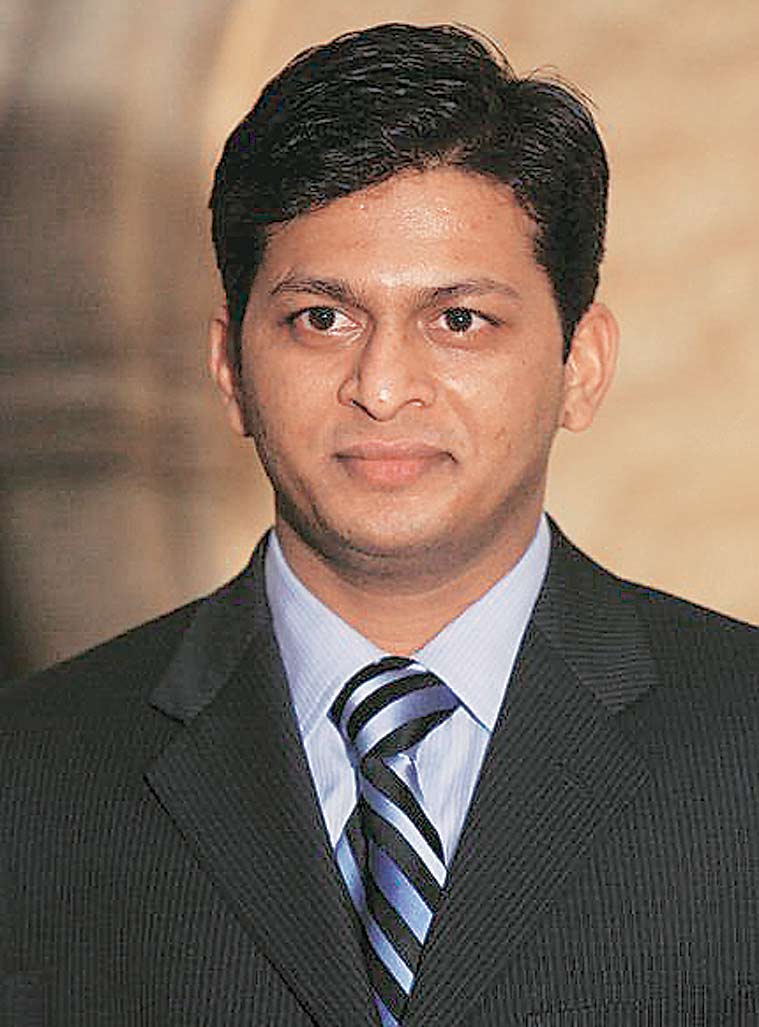
Praveen Kamble
Praveen Kamble (also referred to as Praveen Kamble in sources) is an Indian entrepreneur from Nagpur, Maharashtra, recognized as a first-generation Dalit (Scheduled Caste/SC) businessman. He gained prominence in the mid-2010s as part of the emerging wave of Dalit entrepreneurs highlighted by the Dalit Indian Chamber of Commerce & Industry (DICCI) and media coverage on inclusive capitalism.
Background and Early Life
- Born around 1981 (aged 34 in 2015 reports).
- From a humble family in Nagpur.
- Father: Bhagwan Meshram, a lab assistant at Dadasaheb Dhanwate Nagar Vidyalaya (a school in Nagpur), who struggled to support four children.
- Education: Graduated in Electronics Engineering in 2001 from Visvesvaraya National Institute of Technology (VNIT), Nagpur (a reputed government engineering institute).
Business Venture: Talenticon Consultancy Private Limited
- Founded: Around 2014–2015.
- Business Model: Developed a mobile app and web portal for trading second-hand gift vouchers/cards.
- Concept: Many people receive gift vouchers they don't use; others want to buy them at a discount. Talenticon created a digital marketplace/platform to buy and sell unused or partially used gift cards/vouchers.
- Described by Kamble as "the first government-funded private e-commerce venture."
- Funding: Secured Rs 1.42 crore in venture capital from the VC Fund for Scheduled Castes (a government-backed fund for SC entrepreneurs).
- He learned about the fund via a WhatsApp message and a Marathi newspaper ad, applied, and succeeded in getting support.
- Philosophy and Motivation: Emphasized self-respect and job creation for Dalits. In interviews, he stated: "For Dalits, it's about self-respect. We need to create and provide jobs, not beg for them."
- Scale: Positioned as an innovative tech startup in e-commerce/gifting space, leveraging his engineering background for a digital solution to a niche problem.
Recognition and Context
- Featured in major media outlets (e.g., Indian Express 2015 article "A new business class: Dalits who turned first-generation entrepreneurs") as an example of Dalit youth using education, technology, and government schemes to build businesses.
- Part of broader narratives on Dalit entrepreneurship post-1991 reforms and DICCI's advocacy (though not explicitly listed as a DICCI office-bearer, his story aligns with their promotion of SC/ST self-made success stories).
- His journey reflects overcoming socio-economic barriers: From a modest family to engineering education to launching a funded startup in the digital space.
Current Status (as of available data up to ~2015–2020s)
- Limited recent public updates on Talenticon or his current activities (many Dalit entrepreneur profiles from that era fade from mainstream coverage after initial features).
- No indications of large-scale expansion or major exits in later reports; the company was in early-stage growth when highlighted.
- He remains an inspirational figure in discussions on SC entrepreneurship, government VC funds, and tech-based inclusion.

Ramesh Chand Puhal (also spelled Ramesh Chand Puhal in some sources) is a prominent Indian businessman, social activist, literary figure, and senior political leader from Panipat, Haryana. Born around 1965 (aged 61 as of circa 2010 data), he belongs to the Valmiki community, a Scheduled Caste group historically associated with sanitation and manual labor. Despite facing caste-based discrimination, he has built a successful entrepreneurial career, becoming a well-respected figure in his community and beyond. His story exemplifies upward mobility among Dalit entrepreneurs in northwest India, transitioning from a modest family background to owning multimillion-rupee assets.
Background and Early Life
- Family and Origins: Puhal's father was an illiterate municipal sweeper in Panipat, reflecting the typical socio-economic challenges faced by Valmiki families. The family supplemented income by buying buffaloes from local markets and selling them in Andhra Pradesh, a small-scale trading venture. As a child, Puhal experienced discrimination, such as difficulty selling milk in the city due to his caste, with buyers avoiding his family's produce.
- Education: He completed education up to the 10th grade. Self-taught in Urdu literature, he describes himself as an Urdu scholar. He has authored two books and is working on a third volume about the poet Hali, a prominent figure from Panipat.
- Personal Life: Married with three sons and one daughter, all well-educated. One son assists in his business operations.
Business Ventures
Puhal is a self-made entrepreneur whose businesses focus on energy distribution, fuel retail, transportation, and real estate/agriculture. He started with no formal government financial support, relying on personal savings (including selling his wife's jewelry) and later bank loans. A key early boost came from a friend in the Chamar community who helped secure a gas agency allotment. He did not pursue government schemes despite awareness of them, citing self-reliance.
| Business Type | Details | Scale/Impact |
|---|---|---|
| Gas Agencies | Operates two LPG gas agencies in Panipat, distributing domestic and commercial fuel. This forms the core of his energy sector involvement. | Employs a significant portion of his workforce; key to initial success and stability. |
| Petrol Pump | Runs one petrol pump, catering to local fuel needs in a transportation hub like Panipat. | Contributes to daily revenue; aligns with his transportation investments. |
| Transportation | Investments in logistics and transport services, likely including trucking or related infrastructure to support regional trade. | Supports supply chain for his other ventures; employs local labor. |
| Agricultural Land | Owns farmland investments around Panipat, leveraging Haryana's agrarian economy for passive income and diversification. | Long-term asset; reflects rural-urban business blend common in the region. |
- Overall Scale: As of the early 2010s, his enterprises employed over 25 people and had total assets valued at approximately 50 million rupees (about $600,000–700,000 USD at historical rates). He is described as a "famous businessman" in Panipat, with operations emphasizing community employment and ethical practices.
- Growth Philosophy: Motivated by his father to excel in business, Puhal credits family exposure to trade for his acumen. No formal training mentioned, but his success highlights resilience against caste barriers in accessing capital and markets.
Specific company names (e.g., for gas agencies) are not publicly detailed in available sources, but his operations are well-known locally in Panipat's business circles.
Political and Social Contributions
While the query focuses on business, Puhal's profile is intertwined with public service:
- Politics: A senior Congress party leader with decades of loyalty. On October 4, 2025, he was honored at a district-level Congress event in Panipat's Lal Batti office. District President Ramesh Malik, along with leaders like Sachin Kundu, presented him with khadi attire, a garland, and the tricolor flag in recognition of his unwavering party service.
- Social Activism: Served as a city counselor (municipal role). Actively involved in interfaith harmony, particularly through the Hali Panipati Trust (as vice president), organizing tributes, poetry readings, and cultural events. He has been felicitated by organizations for business success, religious knowledge, Sufi saint advocacy, and philanthropy. Known for kindness and community welfare, he promotes peace in diverse Panipat.
Challenges and Legacy
Puhal openly discusses caste discrimination: Despite his fame, locals often address him by caste, causing discomfort, and he recalls school-era biases. Yet, he is respected as a "kind human being" and role model for Dalit entrepreneurship. His journey—from a sweeper's son to a multimillionaire employer—features in studies on Scheduled Caste self-employment, underscoring barriers like limited access to schemes and networks.
In literary circles, he participates in poetry gatherings (e.g., ghazal recitals) and trusts dedicated to poets like Hali, blending business acumen with cultural advocacy. As of 2026, at around age 77, he remains active in Panipat's socio-political scene.

Ratan Lal Sirswal (also spelled Rattan Lal Sirswal) was a pioneering Dalit businessman from Panipat, Haryana, India. He is recognized as one of the oldest and most successful self-made Dalit entrepreneurs in the region, particularly in the textile and dyeing sector.
Early Life and Background
- Age (as documented in early 2010s reports): 75 years old (born around 1935).
- Community: Belonged to the Valmiki community (a Scheduled Caste/SC group, historically associated with scavenging/manual cleaning work, often facing severe social stigma and discrimination).
- Family Origins: His parents were illiterate and engaged in the traditional occupation of scavenging (sweeping/cleaning). The family had migrated to Panipat long ago.
- Education: Received no formal education due to socio-economic constraints and caste barriers.
- Family: Married with two sons and four daughters. His youngest son assisted him in the business.
Business Profile
- Business: Operated a dye house (fabric dyeing and processing unit) in Panipat — a major textile hub in Haryana known for handlooms and dyeing.
- One of the oldest Dalit businessmen in Panipat city.
- Previously worked as a sweeper with the state government but quit once his dyeing/handloom unit became established and viable.
- Scale and Success: Described as a successful enterprise (specific turnover figures not quantified in sources, but considered substantial for a Dalit entrepreneur in the region).
- Challenges Faced:
- Severe caste discrimination: Once his Valmiki identity was revealed, customers boycotted him, leading to business setbacks.
- Banks were reluctant to provide loans due to caste bias.
- He deliberately hid his caste for a long time to sustain and grow the business.
- Famous quote: “Valmiki ka naam lete hi saanp kaat jata hai” (once people become aware of Valmiki, they behave like bitten by a snake).
- Philosophy: Proudly identified with Dr. B.R. Ambedkar's vision. Emphasized that caste continues to play a major role in business success despite economic progress and market freedom.
Recognition and Documentation
- Profiled in the 2010 research paper "Dalits in Business: Self-Employed Scheduled Castes in Northwest India" by Surinder S. Jodhka (Indian Institute of Dalit Studies) — highlighted as a key case study of successful SC entrepreneurship in Panipat.
- Featured in media articles (e.g., The Telegraph India, 2010: "Dalit is a Dalit even in a 'free' market") and discussions on Dalit capitalism, illustrating persistent caste barriers in the "free market."
- His story exemplifies resilience: From a sweeper's son to a respected businessman in a competitive textile city, despite ongoing discrimination (e.g., social boycott upon caste revelation).
Current Status
- No recent public updates (post-2010s) appear in widely available sources — his profile remains referenced in academic studies and media on Dalit self-employment rather than ongoing news.
- The business (dye house) may have continued under family leadership (youngest son involved), but no current details are available.

Ravi Kumar Narra (born September 1, 1963) is a prominent Indian businessman, entrepreneur, social activist, and Dalit (Scheduled Caste/SC) leader from Secunderabad (Hyderabad), Telangana. He is widely recognized for his rise from extreme poverty in a slum to heading a diversified group of companies primarily in real estate and logistics, while providing direct employment to around 900 people (as reported in profiles up to the early 2020s). He is the founder of the Shanti Chakra Foundation (a service organization focused on networking, empowerment, and spreading Dr. B.R. Ambedkar's philosophy among Dalits), and serves as the National President of the Dalit Indian Chamber of Commerce and Industry (DICCI). In 2014, he became the first Dalit entrepreneur from South India to receive the Padma Shri, India's fourth-highest civilian award, for his contributions to trade, industry, and social upliftment of marginalized communities.
His business ventures are often referred to collectively as a "group of companies" rather than a single formal entity named "Shanti Chakra Group." Shanti Chakra primarily refers to his foundation and associated initiatives, while his commercial operations include real estate development, logistics, and related sectors. He is also noted as the founder chairman of the Greater Hyderabad Builders Federation (with over 2,000 members) and has been involved in policy advocacy for Dalit entrepreneurs.
Early Life and Background
Born to Shankaraiah Narra (a daily wage mason) and a mother who worked as a maid, Ravi grew up in a slum near Secunderabad railway station in a family with very limited resources. He faced poverty, hunger, and caste discrimination from a young age. Despite these challenges, he completed high school and pursued multiple degrees—including in law (from P.G. College of Law), journalism, science, and public policy—while working odd jobs to support himself. His early struggles fueled his determination to succeed through education and entrepreneurship.
Business Career
Ravi Kumar Narra built his enterprises through perseverance, starting small and expanding into diversified sectors. Key aspects include:
- Real Estate: He is prominently involved in real estate development and construction in the Hyderabad/Secunderabad region. As founder chairman of the Greater Hyderabad Builders Federation, he has influenced the local real estate ecosystem. Specific companies or partnerships include Aditya Nirman Pvt. Ltd. (where he serves as Managing Director) and related entities focused on building, infrastructure, and property development.
- Logistics: His group includes ventures in logistics, supply chain, and possibly transportation-related services, contributing to employment and operational scale.
- Other Enterprises: Reports describe a "variety of enterprises" beyond real estate and logistics, though details on additional sectors (e.g., communications via M/S Aditya Communications or partnerships) are mentioned in some profiles. His businesses emphasize merit-based hiring and empowerment, often prioritizing opportunities for Dalits and underprivileged individuals.
The group provides direct employment to approximately 900 people and has been positioned as a model for Dalit-led economic empowerment.
Social Work and Advocacy
- Founded the Shanti Chakra Foundation to foster networking among Dalits, promote Ambedkarite ideals, assist emerging Dalit entrepreneurs, and drive social/economic upliftment.
- Long-time leader in DICCI: Served as President of the Andhra Pradesh chapter (since 2011), South India coordinator (covering multiple states), and National President. He has advocated for policy changes (e.g., modifications to Government Industrial Policy 2010–2015 to benefit SC/ST entrepreneurs) and promotes "business leadership" within the Dalit community.
- Active in mentoring, events, and public speaking on entrepreneurship, self-belief, and inclusive growth.
Recognition and Legacy
- Padma Shri (2014) – For contributions to industry and Dalit empowerment.
- Featured in media (The Better India, TwoCircles.net, DICCI reports, YouTube interviews) as an inspiring figure alongside other Dalit entrepreneurs like Kalpana Saroj and Ashok Khade (from your previous queries).
- His story highlights overcoming caste barriers through education, hard work, and economic independence, inspiring many from SC communities.
Personal Life
Married to N. Vanajakshi, with two children. Based in Hyderabad/Secunderabad, he maintains a focus on family, business, and activism. His official website (ravikumarnarra.com) and social media (e.g., LinkedIn, Facebook @rknarra63) highlight his roles in DICCI, Shanti Chakra, and motivational content.

Rajesh Saraiya (born 2 October 1969) is an Indian industrialist, entrepreneur, and advocate for Dalit empowerment, renowned as India's first Dalit billionaire. As the founder and CEO of Steel Mont Trading Ltd., a multinational steel trading and commodities firm, he has built a global empire from humble beginnings in rural Uttar Pradesh, emphasizing innovation in international trade after three decades in the industry. His story of defying caste-based barriers through education and business acumen has inspired countless Dalit entrepreneurs, making him a symbol of economic self-reliance in India's Scheduled Caste (SC) community. With an estimated net worth exceeding ₹8,000 crore (over $1 billion in USD terms as of 2025), Saraiya's journey highlights how capitalism can accelerate social mobility for marginalized groups.
Early Life and Family Background
Rajesh was born in 1969 in the small village of Saraiya Sani in Sitapur district, Uttar Pradesh, into a modest Dalit family facing the socio-economic challenges of caste discrimination. His father, Natharam Saraiya, a simple farmer or laborer, broke tradition by adopting the surname "Saraiya" to instill pride and identity in his children, rejecting the anonymity often imposed on Dalits. The family later relocated to Dehradun, Uttarakhand, where Rajesh grew up in a middle-class household, witnessing the limitations of caste in accessing opportunities. Details on his mother and siblings are not widely public, but Saraiya has credited his parents' emphasis on education as the foundation for his success, often recounting how they encouraged him to dream beyond village confines.
Education and Early Career
Determined to escape poverty, Saraiya pursued higher education abroad, earning a bachelor's degree in aeronautical engineering from the Kyiv Institute of Civil Aviation in Ukraine (then part of the Soviet Union) in the late 1980s. This international exposure equipped him with technical skills and a global outlook, rare for someone from his background at the time. Upon returning to India, he initially worked in engineering roles but quickly pivoted to business, recognizing opportunities in the burgeoning steel sector amid India's liberalization in the 1990s. His early ventures involved small-scale trading, honing his expertise in metals and commodities.
Building the Business Empire
In 1994, at age 25, Saraiya founded Steel Mont Pvt Ltd. in Mumbai, starting with modest steel trading operations. Leveraging his engineering knowledge and networks from Ukraine, he expanded rapidly into a multinational powerhouse specializing in steel production, trading, and commodities. Today, headquartered in Düsseldorf, Germany, the company operates offices in London, Istanbul, Dubai, and Mumbai, with an annual turnover surpassing ₹2,000 crore. Saraiya's innovations include sustainable sourcing, digital supply chain management, and navigating geopolitical trade challenges—key focuses after 30 years in the industry. Under his leadership, Steel Mont has become a leader in eco-friendly steel solutions, exporting to Europe, the Middle East, and Asia.
Achievements and Awards
Saraiya's rise has been recognized nationally and internationally:
- Pravasi Bharatiya Samman (2012): India's highest honor for overseas Indians, for his contributions to trade and diaspora empowerment.
- Padma Shri (2014): Prestigious civilian award for excellence in trade and industry. He is a founding member of the Dalit Indian Chamber of Commerce and Industry (DICCI), where he mentors SC startups, arguing that "capitalism is changing caste much faster than any human being." His net worth, built through Steel Mont's growth, cements his status as India's first Dalit billionaire, though he clarifies it's in INR terms and emphasizes collective progress over personal wealth.
Personal Life
Saraiya is married and has two sons, maintaining a low-profile family life split between Germany and India. Based primarily in Düsseldorf for business, he frequently visits Uttar Pradesh to connect with his roots. A teetotaler and fitness enthusiast, he advocates work-life balance, often sharing anecdotes of overcoming prejudice in global boardrooms. No major controversies surround him; instead, he's known for his humility and focus on legacy-building.
Philanthropy and Social Impact
Beyond business, Saraiya is a crusader for Dalit upliftment. Through DICCI, he supports skill-training programs and microfinance for SC entrepreneurs, aiming to create 100 Dalit billionaires in the next decade. In 2025, he announced plans for food processing cooperatives in Uttar Pradesh villages like Saraiya Sani, focusing on sustainable agriculture for marginalized farmers. His mantra—"Dalits should look at capitalism as a crusader against caste"—resonates in empowerment seminars, inspiring figures like Kalpana Saroj and Ashok Khade.
Recent Activities (2024-2025)
Saraiya remains active in global trade amid economic shifts. In January 2025, he featured in The CEO Magazine's digital edition, discussing innovations like AI-driven steel logistics for international markets. A March 2025 Instagram reel went viral, chronicling his "small village to billionaire" arc, garnering thousands of views and sparking discussions on Dalit success. On X (formerly Twitter), he's frequently cited in August-September 2025 debates on caste inequality, listed alongside other Dalit tycoons in responses to political speeches by Rahul Gandhi. As of October 2025, no major new ventures are announced, but his DICCI role continues to amplify SC voices in policy forums.
Rajesh Saraiya's life is a testament to resilience: from a discriminated village boy to a global CEO challenging caste norms through enterprise.
Ratibhai Makwana

Ratibhai Makwana (also spelled Ratibhai G. Makwana or Ratilal Makwana in some sources, born around 1943) is a pioneering Indian Dalit (Scheduled Caste/SC) entrepreneur and industrialist from Gujarat. He is the founder, chairman, and managing director (or whole-time director) of Gujarat Pickers Industries Limited (GPIL), an Ahmedabad-based company specializing in plastic intermediaries (such as polymers, chemicals, plastic pickers/components for textiles/mills, and related distribution). The firm has grown into a major player in the plastics and petrochemicals sector, with reported annual revenues historically around ₹380–750 crore (figures vary by source and year; older 2011 reports cited ₹380 crore, while some later accounts suggest higher peaks). GPIL employs thousands (around 3,500 in its Ahmedabad operations as of early 2010s reports), with a significant portion from Dalit communities, providing dignified employment and challenging caste barriers.
He is celebrated as one of India's prominent Dalit business success stories, overcoming severe caste discrimination, poverty, and systemic biases to build a multi-crore empire. His diversification into the sugar business in Uganda in 2005 marked a bold international expansion into agribusiness.
Early Life and Background
Ratibhai was born into a poor Dalit family (Chamar community) in Ranpur near Bhavnagar, Gujarat. His father, Galabhai (or Gala Bhai) Makwana, was initially a farm laborer who later started a small leather pickers manufacturing unit during World War II (amid import shortages for textile mills). The family faced extreme hardship, including caste-based discrimination—Ratibhai endured prejudice in school, and banks repeatedly refused loans due to their caste and "polluting" occupation.
Ratibhai attended school in a small Gujarat town but left college at age 18 to join his father's trade. He helped expand the leather pickers business nationally, overcoming obstacles like supplier boycotts by high-caste rivals and initial financing denials. A key breakthrough came when Commerce Minister T.T. Krishnamachari intervened (directing officials to treat "chamda" or hide as "black gold"), enabling a loan for an automatic machine from Switzerland.
Business Journey
- 1960s–1970s: Joined and grew the family leather pickers unit into a national supplier for textile mills.
- 1980: Diversified into plastic intermediaries as plastic pickers replaced leather ones in the market. This shift proved visionary, positioning the company in the growing plastics and polymers sector.
- Gujarat Pickers Industries Limited (incorporated 2001, but roots trace to earlier family business): Focuses on manufacturing/trading plastic intermediates, polymers, chemicals, and distribution. Authorized distributor for Indian Oil Corporation (IOC) products in some capacities. The company has been a consistent performer, with strong growth (over 10% annually in some periods) despite challenges.
- International Expansion – Sugar in Uganda (2005): Ratibhai led the entry into Uganda's sugar industry by setting up a production unit. This move broke into agribusiness in Africa, competing with established players like the Madhvani group. It represented a strategic diversification beyond plastics, tapping into Uganda's agricultural potential and export markets. (Details on the exact subsidiary or scale are limited in public records, but it's highlighted as a key achievement in his profile.)
- Other mentions include plans for a ₹30 crore cement unit (as of 2011), though primary focus remains plastics and related chemicals.
The business has faced caste-related hurdles (e.g., boycotts, loan denials) but thrived through resilience, quality focus, and networking. Ratibhai served as a director at State Bank of India's local board (1983–1998), gaining financial insights.
Key Achievements and Recognition
- Built a business from humble leather pickers to a ₹300–750 crore conglomerate (peak figures vary; plastics remain core).
- Employs thousands, prioritizing Dalit workers for empowerment.
- Featured in media (Economic Times, YourStory, Forward Press, Zee News) as a symbol of Dalit capitalism.
- Honored in narratives of breaking caste barriers; praised by figures like Ratan Tata at events; awarded/recognized by PM Modi in some contexts.
- Part of broader Dalit entrepreneurship stories alongside Kalpana Saroj, Ashok Khade, etc. (from your prior queries).
Personal Life and Legacy
Now in his early 80s (as of 2026), Ratibhai remains active in leadership at GPIL (board includes family like Vasantkumar Makwana). He is based in Ahmedabad and emphasizes merit, hard work, and social upliftment. His story underscores overcoming caste prejudice through entrepreneurship, providing jobs, and global diversification (e.g., Uganda sugar as a bold step into Africa).
Rajendra Gaikwad

Rajendra Gaikwad (full name: Rajendra Shankar Gaikwad) was a prominent Indian entrepreneur and businessman from Pune, Maharashtra, best known as the founder and former Managing Director of GT Pest Control Pvt. Ltd. (also known as G.T. Pest Solutions or G T Pest Control Private Limited). He was a self-made Dalit entrepreneur whose success story highlighted overcoming caste barriers through determination and business acumen in the pest management industry.
Early Life and Background
- Born into a poor farming family in Vadhu village (near Pune, historically linked to figures like Chhatrapati Sambhaji Maharaj's associates in some family narratives).
- Faced extreme poverty—no basic necessities like footwear for school.
- Migrated to Pune with his family after a famine in the village.
- Started with odd jobs in the city, including collecting and selling old newspapers, driving an auto-rickshaw part-time, and working in a pest control unit to survive.
Business Journey and GT Pest Control
- Founded: GT Pest Control in Pune (initially in areas like Sadashiv Peth), over 35 years ago (around the late 1980s or early 1990s based on company claims of "over 35 years" as of recent updates).
- Breakthrough Moment: A poultry farm owner dismissed rat control work as a "Dalit's job." Gaikwad volunteered, delivered excellent results, and secured repeat business. He turned this perceived disadvantage (caste-linked "lowly" jobs) into a competitive advantage by specializing in pest control.
- Company Growth:
- Specialized in comprehensive pest management: rodent control, termite treatment, fumigation, bed bug eradication, cockroach control, and industrial/agricultural solutions.
- Expanded domestically across India and internationally (e.g., services to Singapore; branches/plans in Pimpri-Chinchwad, Khopoli, and other areas).
- Introduced innovations like hot air fumigation facilities (announced around 2011).
- Achieved ISO certification and built a reputation as one of Pune's most trusted pest control providers.
- Scale and Turnover:
- By the early 2010s (around 2011–2013), turnover reached approximately Rs 8–15 crore (roughly $1–2 million USD at the time), making him a "Dalit crorepati" (millionaire).
- Employed over 100 people (reports from that era indicate 101–500 staff range).
- Company remains active today with branches in Pune and beyond.
Dalit Entrepreneurship and Recognition
- Explicitly identified as a Dalit (Scheduled Caste/SC community) in multiple sources, including media features on emerging Dalit businessmen.
- Featured in prominent lists and articles (e.g., Outlook India 2011 on "Dalit crorepatis," DICCI-related discussions) as an inspiration for first-generation SC/ST entrepreneurs.
- Associated with the Dalit Indian Chamber of Commerce & Industry (DICCI)—participated in events, conclaves, and advocacy for Dalit capitalism, emphasizing that Dalit entrepreneurs pay more in taxes than received in welfare.
- His narrative: Defied caste prejudice, turned societal stigma into business strength, and proved self-reliance post-1991 economic reforms.
Personal Life and Later Years
- Family: Married to Ahilya Rajendra Gaikwad; son Jayesh Rajendra Gaikwad (involved in the business as a director); other family members like brothers (Suresh, etc.) mentioned in tributes.
- He was described as genial, forward-thinking, and community-oriented.
- Death: Rajendra Shankar Gaikwad passed away (exact date not widely publicized in recent sources, but noted as "Late Mr. Rajendra Shankar Gaikwad" on the official company website as of 2024–2026). A memorial day event was held in 2022 for him as founder-president of Shidnak Foundation (a family/community organization), attended by DICCI leaders, former MLAs, and family.
- Legacy: The company continues under family leadership (e.g., directors include Jayesh Rajendra Gaikwad and others). It remains a symbol of Dalit success in entrepreneurship, with the business still operating as a leading pest control firm in Pune and Maharashtra.

Raja Nayak (also known as Raj Nayak or Dr. Raja Nayak in some contexts) is a Bengaluru-based Indian entrepreneur, businessman, and Dalit (Scheduled Caste/SC) success story. He is the founder and leader of a diversified business group with an estimated combined turnover exceeding ₹100 crore (as reported in recent 2026 accounts, up from ₹50–60 crore in earlier profiles). His ventures span packaging, shipping and logistics, packaged drinking water/beverages, real estate, wellness/beauty, and related sectors. A school dropout from extreme poverty, he built his empire through grit, inspired by a Bollywood film (often cited as an Amitabh Bachchan movie that sparked his entrepreneurial drive), and has become a prominent figure in Dalit entrepreneurship as National Vice President of the Dalit Indian Chamber of Commerce and Industry (DICCI) and President of DICCI (South India). He previously served as an Independent Director at ITI Limited (retired in November 2024).
Early Life and Background
Born into a poor family in Bengaluru (Karnataka), Raja Nayak grew up facing severe poverty, caste discrimination, and hunger—often going without food for days. He dropped out of school at age 15 due to financial hardship and ran away from home at 17 to escape the cycle of poverty. Arriving in Mumbai (or Bengaluru streets), he survived as a street vendor/footpath hawker, selling export-reject shirts, household goods, and other items with minimal capital (starting with as little as ₹5,000 borrowed or partnered). He faced societal barriers but drew inspiration from a Bollywood movie emphasizing self-belief and success against odds, motivating him to dream bigger.
Business Journey
- Early Ventures (1980s–1990s): Began as a pavement seller of shirts and goods. Progressed to small trading before formalizing his first company in 1991.
- Akshay Enterprises (founded 1991): His flagship entry into the packaging industry, specializing in corrugated boxes and related manufacturing. This marked his shift from street vending to structured business and laid the foundation for growth.
- MCS Logistics (or MCS Logistics International, established 1998): Expanded into global shipping, logistics, freight forwarding, and supply chain services. A core part of his empire, handling international trade and transportation.
- Jala Beverages Private Limited (incorporated 2013): Focuses on packaged drinking water (bottled mineral water) and beverages. The venture has been successful in the competitive FMCG market, with family involvement (directors include his sons Akshay Raja Nayak and Arjun Raja Nayak).
- Skyline Infra Realty Private Limited (incorporated 2016): Real estate and infrastructure development company based in Bengaluru (BTM Layout). Directors: Akshay Raja Nayak and Arjun Raja Nayak. Involved in property development, rentals, and related activities.
- Other Ventures: Includes Purple Haze Wellness Space/Beauty Spa (wellness and beauty services), Nutri Planet (health foods/nutrition), Nayak Food and Power Systems, and possibly others in beauty, health, and diversified sectors. Some family-run entities involve his sons as directors.
His businesses emphasize merit, quality, and diversification, with operations primarily in Bengaluru and Mumbai, and reach in global logistics. He credits economic liberalization (post-1991) for allowing talent to overcome caste biases.
Key Achievements and Recognition
- Built a business group from ₹5,000 startup capital to ₹100+ crore turnover.
- Prominent Dalit entrepreneur and DICCI leader, mentoring others from marginalized communities.
- Featured in media (YourStory, The Weekend Leader, Economic Times, Zee News, News24, Rediff) for his rags-to-riches story.
- Served on corporate boards (e.g., ITI Limited as Independent Director until 2024).
- Honored for resilience and contributions to entrepreneurship.
Personal Life and Legacy
Now in his late 50s to early 60s (around 55 in 2016 reports), Raja Nayak is based in Bengaluru. He is married with sons Akshay and Arjun, who are actively involved as directors in several companies (e.g., Skyline Infra Realty, Jala Beverages). He remains active in business leadership and advocacy for Dalit economic empowerment.
Savitaben Kolsawala

Savitaben Kolsawala (also spelled Savitaben Kolsawallah or Savitaben Kolsawala, née Savitaben Parmar or similar) is a renowned Indian entrepreneur and one of the most celebrated Dalit (Scheduled Caste/SC) businesswomen in Gujarat. She rose from extreme poverty and manual labor to become a successful tiles manufacturer, owning ceramic/floor tile production units with significant scale.
Early Life and Struggles
- Born: Into a poor Dalit family in Ahmedabad, Gujarat (exact birth year not widely specified, but active in business from the 1980s onward).
- Her husband worked as a city bus conductor in Ahmedabad, but the family income was insufficient to support their children, in-laws, and debts.
- Facing severe financial hardship, Savitaben began selling half-burnt coal (discarded or low-grade coal) door-to-door to households and brick kilns using a hand cart. This grueling work earned her the local nickname "Kolsawala" or "Kolsawallah" (meaning "coal seller" in Gujarati).
- Despite the menial nature of the job and social stigma (as a Dalit woman in a patriarchal society), she treated it as a learning opportunity, gaining business acumen in trading, customer dealings, and resource management.
- She had limited or no formal education, and the family faced typical challenges of caste-based discrimination and economic marginalization.
Business Journey: From Coal to Tiles Manufacturing
- In the late 1980s and early 1990s, using savings from her coal business and insights gained, she pivoted to the building materials industry, specifically ceramic tiles manufacturing.
- She invested in her first ceramic production unit, starting small but scaling up through determination and market understanding.
- Key companies she founded/chaired:
- Premier Ceramics (initial venture).
- Sterling Ceramics Private Limited (incorporated around 2000; focused on manufacture of structural non-refractory clay and ceramic products, including floor tiles).
- Her tile factory produces ceramic/floor tiles, growing into a major operation in the Ahmedabad region.
- By around 2015, her business reportedly achieved an annual turnover of about ₹50 crore (approximately US$6–7 million at the time) and employed over 200 people.
- She diversified into other ventures, including serving as Director of Scion Aliments Private Limited (a food-related company in Ahmedabad).
Achievements and Recognition
- Savitaben is frequently featured in media as a rags-to-riches Dalit entrepreneur, alongside figures like Kalpana Saroj, Ashok Khade, and others.
- Her story symbolizes breaking barriers of caste, gender, and poverty—rising from pushing a coal cart to owning factories and even reportedly owning luxury items like an Audi car.
- She is the Chairman of Premier Ceramics and Sterling Ceramics.
- Also a Trustee of the Dr. B.R. Ambedkar Education Society (Gujarat), reflecting her commitment to education and social upliftment in the Dalit community.
- Active on social media (e.g., Facebook page @savitabenkolsawala with thousands of followers, sharing motivational content and personal updates).
Legacy
Savitaben Kolsawala's journey is inspirational for aspiring entrepreneurs from disadvantaged backgrounds in India. She overcame societal prejudices (including resistance in male-dominated industries like manufacturing) through perseverance. Her tile manufacturing business remains a key example of successful SC/Dalit entrepreneurship in Gujarat's industrial landscape.
Note: Details are based on public profiles, articles (e.g., Forward Press, Reflections Live, Startup Stories), and company records up to recent years. Exact current turnover or expansions may vary, as some reports are from 2015–2020s. She is based in Ahmedabad, Gujarat. If you're seeking more specifics (e.g., factory location or recent photos), let me know!

Sachin Satvi
Sachin Satvi (also spelled Sachine Satvi or Sachin S. Satvi) is a dedicated Indian social entrepreneur, tribal activist, and professional engineer from the Warli (Varli) Adivasi community (a Scheduled Tribe/ST in Maharashtra). He is best known as the Founder and President of AYUSH (Adivasi Yuva Shakti), a voluntary organization and youth collective focused on empowering Warli and other tribal communities in Maharashtra's Palghar-Thane region (e.g., Dahanu, Talasari, Jawhar, Mokhada).
Background and Personal Details
- Community: Warli tribal (ST), from Dahanu/Palghar area in Maharashtra—rooted in Adivasi culture and traditions.
- Education:
- BE in Mechanical Engineering.
- MBA.
- Postgraduate in Tribal Development Management from NIRD (National Institute of Rural Development).
- Professional Career: Senior professional at Hyundai Motor India Engineering in Hyderabad, Telangana (R&D Quality Enhancement, Robust Engineering; 19+ years of experience in engineering design and R&D as of recent updates). He has marked milestones like 18 years with the company (around 2025 posts). This corporate role coexists with his long-term voluntary social work.
- Location: Primarily based in Hyderabad for work, but deeply connected to his native Dahanu/Palghar region for AYUSH activities. No prominent links to Bareilly, Uttar Pradesh (searches show unrelated or minimal overlap).
AYUSH – Adivasi Yuva Shakti
- Founded: Initiated online activities around 2006–2007 (formal group/organization from 2007 onward), marking 19+ years as of 2026.
- Core Focus: Tribal empowerment, social awareness, cultural preservation, and alternative livelihood creation for Warli Adivasi youth and communities.
- Key Initiatives and Achievements:
- Promotes Warli painting/art as a sustainable livelihood—helping artists sell work through digital platforms, collaborations, and GI (Geographical Indication) efforts for protection against infringement.
- Led campaigns for GI-tag recognition for Warli art (achieved in 2011–2014 era; ongoing advocacy for enforcement and international recognition).
- Created platforms: Multiple web pages, 12,000+ photo collection (self-captured), YouTube channel with 40,000+ views (for social awareness and cultural documentation).
- Empowers women and youth: Supports Adivasi women in reclaiming traditional art (e.g., murals, new canvases like umbrellas/bamboo products during COVID slumps), provides business opportunities via digital sales and partnerships.
- Collaborations: Works with government schemes, NGOs, and communities—e.g., solar energy, water access, cultural events (Tarpa stand, artist meetings).
- Impact: Reaches 550+ tribal families (reported in some updates); global outreach as a platform for indigenous tribes.
- During COVID-19: Adapted by promoting innovative products (e.g., bamboo rakhi) and supporting artists amid market drops.
- Structure: AYUSH operates as a non-profit/voluntary group (Adivasi Yuva Seva Sangh linked), with a core team including family (e.g., Sanchita Satvi as Adikanya Lead) and associates like Dr. Sunil Parhad (full-timer for Adivasi empowerment).
Recognition and Legacy
- Featured in media as a tribal social entrepreneur (e.g., The Better India 2022 on Warli art revival; Scroll.in 2022 on GI/infringement; Thunderbird.ca 2020 on indigenous adaptation; Google Groups success stories).
- Participates in webinars (e.g., Textiles Committee on IPR/GI protection), conferences, and UNFCCC-related platforms (as AYUSH president).
- Symbolizes blending professional success with grassroots tribal upliftment—using engineering skills and corporate stability to drive social change in Adivasi areas.
- Active online: LinkedIn (professional and AYUSH updates), Facebook (@adiyuva, personal), Instagram, and group channels for awareness.
Sachin Satvi's work bridges tradition and modernity—preserving Warli heritage while creating economic opportunities for marginalized tribal youth. His dual role (corporate R&D leader + tribal activist) makes him a unique figure in social entrepreneurship. For the latest (e.g., recent AYUSH projects or photos), check his LinkedIn or Facebook pages. If this is a different Sachin Satvi or you have more specifics, let me know!
Santosh Kamble

Santosh Kamble is a successful Indian entrepreneur from Mumbai, Maharashtra, recognized as a prominent Dalit (Scheduled Caste/SC) businessman who rose from humble beginnings to build a thriving enterprise in the bags manufacturing and supply sector, specializing in nylon and leather bags.
Early Life and Background
- Born around 1979 (aged 37 in 2016 reports, making him approximately in his mid-40s as of recent years).
- He belongs to the Dalit community and started his entrepreneurial journey at a very young age—around 12 years old—driven by a passion for bags.
- By age 21, he was focused on building a bag manufacturing business.
- He began operations in Dharavi, Mumbai—one of Asia's largest informal settlements and a hub for small-scale manufacturing, including leather and textile products—where he sourced materials from numerous small units.
Business: Nylon & Leather Bags Supply (Bizcraft)
- Company: Bizcraft Solutions Pvt. Ltd. (also referred to as Bizcraft or Bizcraft Company), founded by him as Founder-CEO.
- Core Business: Supplies nylon and leather bags to corporate clients in Mumbai and beyond.
- Sources raw materials and components from over 100 small units in Dharavi.
- Acts as an aggregator/supplier/OEM (Original Equipment Manufacturer) for various bag types, including corporate gifting bags, anti-theft bags, backpacks, and possibly branded or customized products.
- Supplies to major companies (reports mention around 150 corporate clients by mid-2010s).
- Growth Milestones:
- In 2016: Annual revenue of Rs 6 crore (about US$900,000 at the time), with ambitions to reach Rs 20 crore through expansion.
- Planned/opened a manufacturing plant in Bhiwandi (a major industrial hub near Mumbai) to scale production.
- By the 2020s: Vision to become one of India's top bag manufacturers, with a focus on backpacks and larger-scale factory operations in Mumbai.
- During the COVID-19 lockdown (around 2020–2021): Diversified successfully by producing and supplying masks and PPE kits, generating an additional Rs 1.5 crore in revenue while maintaining bag operations.
- Other Details:
- Located in areas like Sion-Bandra Link Road, Dharavi (e.g., Amit Estate shop/office).
- Involved in corporate gifting items alongside bags.
- Passionate about the bag industry for over 33 years (as of recent LinkedIn posts), starting from childhood fascination.
Social Role and Recognition
- Active in the Dalit Indian Chamber of Commerce and Industry (DICCI):
- Served as President/Coordinator for Mumbai/West India chapters.
- Collaborated with DICCI founder Milind Kamble on initiatives to support micro-entrepreneurs in Dharavi and promote Dalit business growth.
- His story is highlighted in media (e.g., Business Standard 2016 article "Miles to go for Dalit entrepreneurs") as an example of a thriving Dalit business amid challenges like limited access to formal finance and caste biases.
- Featured in discussions on Dalit entrepreneurship, symbolizing perseverance and scaling from informal Dharavi units to corporate supply chains.
- Emphasizes merit, hard work, and passion in his journey.
In summary, Santosh Kamble exemplifies Dalit entrepreneurial success in India's informal-to-formal manufacturing transition—starting young in Dharavi, building Bizcraft into a multi-crore bag supply business (nylon/leather focus), expanding amid adversities like lockdowns, and contributing to community upliftment via DICCI. His vision remains on becoming a leading national bag manufacturer. For the latest on Bizcraft or current operations, check his LinkedIn profile or company contacts. If this matches a different Santosh Kamble, provide more details!

Dr. Sushant H. Meshram
Dr. Sushant H. Meshram (full name: Dr. Sushant Hiraman Meshram) is an Indian physician, pulmonologist (respiratory medicine specialist), sleep medicine expert, academician, and social entrepreneur from Nagpur, Maharashtra. He is best known for his contributions to healthcare as a doctor and his entrepreneurial efforts in establishing affordable medical facilities, particularly highlighted in media as a Dalit entrepreneur (from a Scheduled Caste/SC community).
Background and Personal Details
- Community: Belongs to the Dalit (Scheduled Caste/SC) community, as explicitly noted in 2011 media coverage describing him as a "Dalit entrepreneur" in the healthcare sector.
- Profession: Medical doctor specializing in Pulmonary Medicine, Critical Care, and Sleep Medicine. He holds qualifications including MD (likely in Respiratory Medicine), FCCP (USA) (Fellow of the American College of Chest Physicians), and an International Fellowship in Sleep Medicine from Johns Hopkins Medical University, USA.
- Current/Primary Role: Professor and Head of the Department of Pulmonary Critical Care and Sleep Medicine at Government Medical College (GMC) Nagpur (a major public medical institution in Central India). He is also a postgraduate guide, researcher, and regional coordinator for the World Sleep Society.
Business and Entrepreneurial Ventures
- Clinic Chain: Owns and operates Dr. Sushant Meshram's Clinic (or chain of clinics) in Nagpur, focusing on respiratory and general health services. This started as a modest venture (valued at around Rs 10 lakh in 2011 reports) and serves as his private practice base.
- Hospital Project: In 2011, he announced plans to establish a 30-bed multi-specialty hospital named Ambedkar Institute of Medical Science in Nagpur, with an estimated investment of Rs 10 crore. The facility (spread over 7,000 sq ft) aimed to provide affordable healthcare, including cross-subsidized services for the underprivileged. He expressed intentions to expand the chain to cities like Raipur, Mumbai, Pune, and Aurangabad.
- Co-founder/Chairman role in this initiative (some recent social media/X mentions credit him as Chairman of the clinic chain and co-founder of the institute).
- Updates on whether the hospital fully materialized or its current status are limited in public records post-2011, but it aligns with his vision for accessible medical care in underserved areas.
- Business Style: Described as a social entrepreneur blending medical practice with affordable healthcare expansion. He has been uncomfortable with the "Dalit entrepreneur" label in some interviews, focusing instead on merit and service.
- Co-founder/Chairman role in this initiative (some recent social media/X mentions credit him as Chairman of the clinic chain and co-founder of the institute).
- Updates on whether the hospital fully materialized or its current status are limited in public records post-2011, but it aligns with his vision for accessible medical care in underserved areas.
Professional Achievements
- Pioneer in sleep medicine in Central India—recognized as the region's first specialist with international fellowship (Johns Hopkins).
- Active in research, publications (e.g., on lung cancer, diabetes adherence, sleep disorders), and public health (e.g., studies on non-smokers developing lung cancer due to pollution/environmental factors).
- Involved in global initiatives (e.g., World Sleep Day contributions, COVID-19-related expert inputs).
- Media appearances (e.g., YouTube interviews on health awareness like "Take care Health is Wealth").
Legacy
Dr. Sushant H. Meshram represents a blend of clinical excellence and entrepreneurial initiative in healthcare, particularly noted for efforts to make quality medical services accessible amid his Dalit background (highlighting upliftment narratives in Indian business/media). His work spans government academia, private clinics, and planned institutional expansions.
No direct connections to Bareilly, Uttar Pradesh, appear in records—he is firmly based in Nagpur, Maharashtra. If this refers to a different Dr. Sushant H. Meshram (e.g., a local businessman in Bareilly or another field), or if you have additional context (like a specific company or recent activity), provide more details for clarification!
Sukesh Ranjan

Sukesh Ranjan is the Managing Director (MD) and key founder/promoter of A.B.S. Breverages Private Limited (also spelled ABS Beverages Pvt. Ltd.), a beverage company based in Lucknow, Uttar Pradesh, India.
Company Background
- Incorporation: The company was incorporated on September 5, 2008 (as per MCA records and director appointment details).
- CIN: U15132UP2008PTC035978.
- Business Focus: It operates in the food and beverages sector, likely manufacturing or trading in beverages (e.g., soft drinks, juices, or related products, common for such firms in Uttar Pradesh during that period).
- Directors/Key Personnel:
- Sukesh Rajan (Director since September 5, 2008).
- Abhishek Rajan (co-director, likely family member or associate).
- Registered Address: References point to locations in Lucknow, such as Ist Floor, Prime Plaza, Munshi Pulia, Indira Nagar (from older trade listings).
- Current Status: The company appears to be active based on director records, though detailed recent financials or turnover updates are not widely publicized in open sources.
Personal and Professional Profile
- Establishment Context: While your query mentions "established in 2002," public corporate records show formal incorporation in 2008. It's possible the business started informally or as a proprietorship around 2002 and was later formalized as a private limited company.
- Caste/Background: He is identified as a Dalit (Scheduled Caste/SC) entrepreneur. This is prominently featured in a 2011 Outlook India article ("The Other Temple Entry"), which profiled 30 first-generation Dalit businessmen who achieved success without relying on reservations or quotas. The article, sourced from the Dalit Indian Chamber of Commerce and Industry (DICCI), lists:
- Sukesh Ranjan, MD, ABS Beverages, Lucknow — Turnover: Rs 7 crore (as reported in 2011).
- This placed him among emerging "Dalit crorepatis" who overcame caste barriers in business. The piece highlighted stories of prejudice and resilience in rural-to-urban entrepreneurial journeys.
Additional Details
- Other Associations: Sukesh Rajan has been associated with other companies, including Ample Infrabuild (India) Private Limited (Director since 2008) and possibly Amplegreen-related entities, indicating interests in infrastructure or allied sectors.
- Public Visibility: Beyond the 2011 Outlook feature, there is limited recent media coverage or high-profile updates. No major national news, awards, or expansions appear in recent searches. The company remains a smaller-scale private enterprise in the competitive beverages market.
- Note on Limited Information: Many small-to-medium Indian private companies like this have sparse public profiles outside MCA filings, trade directories, and older entrepreneurial spotlights. No LinkedIn profile, official website, or recent financial reports (e.g., post-2011 turnover) surfaced prominently.
In summary, Sukesh Ranjan is a successful first-generation Dalit entrepreneur from Lucknow who built ABS Beverages into a notable (for its time) beverages business, exemplifying upward mobility in post-liberalization India. If you have more specifics (e.g., a recent news link, family details, or exact establishment context), I can refine this further!
Swwapnil Jijaba Bhingardevay

Swwapnil Jijaba Bhingardevay (often spelled Swwapnil Bhingardeve or Swapnil Bhingardevay) is an Indian entrepreneur from Maharashtra, known for his ventures in the sugar, ethanol, and LPG distribution sectors. He gained prominence in the early 2010s as a first-generation Dalit (Scheduled Caste) businessman who challenged caste-based barriers in Maharashtra's politically influential sugar industry. Born in Karad near Satara, he built his career through determination despite facing discrimination, and was featured in lists of "Dalit crorepatis" (millionaires) by organizations like the Dalit Indian Chamber of Commerce and Industry (DICCI). His story exemplifies resilience in overcoming prejudice in banking, politics, and business lobbies dominated by upper castes.
Early Life and Education
Swwapnil was born and raised in Karad, a town near Satara in western Maharashtra, an area known for its sugar belt but also for caste hierarchies. He belongs to the Dalit community, specifically facing challenges associated with historical prejudices against Scheduled Castes in rural Maharashtra. Details about his exact birth date or early family life are limited in public records, but his father, Jijaba Tukaram Bhingardeve, was involved in his business ventures as a whole-time director.
He pursued higher education in commerce, earning a graduate degree, and later studied law at the Indian Law Society (ILS) Law College in Pune, one of India's premier institutions. This legal background likely helped him navigate business disputes and court cases later in his career.
Career and Business Ventures
Swwapnil's entrepreneurial journey began in 1985 when he started a Hindustan Petroleum LPG (liquefied petroleum gas) distribution business. This venture was successful and ran for over 15 years, providing a stable foundation. By the early 2000s, he sought to diversify.
- Ethanol and Rectified Spirits: Around 2000, he set up an ethanol factory in Karad with a Rs 6 crore loan from Canara Bank. However, a government policy change made ethanol blending in fuel optional instead of mandatory, crippling the business before it fully operated. He pivoted to rectified spirits but struggled with loan repayments, owing Rs 42 lakh in interest. After repaying, the bank reversed on further funding. He eventually secured Rs 1.5 crore from the Karad Urban Co-operative Bank in a single day, thanks to the MD being from the same community. He later restarted the ethanol operations as part of his broader business.
- Sugar Industry Entry: In 2001, he founded Khandoba Prasanna Sakhar Karkhana Limited (now known as Khandoba Biorefineries Private Limited), a sugar manufacturing company incorporated on December 2, 2001, with CIN U15421PN2001PTC015691. Based in Pune (current registered address: Indra Memories, 3rd Floor, Office No. 8, Plot No. 1, S. No. 81/A2, Baner Road, Sakal Nagar, Pune - 411007), the company focuses on sugar production and allied products like biorefineries. It has an authorized and paid-up share capital of Rs 250 crore each and is classified under NIC Code 1542 (Manufacture of sugar). The company secured multiple loans over the years, including from Canara Bank (Rs 75 crore in 2003, closed in 2008) and the Karad Urban Co-operative Bank (various amounts up to Rs 200 crore as recent as 2024). By 2011, it employed about 125 people, with hiring based on merit rather than caste quotas.
His LPG business continued alongside these ventures. Turnover figures vary by source and year: Rs 25 crore in 2010 (with projections of Rs 40 crore for 2011) from one report, and Rs 90 crore in another 2011 profile. These may include combined revenues from his ethanol, sugar, and LPG operations.
Swwapnil served as Managing Director of Khandoba Biorefineries from its inception until August 1, 2019, when he ceased the role. His father, Jijaba, also stepped down as whole-time director on the same date, along with other associates like Vasant Vaman Paul Kate. The company remains active under new directors: Satish Satyanarayan Dandnaik, Vijay Prakash Nade, and Malhar Ranajagjitsinha Patil (as of the latest records). The last balance sheet was filed for March 31, 2022, and the AGM was held on December 23, 2022. No detailed recent financials (e.g., revenue, profits) are publicly available beyond these filings.
Challenges as a Dalit Entrepreneur
As a Dalit in Maharashtra's sugar industry—historically dominated by Maratha politicians and cooperatives—Swwapnil faced systemic discrimination. Banks viewed him through "past notions and prejudices," dismissing his LPG success as quota-based rather than merit-driven. He encountered U-turns on loans, requiring community networks for support.
In setting up the sugar factory, he dealt with land encroachments, electricity issues, and regulatory violations—like another factory built too close (violating the 15 km aerial distance rule, later raised to 25 km). He protested in the Bombay High Court but lost, planning a Supreme Court appeal. Political access was denied; he couldn't meet Sharad Pawar, a key figure in the sugar lobby. A confidante noted politicians ridiculing Dalits behind closed doors, questioning how a "mahar" (a derogatory term for certain Dalit castes) could dream of business. Despite this, he emphasized meritocracy in his operations.
Milind Kamble, DICCI president, praised his "fighting spirit" and unchanged attitude amid problems.
Achievements and Recognition
Swwapnil was profiled in Outlook India's 2011 list of 30 Dalit crorepatis, highlighting first-generation entrepreneurs who succeeded without reservations. His inclusion underscored his role in inspiring Dalit business aspirations. He built a multi-crore enterprise from scratch, employing hundreds and diversifying across sectors. His story was featured in The Economic Times as an example of taking on the "powerful sugar lobby."
Family and Personal Life
Swwapnil is married and has children. Concerned about caste discrimination in rural areas, he moved his family from Satara to Pune after his children's birth, noting less prejudice in bigger cities. He aimed to shield them from the "trials" he endured. His father, Jijaba, was a key business partner until 2019.
Current Status
Post-2019, after stepping down from Khandoba Biorefineries, there is limited public information on Swwapnil's current activities. He may have retired from active management or shifted to other ventures, but no recent news or profiles indicate major new businesses. The company continues operations under new leadership, with ongoing loans and an active status. His legacy remains as a trailblazer for Dalit entrepreneurship in India.
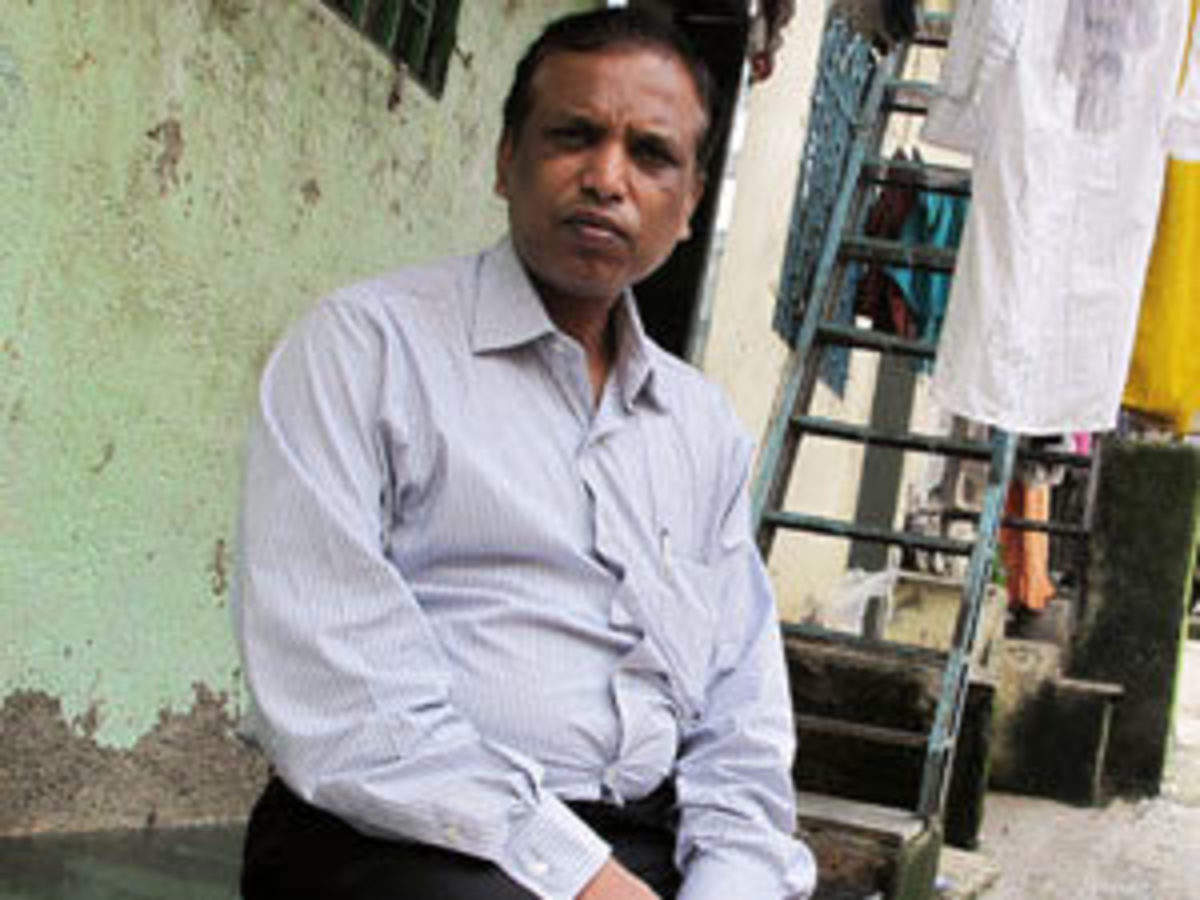
Sharath Babu

Sharath Babu (full name: E. Sarath Babu or Sarathbabu Elumalai) is the founder and CEO of FoodKing (also known as Food King Catering Services Pvt Ltd or Foodking Catering Services), a catering business in India specializing in institutional and corporate food supply, with a focus on quality, hygiene, and employment generation for underprivileged workers.
Early Life and Background
- Born and raised in a slum in Madipakkam, Chennai, Tamil Nadu, into extreme poverty.
- His single mother sold idlis on the pavements of Chennai to support him and his four siblings. The family often faced hunger, with Sarath Babu skipping meals and wearing worn-out uniforms.
- Despite hardships, he excelled academically through determination and scholarships.
- Education:
- Graduated in Chemical Engineering from BITS Pilani.
- Completed an MBA from the prestigious Indian Institute of Management Ahmedabad (IIM-A).
- After IIM, he worked briefly (e.g., at Polaris Software for 2–3 years to pay off debts) but rejected high-paying corporate jobs to pursue entrepreneurship.
Business: FoodKing
- Founded FoodKing in 2006 in Ahmedabad with minimal seed capital—reports vary from ₹2,000 (~US$24–38) to ₹1 lakh (~US$1,200–2,000 at the time).
- Started by supplying snacks/food to institutions, banks, software firms, universities, and corporates.
- Emphasis: Creating jobs for low-skilled/underprivileged youth (inspired by his mother's struggles and his own experience of hunger), providing quality food, and aiming to combat hunger through employment.
- Growth:
- Expanded to multiple locations (6 branches/units by 2011, serving universities and corporates across cities like Chennai, Ahmedabad, and others).
- Employed around 250–300 people by early 2010s (with ambitions for thousands more).
- Turnover/Revenue:
- As of 2011 (most commonly cited recent figure): Annual turnover of ₹80 million (~US$950,000–1 million at the time), or approximately ₹8 crore in some reports.
- Earlier mentions (around 2010): Around ₹7.5–9 crore or ₹8 crore.
- No updated public financials are available post-2011 in major sources (company is private, and recent profiles/news are limited). The business appears to have stabilized as a regional player rather than explosive national growth.
- Other Ventures: Launched a fast-food chain or related initiatives in later years.
Social Impact and Recognition
- Often celebrated as a Dalit entrepreneur success story (from a marginalized background in Chennai slums), featured in media like BBC, Economic Times, World Bank blogs, YourStory, and Rediff for rags-to-riches inspiration.
- Contested elections (e.g., as an independent in 2009; later associated with politics/social work).
- Vision: Aimed to employ 100,000+ people to indirectly feed thousands, creating a "hunger-free" impact through job creation.
- Awards/Features: Recognized at World Bank events (e.g., 2012 Global Youth Conference), motivational talks (e.g., at BITS Pilani), and interviews emphasizing perseverance.
Current Status (as of 2026)
- Still CEO/Founder of FoodKing; maintains a low public profile in recent years (focus on operations rather than media).
- Active on platforms like LinkedIn/Instagram (@sarathbabu_foodking), sharing motivation, founder stories, and HungerFreeIndia foundation initiatives.
- No major recent expansions or controversies reported; the company remains a niche catering player in institutional food services.
Sharath Babu's journey—from selling idlis in slums to building a multi-crore catering business via elite education and determination—is a powerful example of overcoming poverty through entrepreneurship. His mantra focuses on creating employment to address hunger at scale.

Sudhakar Ram was born on September 8, 1960, in Chennai, Tamil Nadu. His early childhood and schooling took place in Delhi and Kolkata, but his family moved back to Chennai when he was eight. Coming from a family with a background in the printing and publishing business, Sudhakar initially considered joining the family enterprise after completing his education. However, his academic journey took a different path. He graduated with a Bachelor’s degree in Commerce from Loyola College, Chennai, where he earned a gold medal. He then pursued an MBA at the Indian Institute of Management (IIM), Calcutta, where he was a silver medalist. During his time at IIM Calcutta, he developed a keen interest in computers, which would shape his future career. It was also at IIM Calcutta that he met his wife, Girija, who became a significant influence in his personal and professional life.
Career and Contributions to Mastek
Sudhakar Ram was a co-founder of Mastek, a multinational IT services company headquartered in Mumbai, established in 1982. Mastek became a prominent player in enterprise digital and cloud transformation, serving clients across 40 countries, with a focus on insurance, government, and financial services sectors. His career at Mastek included several key roles:
- Early Career: Before joining Mastek, Sudhakar served as the Chief Information Officer (CIO) at Rediffusion Dentsu Young & Rubicam, part of the Young & Rubicam network, from 1982 to 1984. His experience in the IT side of advertising gave him early exposure to technology applications, which he later brought to Mastek.
- Co-Founder and Leadership at Mastek: Sudhakar co-founded Mastek with three IIM Ahmedabad graduates—Ashank Desai, Ketan Mehta, and R. Sundar—in a modest 100-square-foot office in Nariman Point, Mumbai. Initially, the company struggled to achieve stable cash flow, with Sudhakar’s wife, Girija, serving as the primary breadwinner during the early years. Over time, Sudhakar’s strategic vision helped transform Mastek into a publicly listed company with global operations. He played a pivotal role in securing venture capital funding from Citibank in 1989 and leading Mastek’s initial public offering (IPO) in 1992.
- Key Roles: Sudhakar served as Group CEO and Managing Director of Mastek, as well as Chairman and Vice Chairman at various points. From 2013 to March 2015, he was the CEO of Mastek (UK) Ltd., a wholly-owned subsidiary, and served on the boards of various overseas subsidiaries, contributing to their establishment and growth. He provided mentorship and guidance to the Group CEO, translating the board’s vision into operational strategies.
- Strategic Vision: Under Sudhakar’s leadership, Mastek focused on high-end vertical enterprise solutions, particularly in the public sector, government, and insurance verticals. He emphasized strategic partnerships, which accounted for about 50% of Mastek’s revenues, and positioned the company as a leader in offshore outsourcing and transformational programs like the London Congestion Charging project. His foresight in anticipating industry trends helped Mastek navigate challenges like the global economic crisis of 2007–08, during which Mastek’s revenues grew by 5% despite a 16% drop in North American revenues.
- Achievements: In 2007, Sudhakar was awarded CNBC Asia’s “India Business Leader of the Year” for his excellence in leadership. His strategic initiatives included the demerger of Mastek’s insurance business and acquisitions to strengthen its North American market presence. By FY15, Mastek’s 12-month order backlog reached Rs 526.8 crore, with expectations of stronger growth in FY16 due to investments in digital capabilities and large business solution programs.
Other Professional Ventures
Beyond Mastek, Sudhakar was involved in other organizations:
- He served as a director of Ruralshores Business Services Private Limited, a process outsourcing company, and Bhavitha Foundation, a nonprofit providing professional training to students (October 2014–present). He also held directorships at IndigoBlue Consulting Limited, UK (May 2015–September 2016), and Legal Practice Technologies Limited, UK (September 2015–December 2016).
- He was the Founder and CEO of Benow, a venture listed on Crunchbase, though specific details about this role are limited.
Thought Leadership and Publications
Sudhakar was a keen observer of global IT and business trends, extending his influence beyond technical expertise. He was the lead contributor to the blog The New Constructs, which had over 46,000 readers and explored societal and business paradigms. His book, The Connected Age: Being the Best You Can by Reinventing Your World (published by HarperCollins India), was based on this blog. The book presented a futurist vision, advocating for new “constructs” in areas like success, learning, work, consumption, wellness, governance, and globalization to address the challenges of the 21st century. He argued that the Industrial Age’s frameworks were outdated and proposed a sustainable, inclusive future for the “Connected Age.”
His philosophy emphasized personal and organizational transformation, drawing parallels between raising his daughter, Samvitha, and allowing Mastek to evolve its purpose organically. He viewed Mastek as a space for employees to “flower” and maintain lifelong connections, fostering a culture of commitment and creativity.
Philanthropy and Social Impact
Sudhakar was known for his silent philanthropy, supporting numerous NGOs globally. His visit to Udavum Karangal, an orphanage in Chennai, profoundly influenced his personal life, leading to the decision to have a child with his wife, Girija. He and Girija co-founded the Bhavitha Foundation to work on social causes, inspired by their travels across Tamil Nadu and Maharashtra, where they engaged with NGOs and studied Mahatma Gandhi’s legacy.
Personal Life
Sudhakar was married to Girija, his IIM Calcutta batchmate, who had a successful career in sales and marketing at Cadbury’s and Raymond. Girija supported the family financially during Mastek’s early years and later became a member of Mastek’s Founders’ Group after Sudhakar’s passing. The couple had a daughter, Samvitha, born when they were in their mid-30s. Samvitha graduated magna cum laude from Princeton University and works at McKinsey in New York. Sudhakar was deeply involved in raising Samvitha, treating her like an adult from a young age and fostering her love for reading and writing. He often brought her to Mastek’s office, balancing his role as CEO with fatherhood.
Sudhakar’s personal experiences, such as visiting an orphanage and raising his daughter, shaped his worldview and leadership style. His decision to pursue an MBA at IIM Calcutta, initially taken on a whim, and his discovery of computers and meeting Girija there were pivotal moments that altered his life’s trajectory.
Health and Passing
Sudhakar Ram passed away on November 8, 2020, at the age of 60, after battling cancer. He remained positive and active until the end, attending Mastek’s Annual General Meeting (AGM) just two weeks before his death, with no one aware of the severity of his condition. His wife, Girija, noted his resilience and commitment to his work and legacy.
Legacy
Sudhakar Ram’s legacy is multifaceted:
- Mastek: As a co-founder and leader, he transformed Mastek into a global IT player, with a lasting culture of innovation and connection. Mastek’s leadership team continues to honor his vision of “DecompleXifying Digital” for clients worldwide.
- Thought Leadership: His book and blog, The New Constructs, continue to inspire discussions on societal transformation. Peter Senge described him as a “reflective practitioner” who balanced practical business realities with deep societal concerns.
- Social Impact: Through the Bhavitha Foundation and his philanthropy, Sudhakar contributed to education and social causes, leaving a lasting impact on communities.
- Family: His daughter, Samvitha, and wife, Girija, carry forward his values. Girija’s involvement in Mastek’s Founders’ Group ensures his legacy within the company.
Sudhakar Ram is remembered as a visionary leader, a compassionate philanthropist, and a dedicated family man whose contributions to the IT industry and society continue to resonate. His ability to blend strategic business acumen with a humane, forward-thinking philosophy made him a transformative figure in India’s IT landscape.
Sunil Zode

Sunil Zode (full name: Sunil Rajaram Zode) is a prominent Indian entrepreneur, businessman, and social activist from Mumbai, Maharashtra. He is best known as the Founder, Chairman, and Managing Director of the Conaitre Group (also spelled Conaitre Group or Connaitre Group in some references), a diversified Indian enterprise headquartered in Mumbai.
Early Life and Background
- He belongs to the Dalit (Scheduled Caste/SC) community and grew up facing significant socio-economic challenges and caste-based discrimination.
- A notable childhood incident (highlighted in a 2017 Mint/LiveMint article) involved humiliation when he was scolded or punished for plucking a mango from a tree—fueling his ambition to become a "big man" and own land/wealth despite societal restrictions on Dalits owning property traditionally.
- He pursued education and business opportunities to overcome these barriers, rising through determination and entrepreneurship.
Business: Conaitre Group
- Founded: 1983 by Sunil R. Zode (initially as a small venture, growing into a conglomerate).
- Headquarters: Mumbai, Maharashtra, India.
- Overview: A multi-sector enterprise comprising 8 companies (as per company profiles and media from 2017 onward).
- Key Sectors and Companies:
- LPG Distribution: Flagship — AGS-LPG Distributors (associated with HPCL — Hindustan Petroleum Corporation Limited), one of Mumbai's leading LPG distributors and service providers for over three decades.
- Integrated Pest Management (pest control services).
- Car Rentals & Fleet Services.
- Facilities Management.
- Logistics & Warehousing (including transportation services via Conaitre Solutions Private Limited and Vihaan Logistics).
- Fertilizers.
- Maritime Services (e.g., Conaitre Maritime Private Limited and Conaitre Maritime Logistics).
- Manufacturing: Recently entered this field (details limited in public records).
- Scale: The group focuses on industrial, commercial, and consumer services, with a strong presence in Mumbai and surrounding areas. It is positioned as a reliable provider in energy, logistics, and support services.
- Leadership: Sunil Zode has served as Chairman and Managing Director since at least 2006 (per professional profiles). Family involvement includes relatives like Kshitijkumar Sunil Zode and Rutvij Sunil Zode in directorial roles across group companies.
Social and Leadership Roles
- Indian Chamber of Commerce for Affirmative Action (ICCAA): Chairman of this leading industrial chamber promoting affirmative action for marginalized entrepreneurs (often linked to Dalit and SC/ST business upliftment).
- National Entrepreneurs Council (UDAAN): Associated as a key figure or leader (e.g., National Entrepreneurs Council UDAN).
- Government and Advisory Roles:
- Served with the Ministry of MSME (Micro, Small and Medium Enterprises), Government of India (2016–2021).
- Member of the High Powered Monitoring Committee, NSSH (likely related to national schemes for SC/ST or entrepreneurship).
- Other Affiliations: Involved with Lions Club Mumbai Island (e.g., President or active member), and speaks at events like Management Development Programs (e.g., at SIMSREE in 2024) and community celebrations (e.g., Naga Students' Union Mumbai in 2021).
- He advocates for Dalit entrepreneurship, affirmative action in business, and social responsibility—often linked to DICCI (Dalit Indian Chamber of Commerce and Industry) initiatives in older reports (e.g., heading "Dalit Social Responsibility" and running schools for Dalit children around 2012).
Legacy and Recognition
- Featured in media as a successful Dalit businessman symbolizing empowerment and breaking caste barriers (e.g., owning a 6-acre farmhouse with a mango orchard in posh Alibaug, Raigad district—contrasting historical restrictions on Dalits owning land).
- His story emphasizes perseverance: From childhood humiliation to heading a multi-company group and influencing policy/advocacy for marginalized entrepreneurs.
- Active on social media (e.g., Facebook, Instagram @sunilzode, X @SunilZode) sharing updates on business, advocacy, and leadership.
In summary, Sunil Zode is a trailblazing Dalit entrepreneur whose Conaitre Group has grown from a 1983 startup into a diversified Mumbai-based conglomerate in energy, logistics, and services. Beyond business, he plays a key role in promoting affirmative action and entrepreneurship for underprivileged communities in India. For the latest on group activities or his current roles, check LinkedIn/company pages or recent news. If you have more specifics or need visuals (e.g., of the farmhouse or group logo), let me know!

Thomas Bata most commonly refers to Thomas J. Bata (full name: Tomáš Jan Baťa, anglicized as Thomas J. Bata; September 17, 1914 – September 1, 2008), a Czech-Canadian businessman, philanthropist, and long-time leader of the Bata Shoe Company (also known as Bata Shoes). He is often called Thomas Bata Jr. or "Shoemaker to the World" for expanding his father's legacy into a global footwear empire. (Note: The name is frequently confused with his father, Tomáš Baťa (1876–1932), the original founder; sources use "Thomas Bata" interchangeably but primarily point to the son in English contexts.)
Early Life
- Born in Prague, Austria-Hungary (now Czech Republic), as Tomáš Jan Baťa.
- Son of legendary Czech entrepreneur Tomáš Baťa (founder of Bata Shoes in 1894 in Zlín) and Marie Menčíková.
- Grew up in the family business amid revolutionary industrial practices—his father pioneered assembly-line production, affordable mass-market shoes, employee welfare (e.g., garden cities for workers), and vertical integration.
- Apprenticed in shoemaking as a boy, stitching his first pair on a family machine in 1932 (the year his father died in a plane crash).
- Educated in business and management, influenced by his father's innovative methods (e.g., time-motion studies, profit-sharing, and treating workers as partners).
Career and Leadership of Bata Shoe Company
- After his father's death in 1932, the company passed to relatives (including stepbrother Jan Antonín Baťa), but Thomas Jr. was deeply involved.
- Anticipating World War II and the Nazi threat, he emigrated in 1939 (just before the German occupation of Czechoslovakia) to Canada with over 100 families from the company.
- Founded Bata Shoe Company of Canada and established the factory town of Batawa, Ontario (named after the family), which became a model community with housing, schools, and facilities for employees.
- Took over global leadership post-WWII, rebuilding the empire after communist nationalization in Czechoslovakia (1948) seized the original Zlín operations.
- Served as CEO/Chairman from the 1940s through the 1980s, expanding Bata into one of the world's largest footwear companies:
- Operations in 70+ countries.
- Factories, retail chains, and distribution networks worldwide.
- Annual production/sales of hundreds of millions of pairs.
- Diversified beyond shoes into related industries while maintaining the core affordable, quality footwear focus.
- Handed over to his son Thomas George Bata in 1984.
Philanthropy and Honors
- Known for social responsibility: Emphasized worker welfare, education, and community development (echoing his father's "garden city" model in Zlín and Batawa).
- Companion of the Order of Canada (CC) — one of Canada's highest civilian honors — for contributions to industry, philanthropy, and international business.
- Supported education, arts, and Czech-Canadian relations.
- After the 1989 Velvet Revolution, he returned triumphantly to Zlín (then renamed Gottwaldov under communists, restored to Zlín), reconnecting with his roots.
Legacy
- Transformed Bata from a Czech regional brand into a truly global one, surviving wars, communism, and economic shifts.
- The Bata name remains iconic in footwear (Bata stores and brands still exist worldwide, though the family influence has lessened).
- Remembered as a visionary who combined capitalism with social good—innovative management, employee empowerment, and ethical business practices.
- Died in Toronto, Canada, at age 93 (just shy of his 94th birthday).

Vijay Shanker (also referred to as Vijay Kumar or Vijay Shanker Kumar in some professional contexts) is an Indian-origin Dalit (Scheduled Caste/SC) entrepreneur and IT professional based in the United States. He is the Founder, Director, Owner, and CEO of h3 Technologies, LLC (often stylized as H3 Technologies or h3 Technologies), a company specializing in IT consulting, staffing, product development, and related services.
Early Life and Background
- Originally from Uttar Pradesh, northern India (some sources note connections to Greater Noida or broader UP roots).
- He belongs to the Dalit community, and his story is highlighted in media as an example of overcoming caste-based challenges through education, migration, and entrepreneurship.
- Moved to the United States in 2000 as a professional (likely on a work visa, common for IT talent at the time).
- Has nearly 20+ years of experience in IT, starting as a programmer and progressing through various roles before founding his own company.
Business: h3 Technologies, LLC
- Founded: 2006 (six years after his arrival in the US).
- Headquarters: Florence, Kentucky, USA (71 Cavalier Blvd, Ste 131, Florence, KY 41042).
- Operations: Global network with presence in the US and India (e.g., Greater Noida operations mentioned in some profiles).
- Core Services:
- IT consulting and solutions.
- Staffing (contract, contract-to-hire, direct hire placements for IT professionals).
- Product development and software services.
- Technical staffing, management consulting, human resources support, and software-related work.
- Described as a female and minority-owned firm (likely emphasizing diversity credentials).
- Clients: Includes major companies such as Computer Associates, Accenture, Ricoh Corporations, Cincinnati Bell Technology Solutions, and others.
- Scale: Operates as a comprehensive staffing and software development firm with a global consultant network. Employee reviews on platforms like Glassdoor show positive feedback on diversity/inclusion (high ratings), with Vijay Shanker receiving strong CEO approval (around 80–100% in various snapshots).
- BBB Profile: Accredited or listed with the Better Business Bureau as a technical staffing and software provider.
- Social Media/Online Presence: Active Facebook page (@h3technologyllc) with over 11,000 likes, promoting consulting and staffing services. He has a personal YouTube channel with older videos explaining company services (e.g., a 2010s-era video on h3 Technologies offerings).
Achievements and Recognition
- Featured in articles on Dalit entrepreneurship abroad, such as a 2021 Entrepreneur.com piece titled "India's 'Untouchable' Dalits Find Liberation in American Entrepreneurship."
- The article portrays him as finding greater freedom from caste discrimination in the US business environment, where merit drives success.
- He is quoted emphasizing that caste is not a factor in American entrepreneurship.
- His journey aligns with broader narratives of Dalit professionals migrating to the US for opportunities in IT and then building businesses, similar to other figures in the community.
- Involved in leadership roles, including as CEO of H3-Technologies LLC with ties to Indian operations (e.g., associated with EIIMS or similar in core team listings).
Legacy
Vijay Shanker represents a successful case of Dalit empowerment through global IT opportunities—from starting as a programmer in India, migrating to the US in 2000, founding h3 Technologies in 2006, and growing it into a respected player in IT consulting and staffing. His company emphasizes diversity, has served Fortune-level clients, and continues to operate with a positive outlook in employee feedback.
The business remains active based on recent listings (e.g., BBB updates, LinkedIn, Facebook as of 2025–2026). For the most current details (e.g., job openings, exact revenue, or expansions), check the official LinkedIn (Vijay Kumar at h3 Technologies), Facebook page, or company website if available (often linked via social profiles). If this refers to a different Vijay Shanker or you have additional context, let me know!
Yashodhan Ramteke

Yashodhan Ramteke is an Indian sustainability expert, carbon markets specialist, and business leader in the circular economy and decarbonization space. He is recognized for his work in climate finance, carbon credits, and promoting sustainable industrial practices, particularly in India and globally.
Professional Background
- Current/Recent Roles:
- CEO of EcoGuard Global (a company focused on sustainability, carbon markets, and circular economy solutions; he has been highlighted in this role in recent media, including articles on blockchain for carbon market integrity and Davos discussions).
- Previously: Head of Carbon Business Unit and Assistant Vice President at Meta Materials Circular Markets (MMCM) (an envirotech enterprise creating digital ecosystems for recycling, carbon reductions, and waste-to-value initiatives).
- He has held leadership positions in carbon programs, including heading carbon initiatives at MMCM, where he specialized in areas like end-of-life vehicle (ELV) recycling for carbon credits, Article 6 mechanisms (international carbon trading under the Paris Agreement), compliance/voluntary markets, and digital platforms for high-integrity carbon credits.
- Expertise: Over two decades in circularity, decarbonization, climate finance, and sustainable practices. He drives initiatives to reduce carbon emissions, convert waste to value through recycling/reuse, and build interoperable digital infrastructure for carbon markets.
- Education: Associated with PVG's College of Engineering and Technology (COET), Pune (likely engineering background, though specifics not detailed in profiles).
- Languages: English, Hindi, Marathi, Gujarati.
Key Contributions and Activities
- Thought Leadership:
- Authored/published articles on the business case for carbon markets in industrial decarbonization (e.g., ET Edge Insights, January 2026).
- Spoke at events like COP29 (panel on digital innovations in carbon markets), webinars (e.g., Material Recycling Association of India on carbon credits from ELV recycling), and Davos (engaged with Kerala government on sustainability integration).
- Featured in media (e.g., WION at Davos 2026 interviews with blockchain experts on carbon market integrity; discussions on blockchain/digital MRV for transparency in carbon trading).
- Organizations/Affiliations:
- Long association with DICCI (Dalit Indian Chamber of Commerce and Industry): Served in public relations (2011–2014) and ongoing involvement, reflecting his role in economic empowerment for marginalized communities.
- Director in multiple companies (DIN: 02778037), with 14+ years in corporate governance; involved in entities like Butibori Basic Apparel Cluster and others (per MCA/Company Check records).
- Earlier Career Note (from 2011 media): An earlier profile in Economic Times described a Yashodhan Ramteke (electronics engineer from Nagpur) who set up a private institute to train engineers in maintaining thermal power plants. This may refer to the same individual in his early career phase before shifting to sustainability/carbon focus.
Personal/Community Context
- He is from a Dalit (Scheduled Caste/SC) background, as referenced in older media (e.g., 2011 Economic Times article on Dalit entrepreneurs highlighting his training institute venture). His DICCI involvement further aligns with advocacy for Dalit economic empowerment.
- No indication of extreme poverty/low-class origins in recent profiles—his career shows progression from engineering/training to high-level sustainability leadership and international engagements.
In summary, Yashodhan Ramteke is a prominent figure in India's sustainability and carbon markets ecosystem, leading initiatives at EcoGuard Global and previously at MMCM, with a focus on circular economy, decarbonization, and digital carbon infrastructure. His work bridges business, policy, and climate action, often featured at global forums like Davos and COP.
Comments
Post a Comment
Thanks for feedback