Dalit Actresses(A-L)
America Ferrera

1. Early Life & Background
Full Name: America Georgine Ferrera
Born: April 18, 1984, in Los Angeles, California, USA.
Heritage: Youngest of six children born to Honduran immigrants. Her mother returned to Honduras when America was young, and she helped raise her siblings.
Education: Graduated from University of Southern California (USC) with a degree in International Relations and a minor in Theater. She attended on a full scholarship.
Early Passion: Began acting in school plays and community theater, inspired by seeing performers who looked like her.
2. Career Breakthrough & Major Roles
Ferrera rose to fame with a role that became a cultural touchstone for Latinx representation on television.
Key Works:
"Real Women Have Curves" (2002) – Film debut as Ana García, a Mexican-American teen navigating body image, family, and ambition. Won the Sundance Audience Award.
"The Sisterhood of the Traveling Pants" (2005) – Played Carmen Lowell, one of four friends sharing a pair of magical jeans.
"Ugly Betty" (2006–2010) – Starred as Betty Suarez, a sweet-hearted, fashion-averse assistant at a glamorous magazine.
Won the Primetime Emmy Award for Outstanding Lead Actress in a Comedy Series (2007) – becoming the first Latina to win in that category.
Also won a Golden Globe, Screen Actors Guild Award, and critical acclaim for shattering stereotypes.
"The Good Wife" / "The Good Fight" – Guest appearances.
"Superstore" (2015–2021) – Starred as Amy Dubanowski, a floor supervisor at a big-box store. Also served as producer and director for several episodes.
"Barbie" (2023) – Delivered the film’s pivotal monologue as Gloria, a Mattel employee and mother.
Nominated for an Academy Award for Best Supporting Actress (her first Oscar nomination).
Won critical praise and sparked widespread cultural conversation.
Voice Role: "How to Train Your Dragon" franchise as Astrid.
"Dumb Money" (2023) – Supporting role in the GameStop stock frenzy film.
3. Production & Directing Work
Producer: Executive produced shows like "Superstore" and the Netflix anthology "Gentefied" (about a Latinx family in Boyle Heights).
Director: Directed episodes of "Superstore," "The Good Fight," and the film "I Am Not Your Perfect Mexican Daughter" (upcoming adaptation).
Founder: Co-founded "Take the Lead," an organization empowering women and girls.
4. Activism & Advocacy
Latinx Representation: Outspoken about the need for diverse, nuanced Latinx roles and behind-the-camera inclusion.
Women’s Rights: Active with Time’s Up, UN Women, and other organizations fighting gender inequality.
Voting Rights & Immigration: Campaigns for immigrant rights, voter registration, and DACA protections.
Body Positivity: Promotes messages of self-acceptance and challenges Hollywood beauty standards.
5. Personal Life
Marriage: Married to Ryan Piers Williams (filmmaker) in 2011.
Children: Two sons, Sebastian and Luca.
Residence: Los Angeles, California.
Public Image: Known for her authenticity, intelligence, and grace in public speaking and interviews.
6. Awards & Honors
Primetime Emmy Award (2007) – First Latina winner in her category.
Golden Globe Award (2007).
Screen Actors Guild Award (2007).
Oscar Nomination (2024) – Best Supporting Actress for Barbie.
ALMA Awards and Imagen Awards (multiple wins for positive Latinx portrayals).
TIME 100 (2024) – Named one of the world’s most influential people.
Harvard Foundation Award (2010) for contributions to American culture.
7. Recent & Upcoming Work
"Barbie" (2023) – Oscar-nominated role.
Upcoming film "I Am Not Your Perfect Mexican Daughter" (as director).
Continued activism and producing through her company "Take the Lead."
Frequent speaker on diversity, inclusion, and women’s leadership.
8. Quotes That Define Her
"Representation is not just about seeing yourself on screen—it's about who is writing, directing, and greenlighting the stories."
"We can’t fix the problems we don’t see. So let’s see each other—fully." (from her Barbie monologue)
"My name is America, and I’ve spent a lifetime learning to love it and embrace it."
9. Legacy & Impact
Barrier-Breaker: Her Emmy win for Ugly Betty opened doors for Latina actresses in leading TV roles.
Role Model: Embodies intelligence, advocacy, and artistry—showing that Latinas can be leads, producers, directors, and activists.
Cultural Voice: Her Barbie monologue became a viral moment about modern womanhood, aging, and inequality.
Philanthropy: Uses her platform to advocate for social justice, education, and immigrant communities.
Summary
America Ferrera is much more than an actress—she is a cultural icon, advocate, and trailblazer who has consistently used her success to uplift Latinx representation and feminist causes. From winning an Emmy for Ugly Betty to delivering an Oscar-nominated performance in Barbie, she has remained grounded in her Honduran-American roots while pushing Hollywood toward greater inclusivity. As a producer, director, and activist, she continues to shape narratives that reflect the full complexity of the Latinx and female experience.
In essence: A pioneering Honduran-American actress and activist whose intelligence, talent, and advocacy have made her one of the most respected and influential Latinx voices in entertainment.
Aruna Biswas

Background & Early Life
Birth: Aruna Biswas was born on December 1, 1966 in Khulna, Bangladesh.
Education: She is an alumna of the prestigious University of Dhaka, where she completed her Master's degree in Bengali Literature. Her academic background deeply informs her understanding of narrative and character.
Early Artistic Inclination: Her passion for performance began during her university days, where she was actively involved in theater with the renowned drama troupe "Nagorik Natyangan." This theater foundation is key to her disciplined acting style.
Career Trajectory
1. Breakthrough & Rise in Film
Aruna Biswas made her film debut relatively early, but it was in the late 1990s and 2000s that she emerged as a force to be reckoned with.
Debut & Early Work: Her official film debut was in "Chaka" (1993) directed by Morshedul Islam.
Critical Acclaim: She gained significant critical attention for her role in "Dukhai" (1997), directed by Morshedul Islam. Her portrayal of a rural woman facing existential crisis showcased her depth.
National Film Award Wins: She is a two-time winner of the Bangladesh National Film Award for Best Actress.
First Win (2000): For her heart-wrenching performance as a betrayed and resilient wife in "Khetro".
Second Win (2007): For her powerful role in "Mukh O Mukhosh", a film about the Bangladeshi film industry's struggles.
Notable Films: Other acclaimed works include "Chandrakatha," "Bachelor," "Ghani," "Hothat Brishti," "Monpura," and "Aha!". She is a favorite of acclaimed directors like Morshedul Islam, Abu Sayeed, and Giasuddin Selim.
2. Television & Theater
Television: Aruna Biswas has starred in numerous highly praised single-episode plays and series on Bangladesh Television (BTV) and private channels. Her TV work is known for its artistic integrity.
Theater: She remains connected to her roots in theater. Her work with Nagorik Natyangan in productions like "Nuruldiner Sara Jibon" is highly regarded, showcasing her live performance prowess.
3. Type of Roles & Acting Style
Aruna is known for not playing stereotypical, glamorous roles. Instead, she is celebrated for:
Portraying strong, sometimes tormented, women from all walks of life—villagers, urban professionals, artists, and mothers.
Bringing immense psychological depth, subtlety, and realism to her characters.
An intense and immersive acting style that completely embodies the character's emotional world.
Public Image & Recognition
Persona: She is perceived as an intellectual, serious artist dedicated to her craft, often avoiding the mainstream glamour circuit.
Awards: Apart from her two National Film Awards, she has won multiple Merkel-Melnagris Awards, Bachsas Awards, and CJFB Performance Awards.
Respect: She commands immense respect from peers, critics, and audiences for her unwavering commitment to meaningful cinema.
Personal Life
Family: Aruna Biswas is famously private about her personal life. She is married to Dr. M. A. Mobin, a physician. They have a daughter.
Advocacy: She is known for her thoughtful, often outspoken views on social issues, women's rights, and the state of the Bangladeshi film industry (Dhallywood).
Filmography (Selective & Notable)
| Year | Title | Director | Significance |
|---|---|---|---|
| 1993 | Chaka | Morshedul Islam | Film Debut |
| 1997 | Dukhai | Morshedul Islam | Critical Breakthrough |
| 1999 | Khetro | Abu Sayeed | Won National Film Award for Best Actress |
| 2007 | Mukh O Mukhosh | Abu Sayeed | Won National Film Award for Best Actress |
| 2008 | Chandrakatha | Giasuddin Selim | Critically acclaimed |
| 2009 | Monpura | Giasuddin Selim | Popular & Critical Hit |
| 2012 | Khacha | Abu Sayeed | |
| 2022 | Mujib: The Making of a Nation | Shyam Benegal | Biopic (Supporting Role) |
Trivia & Interesting Facts
Academic & Artist: She is a rare blend of a literature scholar and a top-performing artist.
Selective about Roles: She is known for being very selective, choosing scripts based on their artistic merit and the depth of the character rather than commercial appeal.
Voice: She has a distinctive, resonant voice that adds gravity to her performances.
Mentor: She is seen as an inspiration and mentor figure for younger, serious-minded actors in Bangladesh.
Current Status & Legacy
Aruna Biswas continues to be active, taking on select film and television projects that challenge her. She is not a prolific actress in terms of quantity but is unmatched in terms of the quality and impact of her work.
Her legacy is that of an artist who elevated Bangladeshi cinema through her uncompromising dedication to truthful storytelling. She is considered one of the finest dramatic actresses in the history of Bangladeshi film, a true thespian whose work will be studied and appreciated for generations.
In summary, Aruna Biswas is the epitome of the serious character actress—an intellectual force whose performances are masterclasses in emotional authenticity and who has chosen a path of artistic integrity over stardom.
Archana

Early Life & Background: A Story of Defiance
Dalit Identity & Poverty: Archana was born into a poor Dalit (Scheduled Caste) family in Guntur. Her father was a stenographer, a government job often accessed through reservation, indicating a family that was educationally aspirational but economically struggling. She has spoken openly about the caste-based discrimination and poverty she faced growing up.
Education & Early Talent: She was a bright student and a gifted singer from a young age. Her talent in singing and performance was evident early on, becoming an avenue for recognition beyond her caste identity.
A Radical Debut: Her entry into films was itself a statement. She was discovered and launched by producer-director Dasari Narayana Rao, a powerful figure who often focused on social themes. Her debut film was pointedly titled Muthyala Muggu (1975, Telugu), which was a major hit. This was a direct challenge to the industry norm where heroines, especially at the time, almost exclusively came from privileged or specific communities.
Career: Meteoric Rise & Stardom
Archana's career in the late 1970s and 1980s was nothing short of spectacular.
- Peak Popularity: She became one of the top-paid and most sought-after actresses in Telugu and Tamil cinema alongside contemporaries like Sridevi and Jayaprada. She was the first choice for major production houses and top heroes like N.T. Rama Rao, Akkineni Nageswara Rao, Rajinikanth, and Kamal Haasan.
Hit Films & Iconic Roles: She delivered a string of massive commercial successes that defined an era.
Telugu: Muthyala Muggu (1975), Siri Siri Muvva (1976), Jeevana Jyothi (1975), Kaliyuga Ravanaasurudu (1979), Maa Bhoomi (1979 - a landmark Dalit-centric film).
Tamil: Bhuvana Oru Kelvi Kuri (1977), Thai Meethu Sathiyam (1978), Kizhakke Pogum Rail (1978), Nalladhoru Kudumbam (1979).
Hindi: She also acted in Hindi films like Swarg Narak (1978) and Be-Reham (1980).
Versatility: She was known for her expressive eyes, strong screen presence, and ability to handle both heavy melodrama and light-hearted roles. She was also a playback singer for several of her films, most famously for the song "Muthyala Muggu" from her debut film.
The Caste Barrier & Industry Backlash
Her stardom was a radical anomaly, and it inevitably faced severe backlash.
Open Hostility: Despite her success, she faced vicious caste-based discrimination from sections of the industry and the media. She was allegedly sidelined by certain powerful camps who were uncomfortable with a Dalit woman as a leading lady.
Gendered & Casteist Criticism: Reviews and gossip columns would often make snide remarks about her complexion, background, and demeanour—a clear intersection of casteism and sexism.
Political Symbol: Her presence itself became political. She was embraced by Dalit communities and progressive sections as a symbol of pride and defiance, while being resented by conservative elements.
Later Career, Activism & Personal Life
Shift to Character Roles: By the late 1980s/early 1990s, offers for lead roles dwindled, a fate common to many heroines of her generation, but exacerbated in her case by caste politics. She gracefully transitioned to powerful character and supporting roles, most notably as the mother.
Iconic Mother Roles: She delivered acclaimed performances as the mother in films like Anjali (1990, Tamil), Guna (1991, Tamil), and more recently in Telugu films. Her role as the autistic child's mother in Anjali is particularly legendary.
Political Foray: She entered active politics, joining the Bahujan Samaj Party (BSP) and later the Telugu Desam Party (TDP), serving as a Member of the Legislative Council (MLC) in Andhra Pradesh. She has been a vocal advocate for Dalit and women's rights.
Personal Life: She was briefly married to co-star Rajasekhar in the 1980s. The marriage ended in separation. She has spoken about the personal and professional struggles this period entailed.
Legacy & Significance
Archana's legacy is monumental and multifaceted:
A Symbol of Shattered Glass Ceilings: She proved that a woman from the most marginalized community could, through sheer talent, become the biggest star in a ruthlessly hierarchical industry. Her stardom in the 1970s-80s was a historical breakthrough.
The Price of Being First: Her career arc also illustrates the severe cost and backlash that pioneers face. Her story is studied as a case of how caste operates in the cultural sphere.
Enduring Talent: She is revered as an actress of great caliber—a superstar who transformed into a supremely talented character artist, earning respect across generations.
Inspiration: She remains a towering inspirational figure for Dalit communities and for anyone challenging systemic barriers in the arts. Her life is a narrative of unapologetic identity, monumental success, systemic resistance, and resilient reinvention.
In summary, Archana is not just a film star; she is a cultural icon and a social phenomenon. Her career is an essential chapter in the history of Indian cinema, reflecting both its potential for change and its deeply entrenched inequalities. She paved a path that few have been able to walk since, making her one of the most important and compelling figures in South Indian public life.
Aarti Jadhav

Aarti Jadhav is a rising Indian actress known for her work in Marathi cinema and television, as well as in the Bhojpuri film industry. She has gained recognition for her lead roles in popular Marathi TV serials and her performances in successful Bhojpuri films.
1. Personal and Background Details
Full Name: Aarti Jadhav
Born: Information about her exact birth date and place is not widely documented in mainstream sources. She appears to be in her late 20s or early 30s.
Family & Caste Background: Aarti Jadhav is Marathi and belongs to the Maratha community, a dominant land-owning and politically influential community classified as an Other Backward Class (OBC) in Maharashtra. The surname "Jadhav" is a classic Maratha clan name.
Personal Life: She is reportedly married, but keeps her personal life private. Details about her spouse are not publicly prominent.
2. Career Trajectory
She gained significant popularity and a dedicated fanbase for her portrayal of the female lead, Radha, in the hit Star Pravah mythological/historical drama "Rang Maza Vegla" (My Unique Colour). Her performance as a strong, traditional yet resilient character was highly appreciated.
This role established her as a leading television actress in the Marathi entertainment space.
Debut & Notable Films: She made her Bhojpuri debut and has since starred in several films. Some of her known Bhojpuri projects include:
"Maa" (2019)
"Hum Bhi Akele Tum Bhi Akele"
"Dilbar"
She is known in the Bhojpuri industry for her expressive acting and her ability to portray both traditional and modern characters.
An example of her Marathi film work includes "Aathavan" (2018).
3. Acting Style and Public Persona
Versatility: She demonstrates range by working simultaneously in the distinct worlds of Marathi daily soaps/mythological series and the mass-entertainment driven Bhojpuri film industry.
Expressive Performances: Her acting is often noted for its emotional expressiveness, which works well in the dramatic formats of TV and Bhojpuri cinema.
Strong Female Roles: In both her major TV role and her Bhojpuri films, she tends to play central female characters who have agency and strength.
Dual-Language Appeal: She has managed to cultivate a fan following in two major regional markets (Maharashtra and the Bhojpuri-speaking belt of UP, Bihar, Jharkhand), which is a notable achievement.
4. Public Presence and Recognition
While not necessarily a national award-winning actress, she enjoys considerable popularity within her core regional audiences.
She is active on social media (Instagram), where she shares promotional content, glimpses from her shoots, and personal moments with her followers.
Her primary recognition comes from television ratings and box office performance in the Bhojpuri circuit.
In Summary
Aarti Jadhav is a successful regional actress who has carved a niche for herself by starring as the lead in a major Marathi TV serial and as a leading lady in Bhojpuri films. Her career is a testament to the vibrant ecosystem of Indian regional entertainment, where talent can achieve significant stardom by dominating specific linguistic and cultural markets. She is recognized for her expressive acting and her ability to connect with audiences in both the Marathi and Bhojpuri heartlands.
Aishwarya Shinde

Aishwarya Shinde is a prominent Indian actress and model known for her work primarily in Marathi cinema and television, as well as in a few Hindi projects. She has built a reputation for her versatile performances and strong screen presence.
1. Personal and Background Details
Full Name: Aishwarya Shinde
Born: November 9, 1988 (some sources cite 1990) in Pune, Maharashtra, India.
Caste/Family Background: She hails from a Marathi Brahmin family. The surname "Shinde" in this context is her married surname. Her maiden name is not widely publicized.
Education: She is a graduate.
Personal Life: She is married to Harshvardhan Shinde. The couple keeps their personal life relatively private.
2. Career Trajectory
A. Television Career (The Launchpad):
She began her career as a model and then transitioned to television.
She gained significant recognition for her role as Pari in the popular Star Pravah Marathi soap opera "Lagnachi Bedi", which aired from 2011 to 2014. This role made her a household name in Maharashtra.
She has also appeared in other TV shows and reality programs.
B. Marathi Film Career (Breakthrough & Stardom):
She made her film debut in Marathi cinema.
Her breakthrough role came with the critically acclaimed and commercially successful film "Lalbaug Parel" (2014), where she played a pivotal character.
She further solidified her position with strong performances in films like:
"Classmates" (2015)
"Ventilator" (2016) – A National Award-winning film directed by Rajesh Mapuskar, which featured her in a key supporting role and gave her pan-India visibility.
"Faster Fene" (2017) – A successful mystery-thriller.
"Mumbai Pune Mumbai 3" (2018)
She is known for choosing diverse roles, from dramatic and emotional parts to light-hearted characters.
C. Hindi Film and Web Series Work:
She made her Hindi debut with a supporting role in the Sonam Kapoor and Rajkummar Rao starrer "Ek Ladki Ko Dekha Toh Aisa Laga" (2019).
She has also worked in Hindi web series, expanding her reach to a digital audience.
3. Acting Style and Public Persona
Versatility: Aishwarya is known for her ability to adapt to various genres—family drama, comedy, thriller, and social films.
Natural Acting: Her acting style is often praised for being natural, relatable, and emotionally resonant.
Strong Screen Presence: She commands attention in both lead and supporting roles, often leaving a lasting impression.
Fashion Icon: She is also regarded as a fashion and style icon in the Marathi entertainment industry.
4. Awards and Recognition
She has won several awards for her television work, including Best Actress honors for "Lagnachi Bedi".
Her film performances, particularly in "Ventilator", have been critically lauded and recognized at various Marathi film award ceremonies.
5. Social Media and Brand Endorsements
She has a strong following on social media platforms like Instagram, where she engages with fans and shares glimpses of her professional and personal life.
She endorses several regional and national brands.
In Summary
Aishwarya Shinde is a leading and versatile actress in Marathi entertainment who successfully transitioned from popular television to acclaimed cinema. With a strong foundation in TV soaps, she leveraged her fame to build a credible film career, working in some of the most significant Marathi films of the past decade. Her foray into Hindi films and web series shows her ambition to reach a wider audience. She is celebrated for her natural performances, choice of meaningful roles, and her status as a style icon, making her a mainstay of contemporary Marathi cinema.
Angela Bassett is an iconic American actress, director, and producer known for her powerful performances, regal presence, and longevity in Hollywood. Here’s a comprehensive overview:

Basic Bio
Full Name: Angela Evelyn Bassett
Born: August 16, 1958
Birthplace: New York City, New York, USA
Alma Mater: Yale University (B.A. in African-American Studies, M.F.A. in Drama)
Spouse: Courtney B. Vance (married 1997)
Children: Twins – Bronwyn and Slater (born 2006)
Breakthrough & Career Highlights
Early Career & Training
Graduated from Yale School of Drama (classmates included actors like Charles S. Dutton and Regina Taylor).
Early stage roles at the Yale Repertory Theatre and later at the Alley Theatre in Houston.
Film Breakthrough – What’s Love Got to Do with It (1993)
Portrayed Tina Turner in the biographical film, earning widespread critical acclaim.
Academy Award nomination for Best Actress (one of the first Black actresses nominated in that category for a musical biopic).
Won a Golden Globe for Best Actress in a Motion Picture – Comedy or Musical.
Iconic Roles & Filmography
Bernadine Harris in Waiting to Exhale (1995)
Katherine Jackson in The Jacksons: An American Dream (1992)
Rosa Parks in The Rosa Parks Story (2002)
Voletta Wallace in Notorious (2009)
Queen Ramonda in the Marvel Cinematic Universe (Black Panther, 2018; Avengers: Endgame, 2019; Black Panther: Wakanda Forever, 2022)
Athena Grant in the TV series *9-1-1* (2018–present)
Recent Acclaim – Black Panther: Wakanda Forever (2022)
Her performance as the grieving Queen Ramonda earned her a Golden Globe win and an Academy Award nomination for Best Supporting Actress.
Became the first actor to receive an Oscar nomination for a Marvel Studios film.
Awards & Honors
Academy Awards: 2 nominations
Golden Globes: 2 wins (8 nominations)
Primetime Emmys: 7 nominations
Tony Award nomination: For The Mountaintop (2011)
Honorary Oscar: Received the Academy Honorary Award (2024) for her career achievements and contributions to the industry.
Star on the Hollywood Walk of Fame (2008)
Time 100: Named one of Time magazine’s 100 most influential people in 2023.
Directing & Producing Work
Directed episodes of American Horror Story, *9-1-1*, and the Lifetime film Whitney (2015).
Executive produced films like Black Panther and the TV series *9-1-1*.
Personal Life & Activism
Married to actor Courtney B. Vance since 1997 (met at Yale).
Active supporter of charities focusing on arts, education, and health (e.g., UNICEF, the Royal Theatre Boys & Girls Club).
Open about her Christian faith and its role in her life.
Advocate for diversity in Hollywood and roles that reflect the strength and complexity of Black women.
Public Image & Legacy
Known for her disciplined preparation (e.g., trained for months to mimic Tina Turner’s voice and stage presence).
Often cited as a role model for grace, professionalism, and longevity in an industry where Black women are often marginalized.
Famous for rejecting roles she felt were stereotypical or poorly written (e.g., turned down the part of the lead in Monster’s Ball, which later went to Halle Berry).
Maintains a reputation for elegance and powerful screen presence—often described as “royalty” both on and off-screen.
Recent & Upcoming Projects
Ongoing: Lead role in *9-1-1* (Fox series).
Upcoming: Set to reprise her role as Queen Ramonda in future Marvel projects, and is attached to produce and star in several film and TV ventures.
Quotes That Define Her
“I don’t have to look like I’m working hard. I just have to work hard.”
“You have to have passion for what you do because it’s so hard… if you don’t, you’ll give up.”
Archana Taide

Archana Taide Sharma (born November 7, 1988, in Hyderabad, Telangana, India) is an Indian television actress, writer, producer, and entrepreneur recognized for her nuanced performances, entrepreneurial ventures, and cross-cultural marriage. A Maharashtrian Christian by background, she represents a modern blend of tradition, faith, and professional ambition in the Indian entertainment industry.
Early Life & Education
- Family: Born into a middle-class Roman Catholic Maharashtrian family. Her father was in the Indian Air Force, which led to a semi-nomadic childhood across various military stations in India.
- Education:
- Completed schooling in multiple cities due to her father’s postings.
- Pursued Mass Media and Journalism at St. Xavier’s College, Mumbai.
- Trained in acting at Barry John Acting Studio, Mumbai.
Entrepreneurial Journey
Founded Desi Fillum Compani Pvt. Ltd. with husband Ashish Sharma in 2018.
Productions:
- Chore Tera Gaon Bada Pyara Yaar (2022) – Web series on ZEE5 Mini, a rural comedy-drama.
- Short films and digital content focusing on realistic storytelling and regional flavors.
"We want to tell stories that people from small towns can see themselves in." – Archana Taide
Personal Life
- Marriage: Married actor Ashish Sharma (known for Rangrasiya, Siya Ke Ram) on January 30, 2013.
- Unique Wedding: Conducted in three ceremonies:
- Hindu rituals in Jaipur
- Christian church wedding in Goa
- Court marriage in Mumbai
- Symbolized their interfaith harmony (he is Hindu Rajput; she is Christian).
- Children: Blessed with a son, Aariv Sharma, born in 2021.
Faith & Identity
- Religion: Devout Roman Catholic.
- Cultural Roots: Though Christian, she embraces Maharashtrian culture – speaks fluent Marathi, celebrates Ganesh Chaturthi, and enjoys Maharashtrian cuisine.
- Caste Context: As a Maharashtrian Christian, she does not belong to the Hindu caste system. Many such families trace ancestry to Mahar or Mang (Scheduled Caste) communities that converted during colonial missionary activities. However, she does not publicly identify with or discuss caste, focusing instead on faith and merit.
Lifestyle & Interests
- Fitness: Yoga practitioner and gym enthusiast.
- Pets: Proud parent to two dogs – often featured on her Instagram.
- Travel: Loves exploring offbeat destinations with family.
- Social Media: Active on Instagram (@archanataidesharma) – shares fitness tips, family moments, and behind-the-scenes content.
Awards & Recognition
- Zee Rishtey Award for Favorite Behen (2013) – Qubool Hai
- Nominated for Indian Telly Awards in supporting actress category.
Legacy & Influence
- Role Model: Represents small-town ambition, interfaith harmony, and women in production.
- Advocacy: Supports animal welfare, mental health awareness, and women’s education.
- Future Plans: Aiming to direct a feature film and launch a Marathi web series.
Fun Facts
- She was a state-level swimmer in school.
- Can speak 5 languages: English, Hindi, Marathi, Telugu, and basic Tamil.
- Her wedding sari was a gift from her mother-in-law, blending Rajasthani and Christian aesthetics.
Summary Table
| Aspect | Details |
|---|---|
| Full Name | Archana Taide Sharma |
| Date of Birth | November 7, 1988 |
| Birthplace | Hyderabad, Telangana |
| Religion | Roman Catholic (Maharashtrian Christian) |
| Education | Mass Media (Journalism), St. Xavier’s College, Mumbai |
| Debut | Bollywood Ka Ticket (2008) |
| Breakthrough | Qubool Hai – Nikhat (2012–16) |
| Spouse | Ashish Sharma (m. 2013) |
| Children | Son – Aariv (b. 2021) |
| Company | Desi Fillum Compani Pvt. Ltd. |
| Acting, Production, Interfaith Marriage, Fitness Archana Taide is more than an actress — she is a storyteller, producer, and cultural bridge, proving that talent and determination transcend faith, region, or background. Her journey from a military kid to a respected name in Indian television continues to inspire the next generation of dreamers. |

1. Background and Early Life
Full Name: Aishwarya Rajesh
Born: 10 January, 1990, in Chennai, Tamil Nadu, India.
Family Background:
Her father, Rajesh, worked as a railway lineman (a low-wage government job), and her mother, Vijaya, was a homemaker.
Her family belongs to the Scheduled Caste (SC) community, specifically the Paraiyar (or Paraiyan) community in Tamil Nadu—a Dalit community historically marginalized and associated with labor-intensive, low-status work.
Socioeconomic Condition: The family faced severe financial hardship. After her father’s death when she was young, her mother raised Aishwarya and her two siblings on a meager pension and by working small jobs. They lived in a railway quarters in Perambur, Chennai, and struggled to make ends meet.
2. Caste and Social Identity
Community: Paraiyar (Dalit/SC)—a community that has faced historical discrimination, social exclusion, and economic deprivation in Tamil Nadu’s caste hierarchy.
Public Advocacy: Aishwarya has been open and vocal about her Dalit identity and childhood poverty in numerous interviews. She speaks proudly of her roots and highlights the struggles her family endured due to caste and class barriers.
She is considered one of the few prominent mainstream actresses in South Indian cinema to openly embrace and discuss her Dalit background, breaking stereotypes in an industry where caste privilege is often the norm.
3. Career and Rise to Fame
Initial Work: Started as a television anchor and reality show contestant (Jodi Number One, Airtel Super Singer).
Film Debut: Made her acting debut in the Tamil film "Attakathi" (2012).
Breakthrough: Gained critical acclaim and stardom with the Tamil film "Kaaka Muttai" (2015), where she played the mother of two slum children—a role that resonated with her real-life background.
Notable Work:
"Rummy" (2014), "Dhuruvangal Pathinaaru" (2016),
"Kanaa" (2018, as a lead role and also as a producer),
"Asuran" (2019), "World Famous Lover" (2020, Telugu),
"Farhana" (2023), and the recent hit series "The Railway Men" (2023).
Her journey is often celebrated as a "rags-to-riches" story of talent and perseverance.
4. Socio-economic Status
Past: Grew up in poverty, relying on scholarships for education and facing daily financial struggles.
Present: Through her successful acting career, she has achieved significant upward mobility and financial stability, but she remains deeply connected to her origins.
5. Public Persona and Advocacy
Aishwarya is known for her grounded, resilient persona and is often cited as an inspiration for marginalized youth.
She uses her platform to highlight issues of caste discrimination, poverty, and gender inequality, though she does so through her personal narrative rather than overt political activism.
Her social media and interviews reflect a blend of professional success and pride in her humble beginnings.
Conclusion
Aishwarya Rajesh belongs to a Scheduled Caste (SC) community—the Paraiyar Dalit community—and came from a severely disadvantaged, low-class socioeconomic background. Her identity as a Dalit woman who overcame poverty is central to her public image and inspirational story, making her a significant figure in contemporary Indian cinema for both her artistic contributions and her social representation.


1. Early Life & Background
Birth: Anamika Saha was born on December 15, 1981, in Kolkata, West Bengal, India.
Family: She comes from a middle-class Bengali Hindu family. Her father, Late Dilip Kumar Saha, was a businessman, and her mother, Mina Saha, is a homemaker.
Education: She completed her schooling in Kolkata and graduated with a Bachelor’s degree in Commerce (B.Com) from a local college.
Early Interests: She was passionate about dance and acting from a young age and trained in classical and contemporary dance forms.
2. Career Trajectory
Breakthrough & Rise to Fame:
Anamika started her career as a model and gained attention through beauty pageants and commercials.
She made her acting debut in Bengali television with the popular serial "Bou Kotha Kao" (2008), where she played a supporting role. This marked her entry into the entertainment industry.
Notable TV Shows (Bengali Television):
"Bou Kotha Kao" (2008) – Her debut role as Ria.
"Gouri" (2010) – Played the lead role, gaining widespread recognition.
"Pratidhwani" (2011) – A detective thriller where she showcased versatility.
"Khelaghar" (2013) – A family drama that cemented her popularity.
"Khorkuto" (2017–2020) – A comedy series where she played the funny, endearing character Mou, earning critical acclaim and a loyal fanbase.
"Golondaaj" (2021) – A historical drama based on football legend Nagendra Prasad Sarbadhikari.
Films (Bengali Cinema):
"Chalo Let's Go" (2008) – Her film debut.
"Bojhena Se Bojhena" (2012) – A romantic drama.
"Bibaho Obhijaan" (2021) – A comedy film.
She is known for choosing roles that highlight strong, independent women or bring comic relief.
Theater & Other Work:
Active in Bengali theater, performing in plays like "Chitrangada" and "Aparajita".
Hosted TV shows and events, including "Dance Bangla Dance" (as a judge) and reality shows.
3. Public Image & Personal Life
Persona: Anamika is known for her versatility, comic timing, and relatable screen presence. She transitioned seamlessly from serious roles to comedy, becoming a household name in Bengal.
Personal Life: She married Arindam Ganguly (a businessman) in 2011. The couple has a daughter, Anisha (born 2014). She balances her career and family life, often sharing glimpses on social media.
Social Media Presence: Active on Instagram and Facebook, where she engages with fans and promotes her work.
4. Awards & Recognition
Won the Tele Academy Award for Best Actress (Comedy) for Khorkuto.
Nominated for multiple Bengali Television Awards for her performances.
Recognized as one of the most popular TV actresses in Bengal by magazines and polls.
5. Caste & Socio-Economic Background
Caste: Anamika belongs to a Bengali Hindu family. The surname "Saha" is commonly associated with the Teli community in Bengal, which is classified as an Other Backward Class (OBC) in West Bengal. However, it is also used by some Trading (Vaishya) communities.
Class: She comes from a stable middle-class business family—not economically disadvantaged. Her upbringing was comfortable, with access to education and artistic training.
6. Legacy & Impact
Versatility: She broke the stereotype of Bengali TV actresses being limited to dramatic roles by excelling in comedy (Khorkuto) and historical dramas (Golondaaj).
Longevity: With over 15 years in the industry, she has maintained relevance by adapting to changing trends (TV, film, OTT).
Role Model: She is seen as an inspiration for balancing a successful career with family life in a traditional societal context.
7. Trivia & Lesser-Known Facts
She is a trained Kathak dancer.
An avid reader and loves traveling.
Actively supports child education and women’s empowerment causes.
Conclusion
Anamika Saha is a versatile and beloved Bengali actress known for her comic timing, emotional depth, and relatable roles on TV and film. Coming from a middle-class OBC (Saha/Teli) family, she represents the rise of talented performers from non-film, conventional backgrounds in the Bengali entertainment industry. Her career is a testament to hard work, adaptability, and connecting with audiences across genres.

Anusuya Majumdar (also spelled Anashua Majumdar or Anusua Majumder; born December 9, 1953) is a renowned Indian actress celebrated for her enduring contributions to Bengali-language cinema, television, and theatre. With a career spanning over three decades, she has portrayed a wide array of characters—from strong-willed matriarchs and historical figures to nuanced supporting roles—earning acclaim for her depth and versatility. Often described as a "veteran of Bengali theatre and cinema," Majumdar has appeared in over 50 films and numerous popular TV serials, becoming a household name in West Bengal through her commanding screen presence and emotional range. Her work bridges commercial hits and artistic endeavors, making her a pivotal figure in the evolution of Bengali entertainment.
Early Life and Education
Born on December 9, 1953, in Kolkata (then Calcutta), West Bengal, Anusuya Majumdar grew up in a culturally rich environment that nurtured her passion for the performing arts. Details about her childhood and family background remain relatively private, with limited public information available beyond her deep roots in Bengali society. From a young age, she was drawn to theatre, which became the foundation of her career. Majumdar pursued higher education at the prestigious Loreto College in Kolkata, where she honed her skills in literature and the arts, laying the groundwork for her multifaceted acting journey.
Career
Majumdar's professional trajectory began in the early 1990s with theatre and transitioned seamlessly into film and television. She started as a theatre artist, performing in various Bengali stage productions that emphasized classical and contemporary narratives. Her entry into cinema marked a significant milestone, and by the 2000s, she had become a staple in television soaps, often playing pivotal maternal or authoritative roles. Her ability to adapt across mediums has kept her relevant, with active projects as recent as 2025.
Films
Majumdar debuted in films in the early 1990s, quickly establishing herself as a reliable supporting actress in both mainstream and parallel cinema. Her filmography reflects a blend of commercial successes and critically acclaimed works, often showcasing her in roles that highlight resilience and complexity. Key highlights include:
- Mahaprithibi (1991): Early breakthrough in a socially conscious drama.
- City of Joy (1992): A rare international outing in Roland Joffé's English-language film set in Kolkata, where she played a supporting role alongside Patrick Swayze and Om Puri.
- Pashanda Pandit (1993) and Tahader Katha (1993): Dual releases that solidified her presence in Bengali arthouse cinema.
- Bhalo Theko (2003): A heartfelt family drama.
- Chitrangada: The Crowning Wish (2012): Portrayed a key role in Rituparno Ghosh's exploration of identity and gender.
- Kagojer Nouka (2013) and Mrs. Sen (2013): Dual arthouse contributions.
- Vishwaroopam (2013): Appeared as a Kathak dancer in Kamal Haasan's multilingual thriller.
- Gangster (2016): A crime drama showcasing her dramatic chops.
- Maati (2018): Environmental-themed narrative.
- Gotro (2019): Played Mukti Debi in this family saga.
- Mukherjee Dar Bou (2019): As Shovarani, in a popular comedy-drama.
- Aparajito (2022): Portrayed Surama Devi in Aniruddha Roy Chowdhury's adaptation.
- Boudi Canteen (2022): As Surabhi Chatterjee.
- A Holy Conspiracy (2022): As Bijoya.
- Byadh (2022): A thriller role.
- Raktabeej (2023): As Gouri Devi; followed by Raktabeej 2 (2025).
- Shontaan (2024): As Mala.
- Raas (Finding Your Roots) (2025): As Didama.
- Ghore Pherar Gaan (2023): As Ribhu's mother.
Her film roles often emphasize strong female characters, contributing to narratives on social issues, family dynamics, and personal growth.
Television
Majumdar's television career is her most prolific, with over 20 serials since 1999, primarily on channels like Zee Bangla, Star Jalsha, and Colors Bangla. She excels in long-running family dramas, frequently cast as mothers, in-laws, or mentors. Notable roles include:
- Shyaola (1999, Zee Bangla): As Kamalika Sinha Roy.
- Rani Kahini (2006–2009, Zee Bangla): As Miss.
- Bou Kotha Kao (2009–2012, Star Jalsha): Iconic as Niharika, a role that boosted her popularity.
- Binni Dhaner Khoi (2009–2013, Colors Bangla): As Anwara Bibi.
- Sokhi (2013–2014, Star Jalsha): As Rama Sanyal.
- Jol Nupur (2013–2015): As Radharani.
- Tumi Robe Nirobe (2014–2016, Zee Bangla): As Jaya.
- Kojagori (2015–2016): As Rashmoni Mitra.
- Chokher Tara Tui (2015–2016, Star Jalsha): As Umrao Jaan.
- Ei Chheleta Bhelbheleta (2016–2017, Zee Bangla): As Jaan.
- Kusum Dola (2016–2018, Star Jalsha): As Nayan Mani.
- Andarmahal (2017–2018, Zee Bangla): As Kundanandini Bose.
- Mohor (2019–2020, Star Jalsha): As Malobika Roy Chowdhury (replaced later).
- Kora Pakhi (2020, Star Jalsha): As Radharani Banerjee (replaced later).
- Desher Maati (2020–2021): As Sharmila Mukherjee.
- Ekka Dokka (2022–2023): As Binodini Sengupta (301 episodes).
- Jol Thoi Thoi Bhalobasha (2023–2024): As Kojagori's mother-in-law.
- Dadur Kirti (2024): Supporting role.
- Kumudini Bhavan (2023–present): Ongoing.
- Chirosokha (2025–present): As Lokkhimoni and Kamalini's mother-in-law.
These roles have made her a fan favorite for her portrayal of authoritative yet empathetic figures.
Theatre
As a theatre veteran, Majumdar has been involved in numerous Bengali stage plays since the 1980s, though specific productions are not extensively documented. Her stage work, influenced by Kolkata's vibrant theatre scene, includes classical adaptations and modern dramas, where she often takes on lead or ensemble roles that demand physical and emotional intensity.
Notable Achievements and Awards
Majumdar's contributions have been recognized with prestigious honors, underscoring her impact on Bengali arts:
- Bengal Film Journalists' Association Best Supporting Actress Award (2000): For her compelling performance in a key film role.
- Two West Bengal State Academy Awards: For outstanding film performances, highlighting her cinematic excellence.
- One Award Nomination (per IMDb records): Reflecting ongoing peer recognition.
In 2022, she received additional acclaim for her work, though specifics vary across sources. Her consistent presence in award-worthy projects has cemented her as a respected figure in the industry.
Personal Life and Legacy
Anusuya Majumdar is married to Subrata Majumder, and the couple maintains a low-profile personal life, with little public disclosure about children or extended family. Based in Kolkata, she continues to balance her professional commitments with a grounded lifestyle, occasionally sharing insights through interviews about her love for theatre and mentoring young actors.
Anandavally

Early Life & Background: A Story of Resilience
Birth & Family: Born in 1954 into a Dalit (Scheduled Caste) family in Kerala. She belonged to the Pulaya community, a historically oppressed caste traditionally associated with agricultural labor and subjected to severe untouchability.
Socioeconomic Struggle: Her childhood was marked by extreme poverty. Her father was a farm laborer, and the family faced immense financial hardship. She had to discontinue her formal education early.
Early Work: To support her family, she took up manual labor, including work in brick kilns and as a construction worker. This lived experience of struggle later deeply informed her acting.

Career: An Unconventional Entry and Impactful Journey
Her entry into films was as unconventional as her background.
Discovery: She was discovered by the acclaimed, socially-conscious filmmaker G. Aravindan. He cast her in his seminal film "Thampu" (The Circus Tent, 1978), where she played a member of a nomadic tribal community. Her raw, non-acting background perfectly suited Aravindan's realistic aesthetic.
Breakthrough & Collaboration with Aravindan: This began a long artistic partnership. She became a muse for Aravindan, delivering unforgettable performances in his films:
"Arappatta Kettiya Gramathil" (In the Village That Wears a Girdle, 1986): Played the central role of Rahel, a strong-willed Christian woman, showcasing her remarkable range.
"Oridathu" (1986)
"Marattam" (1988)
Versatility in Mainstream & Parallel Cinema: While rooted in parallel cinema, she successfully transitioned into mainstream Malayalam films, often playing pivotal character roles—mothers, grandmothers, village women, and domestic helps. She worked with directors like Hariharan, Blessy, and Kamal.
Notable films include "Kannezhuthi Pottum Thottu" (1999), "Thanmathra" (2005), "Kadha Thudarunnu" (2010), and "Kutty Srank" (2010).
Distinctive Style: She was known for her deep, resonant voice, intense screen presence, and an ability to convey profound emotion with minimal dialogue. Her performances were marked by an authenticity rarely seen.
Social Identity & Advocacy: A Pioneering Voice
Openly Dalit Identity: In an industry where caste backgrounds were often obscured, Anandavally was unabashedly proud of her Dalit roots. She frequently spoke in interviews about her background, the discrimination she faced, and the lack of representation.
Symbol of Breaking Barriers: Her very presence in mainstream cinema challenged the upper-caste dominance of the film industry. She became a role model and symbol of possibility for marginalized communities.
Voice for the Marginalized: Through her choice of roles and public statements, she consistently highlighted social inequalities and gave voice to the experiences of the poor and oppressed.
Personal Life & Legacy
Personal Life: She led a simple, private life. She was married and had children. Despite her fame, she remained closely connected to her roots and lived without the glamour often associated with film stars.
Awards: While she did not receive a flood of mainstream awards, she was the recipient of the Kerala Sangeetha Nataka Akademi Award for acting.
Death: She passed away on June 3, 2022, in Kochi, Kerala, after a period of illness. Her death was widely mourned as the loss of a unique artistic and social voice.
Legacy: Anandavally is remembered as:
A consummate artist who elevated every role with her authenticity.
A trailblazer for social representation in Indian cinema.
A symbol of resilience—her journey from brick kilns to film sets remains an inspirational narrative.
A crucial figure in the cinema of G. Aravindan, helping to create some of Indian parallel cinema's most enduring images.
In summary, Anandavally was not just an actress; she was a cultural icon who used her art and her identity to challenge social norms and expand the very idea of who could be a star in Indian cinema. Her legacy is etched in both the artistic quality of her work and the social barrier she broke.
Abenao Elangbam

1. Background and Early Life
Full Name: Abenao Elangbam (also written as Abenao Elangbam or Abhenao Elangbam in some credits).
Ethnicity & Community: She belongs to the Meitei community in Manipur, which is recognized as a Scheduled Tribe (ST) in India.
Hometown: Likely from the Imphal Valley region of Manipur, the cultural heartland of the Meitei people.
Early Influences: Grew up immersed in Manipuri culture, dance, and theater, which often form the foundation for performers in the region’s cinema.
2. Career and Filmography
Abenao has primarily worked in Meitei-language films, which are known for addressing social issues, cultural themes, and local narratives.
Notable Works:
Films & Digital Series:
She gained attention for her role in the Manipuri film “Nungshibi” (The Soulmate), a romantic drama.
Also appeared in “Mami Sami” (2022), a social drama addressing family dynamics.
Featured in “Eigi Nung” (My Home), a film exploring identity and displacement.
Acted in digital series and YouTube projects targeting the Manipuri diaspora, such as “Manipuri Da” (a web series on local themes).
Artistic Style:
Often portrays traditional yet contemporary Meitei women, balancing cultural roots with modern challenges.
Known for natural acting and emotive expressions, fitting the realistic storytelling style of Manipuri cinema.
3. Advocacy and Cultural Role
Cultural Representation: As a Meitei ST actress, she represents an indigenous community often underrepresented in mainstream Indian media. Her work helps preserve and promote the Meitei language and traditions.
Social Themes: Many of her projects touch on issues like women’s empowerment, cultural identity, and socio-political dynamics in Northeast India.
Community Engagement: Active in local cultural events, theater workshops, and initiatives to support Manipuri artists.
4. Public Presence and Recognition
Social Media: She maintains a profile on Instagram and Facebook, where she shares updates about her projects, traditional attire (e.g., phanek and innaphi), and glimpses of life in Manipur.
Awards & Festivals: While not yet nationally recognized, she has been featured in regional film festivals like the Manipur State Film Festival and the Northeast Film Festival in Guwahati.
Media Coverage: Occasionally covered by local Manipuri outlets and niche platforms highlighting Northeast Indian cinema.
5. Challenges and Context
Industry Limitations: The Manipuri film industry is small and often underfunded, with limited reach outside the Northeast. Actors like Abenao work with passion despite fewer resources.
Representation: She is part of a new generation of Manipuri artists bridging the gap between regional authenticity and broader digital audiences.
Identity Navigation: Balances her ST/Meitei identity with the demands of an artist in a industry where Northeast faces are often stereotyped or sidelined in mainstream Bollywood.
6. Legacy and Significance
Abenao Elangbam embodies the resilience and creativity of Manipuri cinema. In a film industry dominated by Hindi and South Indian giants, she represents the quiet but powerful voice of India’s Northeast—telling stories that are locally rooted yet universally relatable. Her career highlights:
Cultural Preservation: Keeping Meitei stories alive through cinema.
Youth Inspiration: Encouraging young Manipuris to pursue arts.
Diversity in Indian Cinema: Showcasing the rich narratives of Scheduled Tribe communities.
Conclusion
Abenao Elangbam is a talented Manipuri actress from the Meitei ST community, contributing to the vibrant but under-recognized cinema of Northeast India. While she may not have national fame, her work is crucial for regional representation and cultural continuity. As Manipuri cinema gains digital traction, artists like her are pivotal in shaping its future.
Agnes Sonkar




Antara Biswas, professionally known as Monalisa (born November 21, 1982), is a prominent Indian actress, model, and television personality, best recognized for her work in Bhojpuri cinema, Hindi TV serials, and reality shows like Bigg Boss 10. While her exact jati (sub-caste) is not publicly specified in reliable sources, she belongs to the Bengali Hindu community, which in the socio-cultural context of West Bengal (her birthplace) often aligns with forward castes such as Kayastha or Brahmin. These groups are historically associated with education, administration, and arts, fitting her family's urban, middle-class background in Kolkata. Bengali Hindus from such communities are classified as general category under India's reservation system, indicating no disadvantaged or reserved status.
Key Insights on Caste and Family Background:
- Community Affiliation: Multiple biographical sources confirm Monalisa was born into a Bengali Hindu family in Kolkata, West Bengal. Her real name, Antara Biswas, reflects typical Bengali naming conventions (Biswas is a common surname among Bengali Hindus, particularly Kayasthas). She adopted "Monalisa" as a stage name on her uncle's suggestion, with whom she shared a close bond. Her family has been described as middle-class, with no public mentions of caste-based challenges or reservations.
- Socio-Economic Context: Growing up in Kolkata, she attended Julian Day School and later graduated with a bachelor's degree in Sanskrit from Asutosh College, University of Calcutta. Before entering films, she worked as a Guest Relations Executive in hotels and restaurants, highlighting early financial independence in a modest urban Hindu household. No sources link her to Scheduled Castes (SC), Scheduled Tribes (ST), or Other Backward Classes (OBC); instead, her profile aligns with forward-caste privileges in Bengali society.
- Cultural Notes: As a Bengali Hindu, her heritage ties into broader Hindu traditions, but she has not publicly engaged in caste-related advocacy. In interviews, she emphasizes her family's support for her career, without delving into caste specifics—common for celebrities from general categories.
Brief Career Context:
Monalisa has appeared in over 125 Bhojpuri films (e.g., Bhole Shankar, Tauba Tauba), Hindi movies (Jayate, Blackmail), and South Indian projects (Jackpot in Kannada). On TV, she's iconic for roles like Mohana Rathod in Nazar and Iravati Verma in Namak Issk Ka. She gained massive fame via Bigg Boss 10 (2016) and has 5.8+ million Instagram followers. Married to actor Vikrant Singh Rajpoot since 2017, her net worth is estimated at ₹10–15 crore from acting, endorsements, and social media.
Caste details for figures like Monalisa are often inferred from regional and surname norms rather than explicit declarations, as they rarely factor into her public narrative. If this refers to a different Antara Biswas or if new details surface, further context could help.


Actress
Born : 31 March 2001
Birth Place : Hyderabad, Telangana, India
Annie, sometimes referred to as Baby Annie, is an Indian actress who works in Telugu movies. She was born on March 31, 2001. She is well-known for playing Mallamma in the historical drama Rajanna from 2011, for which she won a Nandi Award. She made her acting debut alongside Jagapathi Babu and Charmi in Anukokunda Oka Roju. She also starred in the movie Swagatham, Athidi, Stalin, and Ek Niranjan, among others.
Telugu-speaking parents raised Annie in Hyderabad where she was born and raised.
At the age of 4, Annie began her acting career. To date, she has been on screen alongside many of Telugu cinema’s greatest actors, including Chiranjeevi, Mahesh Babu, Nandamuri Balakrishna, Nagarjuna, Jagapathi Babu, Gopichand, Ram Pothineni, Ram Charan, Uday Kiran, and Aadhi Pinisetty. She also appeared in the Suresh Productions-produced Bhojpuri movie Shiva, which was directed by Dinesh Lal Yadav.
She has received three Nandi Awards: one for Rajanna (2011), one for Gorintaku Serial (2010), and one for Trap (Telefilm) (2007). For the film Rajanna, she received the 2011 Nandi Award for Best Child Actress and the 2011 Filmfare Award for Best Supporting Actress – Telugu.
Current Residence Hyderabad, Telangana, India
Educational Qualification Graduate
College (s) Avinash College of Commerce, Hyderabad
Debut Movies
LanguageMovie Name
Telugu Anukokunda Oka Roju
Awards List Year Award Category Movie Name 2011 Nandi Award Best Child Actress Rajanna 2011 Filmfare Award Best Supporting Actress Rajanna 2011 CineMAA Special Appreciation Award Best Supporting Actress Rajanna 2011 Santosham Film Award Best Child Actress Rajanna 2011 Santosham Film Award Best Child Actress Rajanna 2011 TSR–TV9 National Film Award Best Child Actress Rajanna 2011 Special Jury Award Best Child Actress Rajanna
https://filmyfocus.com/celebs/baby-annie
Birth Place : Hyderabad, Telangana, India
Annie, sometimes referred to as Baby Annie, is an Indian actress who works in Telugu movies. She was born on March 31, 2001. She is well-known for playing Mallamma in the historical drama Rajanna from 2011, for which she won a Nandi Award. She made her acting debut alongside Jagapathi Babu and Charmi in Anukokunda Oka Roju. She also starred in the movie Swagatham, Athidi, Stalin, and Ek Niranjan, among others.
Telugu-speaking parents raised Annie in Hyderabad where she was born and raised.
At the age of 4, Annie began her acting career. To date, she has been on screen alongside many of Telugu cinema’s greatest actors, including Chiranjeevi, Mahesh Babu, Nandamuri Balakrishna, Nagarjuna, Jagapathi Babu, Gopichand, Ram Pothineni, Ram Charan, Uday Kiran, and Aadhi Pinisetty. She also appeared in the Suresh Productions-produced Bhojpuri movie Shiva, which was directed by Dinesh Lal Yadav.
She has received three Nandi Awards: one for Rajanna (2011), one for Gorintaku Serial (2010), and one for Trap (Telefilm) (2007). For the film Rajanna, she received the 2011 Nandi Award for Best Child Actress and the 2011 Filmfare Award for Best Supporting Actress – Telugu.
Current Residence Hyderabad, Telangana, India
Educational Qualification Graduate
College (s) Avinash College of Commerce, Hyderabad
Debut Movies
LanguageMovie Name
Telugu Anukokunda Oka Roju
| Awards List | ||||
|---|---|---|---|---|
| Year | Award | Category | Movie Name | |
| 2011 | Nandi Award | Best Child Actress | Rajanna | |
| 2011 | Filmfare Award | Best Supporting Actress | Rajanna | |
| 2011 | CineMAA Special Appreciation Award | Best Supporting Actress | Rajanna | |
| 2011 | Santosham Film Award | Best Child Actress | Rajanna | |
| 2011 | Santosham Film Award | Best Child Actress | Rajanna | |
| 2011 | TSR–TV9 National Film Award | Best Child Actress | Rajanna | |
| 2011 | Special Jury Award | Best Child Actress | Rajanna | |

Here is a comprehensive overview of her life and career:
1. Background and Early Life
Full Name: Birbaha Hansda (also credited as Birbaha Hansdah in some works).
Ethnicity & Community: She belongs to the Santal (Santhal) tribe, one of the largest and most culturally rich indigenous communities in eastern India, officially classified as a Scheduled Tribe (ST).
Hometown: She hails from the Jharkhand/West Bengal border region, the heartland of Santali culture.
Early Influences: Grew up immersed in Santali traditions, music, and dance, which later influenced her artistic career.
2. Career and Filmography
Birbaha Hansda’s work spans Santali, Bengali, and Odia cinema, with a focus on stories rooted in tribal life and social issues.
Breakthrough and Notable Films:
Sona Braj (2012): Her breakthrough role in this Santali-language film directed by Bapi Basu. The film addressed themes of love, tradition, and displacement in Santal life.
Bhoga Khirikee (2018): A critically acclaimed Assamese-Bengali film where she played a pivotal role. The film won the National Film Award for Best Feature Film in Assamese.
Khirki (2019): A Bengali drama where she portrayed a tribal woman fighting for her land and identity.
Other Works: She has acted in Odia films and regional television, often playing strong, culturally rooted Adivasi characters.
Themes in Her Work:
Adivasi Identity: Her roles often highlight the cultural pride, struggles, and resilience of tribal communities.
Social Issues: She tackles themes like land displacement, poverty, gender inequality, and environmental justice—issues deeply affecting Adivasi communities.
Language Preservation: By acting in Santali-language cinema, she promotes the preservation of her native language and culture.
3. Advocacy and Cultural Impact
Voice for Tribal Rights: Birbaha is more than an actress; she is an advocate for Adivasi rights and representation. She uses her platform to speak about tribal issues in media and public forums.
Cultural Ambassador: She actively participates in Santali cultural festivals, dance, and music performances, helping to keep traditional art forms alive.
Breaking Stereotypes: In an industry where tribal characters are often sidelined or stereotyped, she brings authenticity and depth to her roles, challenging mainstream narratives.
4. Recognition and Awards
While not heavily awarded in mainstream ceremonies, she is widely respected in regional and tribal cinema circuits.
Her film Bhoga Khirikee winning a National Award brought her wider recognition.
She is celebrated as a trailblazer for Adivasi women in Indian cinema, inspiring younger generations from tribal communities to pursue arts and media.
5. Personal Life and Public Persona
She maintains a strong connection to her roots, often seen in traditional Santali attire at public events.
Keeps a relatively low profile in mainstream Bollywood-centric media but is influential in regional and tribal cultural spheres.
Active on social media, where she shares insights into Santali culture, her work, and social causes.
6. Legacy and Significance
Birbaha Hansda’s career represents a significant step toward inclusive representation in Indian cinema. As a Santal woman from a marginalized community, her success challenges the industry’s caste and ethnic hierarchies. She exemplifies how art can be a tool for social commentary, cultural preservation, and empowerment.

Early Life & Background: Roots in Struggle
Family & Upbringing: The youngest of four children, Cristela was raised primarily by her single mother, Natalia "Nataly" Alonzo, after her father abandoned the family. Her mother worked low-wage jobs (often at a local lodge) to support them.
Poverty & Housing: For much of her childhood, her family lived in a rural, dilapidated house without consistent running water or a working bathroom near the Texas-Mexico border. They later moved to Dallas, where they shared a one-bedroom apartment with an aunt.
Inspiration & Escape: Comedy was her refuge. She found inspiration watching sitcoms like The Golden Girls and Roseanne, which showed working-class families and strong women. She credits her mother's relentless work ethic and humor in the face of hardship as her foundational influence.
Education: She attended the University of Texas at Arlington but left just shy of graduation to pursue comedy (she later returned to complete her degree in 2015).
Career Breakthrough: The Hard Climb
Stand-Up Beginnings (Early 2000s): She started performing stand-up in Dallas dive bars and clubs, developing a sharp, autobiographical style focused on her family, class struggles, and the Latino experience in America.
National Exposure: Her big break came in 2010 when she performed on Comedy Central's Live at Gotham. This led to appearances on Conan, The Late Late Show, and her own Comedy Central half-hour special.
Historic Sitcom: Cristela (2014-2015): After years of development, her sitcom premiered on ABC. It was semi-autobiographical, following a law student (Cristela) living with her older sister's family while pursuing an internship. The show was notable for:
Breaking the "maid or immigrant" stereotype for Latina characters on TV.
Featuring a nuanced, multi-generational Mexican-American family.
Quietly making history with its all-Latino writer's room.
Despite critical praise and decent ratings, it was cancelled after one season (24 episodes), a decision widely criticized by fans and diversity advocates.
Mainstream Success & Pioneering Moments
First Latina Lead in a Disney/Pixar Film (2017): She made history again by voicing the character Cruz Ramirez in Cars 3, becoming the first Latina lead in a Pixar film. She also contributed to the script, ensuring Cruz's character felt authentic.
Netflix Special & Tour: Her acclaimed 2017 Netflix stand-up special, "Cristela Alonzo: Lower Classy," showcased her polished, heartfelt, and socially observant comedy. She followed it with a successful national theater tour.
Author: She published a memoir, "Music to My Years: A Mixtape-Memoir of Growing Up and Standing Up," in 2019, which intertwined personal stories with the songs that defined them.
Activism & Voice: She is an outspoken advocate for immigration reform, LGBTQ+ rights (publicly supporting her gay brother), and economic justice. She uses her platform to speak for working-class families and communities of color.
Comedy Style & Public Persona
Style: Her comedy is warm, relatable, and deeply personal, blending family anecdotes with sharp social commentary on class, race, and gender. It's often described as "kind-hearted but fearless."
Persona: She is seen as authentic, grounded, and proudly representative of her community. She carries the identity of a "first" without pretension, often highlighting the systemic barriers that made her success so rare.
Advocate for Change: Beyond jokes, she is a vocal critic of Hollywood's lack of diversity and inclusion, speaking openly about the fight she had to wage to get Cristela on the air and the frustration of its cancellation.
Personal Life
She is based in Los Angeles but remains deeply connected to her Texas roots.
She has been open about her decision not to have children.
She is a survivor of sexual assault and has spoken about it to help destigmatize the experience for other survivors.
Awards & Recognition
Imagen Award for Best Primetime Television Program – Comedy for Cristela.
Hispanic Heritage Award in Entertainment (2015).
Named one of Variety's "10 Comics to Watch."
The "Cristela" sitcom itself is her most significant landmark—a case study in both breakthrough and the limitations of network TV.
Legacy & Significance
Cristela Alonzo's impact extends far beyond her joke-telling:
Shattering the Glass Ceiling: She proved that a Latina from a poor, rural background could not only enter but also create and control the narrative on network television and in major animation studios.
Authentic Representation: She consistently pushes for stories that reflect the full, complex humanity of Latino families—their struggles, joys, and specific cultural nuances—moving far beyond stereotypes.
The "First" Who Paved the Way: As a historic "first" in multiple arenas (TV creation, Pixar lead), she has made the path slightly easier for the Latina writers, creators, and actors following her.
Voice for the Working Class: Her comedy and advocacy keep the realities of economic hardship, immigrant families, and the working poor in the cultural conversation with humor and dignity.
In summary, Cristela Alonzo is a cultural pioneer. Her journey from a shack in Texas to creating TV history embodies resilience and talent. While her sitcom was short-lived, its existence changed the industry's landscape, and she continues to be a powerful, authentic, and necessary voice in American comedy and social commentary.
Chhaya Kadam

Early Life & Background: Roots in Struggle
Born: October 23, 1975 , Mumbai, india
Hometown: Nashik, Maharashtra. Unlike many actors from film families, her roots are not in the industry's hubs.
Family & Upbringing: She hails from a working-class, Dalit (Matang) community background. Her family faced significant socio-economic challenges, and she has often spoken openly about the hardships of her childhood. Acting was not a conventional or easily accessible career path from this starting point.
Education & Early Interest: She was drawn to theatre and acting from a young age. She pursued this passion by joining local theatre groups in Nashik, laying the foundation for her craft through the grassroots performing arts scene.
Career Journey: From Theatre to National Acclaim
Her path to success was not overnight but built steadily through stage and television.
Theatre Foundation: The bedrock of her craft is Marathi theatre. She performed extensively in experimental and mainstream Marathi plays, honing her skills and earning recognition in theatre circles.
Television Beginnings: She started her on-screen career with small roles in Marathi television serials. This provided crucial screen experience and visibility.
Marathi Film Breakthrough: Her raw talent was soon noticed in Marathi cinema. She delivered memorable performances in films like Jogwa (2009), Time Please (2012), and Killa (2014), where her portrayals of rural, strong-willed women began to stand out.
National Breakthrough & Mainstream Recognition (2022-2023): While she was a respected figure in Marathi cinema for years, her talent exploded onto the national stage with two back-to-back powerhouse performances:
'Laapataa Ladies' (2024): As Manju Maai, the wise, no-nonsense, and secretly literate station vendor, she became the film's moral and emotional anchor. Her performance was universally lauded for its warmth, strength, and subtle humor.
'All India Rank' (2023): As the exasperated, loving, and fiercely supportive mother of a Kota coaching student, she delivered a painfully relatable and heartfelt performance that resonated with millions of Indian families.
'Maidaan' (2024): Played a supportive role, further cementing her presence in major Hindi projects.
Collaboration with Filmmakers: She has become a favorite of acclaimed directors who seek authenticity, such as Kiran Rao (Laapataa Ladies) and Vikramaditya Motwane (producer of All India Rank).
Artistry & Public Persona
Signature Style: Kadam is renowned for her utterly naturalistic and uninhibited acting style. She embodies her characters completely, often using her expressive face and commanding voice to convey deep emotion without melodrama.
Typecast & Breaking It: While often cast as the rural mother, wife, or working-class woman, she infuses each role with such unique specificity, dignity, and inner life that she transcends clichés. Her characters are never just background figures; they are pillars of their stories.
Voice & Advocacy: She is outspoken about her Dalit identity and her journey from Nashik to the national screen. She openly discusses caste discrimination and class barriers in the film industry and society, making her an important voice for representation. Her success is seen as a hard-won victory against systemic odds.
Public Image: Perceived as grounded, fiercely talented, and authentic. She carries the aura of someone who has lived a real life outside the film industry bubble, which translates into palpable sincerity in her roles.
Personal Life
Chhaya Kadam is known to be a very private person regarding her family. She is reportedly married and has children but keeps this part of her life away from the media spotlight.
She continues to be based in Maharashtra and actively works in both Marathi and Hindi mediums.
Awards & Recognition
She has won several state and film critic awards for her work in Marathi cinema.
Her performances in Laapataa Ladies and All India Rank have made her a strong contender for major national film awards in the Best Supporting Actress categories.
The most significant recognition is the widespread critical and audience acclaim, establishing her as one of the most reliable and brilliant character actors of her generation.
Significance & Legacy
Chhaya Kadam's rise is significant for Indian cinema because:
Authentic Representation: She brings authentic, non-glamorized portrayals of Indian women from small towns and marginalized communities to mainstream audiences.
Breaking Barriers: Her success story challenges the nepotistic and often exclusionary nature of the film industry, proving that exceptional talent can emerge from any background.
The Power of the Character Actor: She exemplifies how character actors are not just supporting players but can be the soul of a film and deliver career-defining, award-worthy performances.
In summary, Chhaya Kadam is more than an actress; she is a force of nature. Her journey from the theatres of Nashik to being the scene-stealer in a major Bollywood film is an inspirational narrative. At the peak of her craft, she represents the voice and spirit of countless unseen women, making her one of the most important and respected performers in contemporary Indian cinema.

Divya Bharati

1. Early Life and Background
Birth: Born on February 25, 1974, in Mumbai, Maharashtra.
Death : April 5, 1993, Mumbai
Cause of Death : Accidental fall from building
Family:
Father: Om Prakash Bharati, a film director and writer.
Mother: Meeta Bharati, a homemaker.
Siblings: Two older sisters.
Marriage: Married film producer Sajid Nadiadwala on May 10, 1992, in a secret ceremony. She was 18; he was 27. The marriage was revealed only after her death.
Caste/Community: Born into a Hindu Punjabi family (Khatri community, forward caste), but her mother later claimed she was adopted—a controversial and disputed fact.
2. Career: Meteoric Rise
Debut and Breakthrough
Film Debut: At age 13, as a child actress in the Telugu film "Bobbili Raja" (1990) with actor Venkatesh.
Hindi Debut: "Vishwatma" (1992) opposite Sunny Deol, but her breakthrough came with "Shola aur Shabnam" (1992) — a major hit.
Rise to Stardom: Within just 2–3 years, she became one of the top actresses in Bollywood, known for her girl-next-door charm, sparkling eyes, and energetic dance performances.
Major Films
Hindi: "Deewana" (1992), "Dil Aashna Hai" (1992), "Balwaan" (1992), "Rang" (1993), "Kshatriya" (1993), "Tholi Muddhu" (Telugu, 1993).
Telugu/Tamil: Acted in several successful South Indian films, including "Dharma Kshetram" (1992) and "Tholi Muddhu".
Brand Image
Known as "The Dimpled Beauty" and "The Live Wire" of early 90s cinema.
Often compared to Madhuri Dixit and Juhi Chawla for her expressive eyes and comic timing.
Sang several of her own songs (playback) in films like "Dil Ka Kya Kasoor".
3. The Mysterious Death
Date: April 5, 1993.
Incident: She fell from the fifth-floor balcony of her husband Sajid Nadiadwala’s apartment in Versova, Mumbai. She was taken to Cooper Hospital, where she was declared dead.
Age at Death: 19 years old.
Official Cause: Ruled an accident by police, but intense media speculation suggested possible suicide or foul play. No concrete evidence of murder was found.
Theories:
Accident: Slipped while trying to adjust a loose window or while watering plants.
Suicide: Rumors of depression, stress, or marital discord (strongly denied by family).
Murder: Unverified conspiracy theories involving industry rivals or personal enmity.
Aftermath: Her last film, "Laadla" (1994), was released posthumously. Some of her scenes were completed with a body double.
4. Legacy and Impact
Cultural Icon: Remembered as a bright star extinguished too soon. She symbolized the aspirational young woman of the early 90s.
Unfinished Potential: Had over 30 film offers pending at her death, including big projects with top heroes.
Influence: Inspired many young actresses with her natural acting and effervescent screen presence.
Memorial: Her grave is at the Badakabarastan cemetery in Marine Lines, Mumbai. Fans still visit on her birth and death anniversaries.
5. Controversies and Rumors
Adoption Controversy: Her mother gave interviews claiming Divya was adopted from a Sindhi refugee family — a claim rejected by her father and sisters.
Marriage Secrecy: Her marriage to Sajid Nadiadwala was hidden to protect her "innocent" image.
Link to Other Deaths: Baseless rumors linked her death to other Bollywood tragedies like the murder of producer Bharat Shah’s brother.
Last Film Clash: "Rang" and "Kshatriya" released just before her death under tragic circumstances.
6. Filmography Highlights
| Year | Film (Hindi) | Co-Star | Note |
|---|---|---|---|
| 1992 | Vishwatma | Sunny Deol | Debut |
| 1992 | Shola aur Shabnam | Govinda | Blockbuster |
| 1992 | Deewana | Shah Rukh Khan, Rishi Kapoor | Hit |
| 1992 | Dil Aashna Hai | Shah Rukh Khan | Directed by Hema Malini |
| 1993 | Rang | Govinda | Released before death |
| 1993 | Kshatriya | Sanjay Dutt, Suniel Shetty | Released before death |
| 1994 | Laadla | Anil Kapoor | Released posthumously |
7. Personal Traits and Trivia
Nickname: "Bittu" by family.
Hobbies: Painting, writing poetry.
Unique Fact: She recorded 7 songs as a playback singer in her films.
Friendships: Close to co-stars like Govinda and Shah Rukh Khan.
Style: Known for her trademark side-parted hairstyle, dimpled smile, and vibrant costumes.
8. Conclusion

1. Early Life: Struggle and Survival
- April 18, 1928, Nagpur, India
- January 18, 2013, Pune, India
- J. B. Jagtap(m. 1952-2013)
- Charulata Jagtap

Divya Sinde

Key Details & Background
Profession: Social Media Influencer, Digital Content Creator, YouTuber, Bigg Boss Contestant.
Primary Platform: Instagram (where she has hundreds of thousands of followers).
Bigg Boss Entry: She entered Bigg Boss Marathi 5 as a contestant, which dramatically increased her public recognition beyond social media.
Public Persona: Often seen as bold, outspoken, and stylish, with content centered around daily vlogs, trends, fashion, and humorous takes on everyday situations.
Career & Rise to Fame
Social Media Beginnings: Divya started her journey on platforms like Instagram and YouTube, creating short, engaging videos. Her relatable Marathi-girl-next-door vibe, coupled with a modern, confident style, helped her gain a massive following.
Content Style: Her content includes:
Comedy skits and reels.
Lifestyle and fashion vlogs.
Behind-the-scenes glimpses of her life.
Commentary on social trends.
Bigg Boss Marathi 5 (2023):
Her participation in the controversial and widely watched reality show brought her into mainstream Marathi television.
Inside the house, she was known for her strong opinions, conflicts with other contestants, and her visible emotional journey.
While she did not win the season, her presence was memorable and sparked discussions among viewers.
Media Appearances: Post-Bigg Boss, she has been invited for interviews, podcasts, and public events, solidifying her status as a celebrity influencer.
Public Image & Personality
Bold & Unfiltered: Divya is known for speaking her mind, both on social media and in Bigg Boss, which has earned her both admirers and critics.
Fashion Influencer: She has a distinct sense of style and often sets trends among her young followers.
Connect with Youth: Her primary audience is the Marathi-speaking youth, who see her as an aspirational yet relatable figure.
Controversies & Discussions
Bigg Boss Conflicts: Her arguments and emotional outbursts on the show were widely discussed on social media.
Social Media Scrutiny: As with many influencers, her personal life, relationships, and public statements occasionally become topics of discussion and gossip.
Current Status & Influence
Continued Influence: She remains a top-tier Marathi influencer with strong engagement on Instagram and YouTube.
Brand Collaborations: Works with numerous brands for promotions and endorsements.
Future Prospects: May explore more TV appearances, web series, or entrepreneurial ventures in fashion/beauty.
Important Clarification: "Represented" in Bigg Boss
The phrase "represented" likely means she was a contestant who represented herself and her personal brand (as a social media creator) on the show. It does not imply she was a proxy for someone else. In the Bigg Boss context, all contestants "represent" their own profession or public identity.
Why Was She Hard to Find Earlier?
Earlier searches failed because:
Name Commonality: "Divya" and "Sinde" are common names in Maharashtra.
Not a Film Actress: She is a digital-native celebrity, not a traditional film/TV actress, so she isn't listed on databases like IMDb or Wikipedia with significant filmography.
Regional Focus: Her fame is primarily within the Marathi-speaking digital and TV space, not pan-Indian cinema.
In Summary:
Divya Sinde is a young, bold Marathi social media star who leveraged her digital fame to enter the mainstream via Bigg Boss Marathi 5. Her career is a classic example of the new-age path to celebrity: Instagram/Youtube → Reality TV → Expanded Public Figure.
If you are looking for specific details about her Bigg Boss journey, controversies, or social media handles, I can provide a more focused breakdown.

1. Early Life and Training
Family and Identity: The youngest of five children, she was raised by her father (Indigenous) and her mother (Māori from New Zealand). Her strong cultural heritage is central to her identity. She has spoken about the challenges of growing up with curly hair and darker skin in a predominantly white town, experiences that fueled her determination.
Path to Acting: Initially considering teaching or social work, she discovered acting in high school. She pursued it professionally, graduating from Queensland University of Technology's Academy of the Arts in Brisbane in 1992.
2. Career Breakthrough: Stage and The Secret Life of Us
Theatre Grounding: She began with the Queensland Theatre Company and quickly made her mark. Her early stage work in plays like The Seven Stages of Grieving (co-written by Wesley Enoch) established her as a powerful dramatic voice.
Historic "First": In 1998, she became the first Aboriginal actress to win the Australian Film Institute (AACTA) Award for Best Actress in a Leading Role for her stunning performance in the film Radiance, playing a young woman returning home for her mother's funeral.
The Secret Life of Us (2001-2005): This was her career-defining television role. As Kelly Lewis, the sharp-witted, loyal, and complex legal assistant, she became a national icon. The show captured a generation, and Mailman's authentic, relatable performance made her a household name and a role model.
3. Iconic Roles and Versatility
Mailman has demonstrated extraordinary range, avoiding being typecast and moving seamlessly between comedy, drama, and genre work.
Television Powerhouse:
Offspring (2010-2017): As the hilariously blunt, fiercely loyal, and deeply caring midwife Cherie Butterfield, she provided the show's heart and much of its humour.
The Wrong Girl (2016-2017): In a lead role, she played Lily Woodward, a TV producer navigating love and life, showcasing her skill in romantic comedy.
Total Control (2019-present): A career highlight. She stars as Alex Irving, a charismatic Indigenous woman thrust into the ruthless world of federal politics. The role is a powerful exploration of power, representation, and cultural conflict, earning her more critical acclaim.
Bump (2021-present): As Rosa, the wise and grounded mother, she adds warmth and depth to the hit series.
Voice Work: She is the beloved voice of "Eddie" in the Australian children's classic Bluey.
Film Work: Notable film credits include The Sapphires (2012) as the strong-willed mother of the group, Paper Planes (2014), The Lion (2017), and June Again (2021).
Stage Return: She continues prestigious stage work, including starring in The Speechmaker for the Melbourne Theatre Company.
4. Acting Style and Public Persona
Emotional Authenticity: She is praised for her ability to convey deep, raw emotion with incredible honesty and without sentimentality. She makes her characters feel entirely real and lived-in.
Comic Timing: Her skill in comedy is exceptional, deriving from sharp delivery, expressive physicality, and perfect timing.
Strength and Vulnerability: She excels at portraying women who are outwardly strong, resilient, and funny, while masterfully revealing their inner vulnerabilities and fears.
Grounded Presence: Off-screen, she is known as warm, articulate, humble, and deeply thoughtful about her industry and her role in it.
5. Advocacy and Cultural Impact
A Trailblazer: Every step of Mailman's career has broken ground for Indigenous women and actors of colour in Australia. She has consistently been "the first" in many arenas, carrying that responsibility with grace and using it to open doors for others.
Voice for Change: She is a respected advocate for diversity and representation in the Australian screen industry. She speaks candidly about the lack of opportunities and the importance of authentic storytelling by and about Indigenous people.
Role Model: She is a monumental role model for young Indigenous Australians, particularly women and girls, proving that they can be the stars, the leads, and the heart of mainstream Australian storytelling.
6. Honours and Recognition
She is one of the most awarded actors in Australian television history.
She has won a record eight AACTA Awards (including the historic first for Radiance).
She was appointed a Member of the Order of Australia (AM) in 2019 for her significant service to the performing arts and to the Indigenous community.
In 2021, she was inducted into the Logie Hall of Fame, becoming the first Indigenous Australian actor to receive this honour.
In summary, Deborah Mailman is more than a brilliant actor; she is a cultural architect. Through sheer talent, perseverance, and integrity, she has reshaped the Australian entertainment landscape. She has not only delivered some of the most memorable performances of her generation but has also fundamentally expanded the idea of who gets to be the heroine of an Australian story.
Dame Julie Walters

1. Early Life and Rebellious Start
Working-Class Roots: Born to an Irish Catholic mother and an English Protestant father, she grew up in a post-war council house. Her mother's wit and the characters of her neighbourhood were early inspirations.
Nursing to Acting: Bowing to family pressure, she initially trained as a nurse at the Queen Elizabeth Hospital, Birmingham. Finding it wasn't for her, she left after 18 months and pursued her passion, studying English and Drama at Manchester Polytechnic before training at the Royal Academy of Dramatic Art (RADA).
2. Career Breakthrough: Stage and Educating Rita
Early Stage Work: In the late 1970s, she was a core member of the Liverpool Everyman Theatre company, a hotbed of talent that also nurtured actors like Pete Postlethwaite and writers like Willy Russell.
Partnership with Victoria Wood: Her legendary creative partnership with comedian Victoria Wood began here, leading to groundbreaking TV sketch shows like Wood and Walters and the seminal sitcom dinnerladies, where Walters' portrayal of the acerbic, kind-hearted Petula Gordino was a masterclass.
Educating Rita (1980, Stage; 1983, Film): This was her career-defining moment. Willy Russell wrote the play for her. Her portrayal of Susan "Rita" White, a hairdresser seeking self-improvement through an Open University course, was a sensation in the West End. She reprised the role opposite Michael Caine in the film, earning her first Academy Award nomination for Best Actress, a BAFTA, and a Golden Globe. It established her as a star.
3. Iconic Roles: From Mrs. Weasley to Mamma Mia!
Walters has an extraordinary range, moving between gritty drama and beloved family films.
National Treasure Status:
The Harry Potter Film Series (2001-2011): As Molly Weasley, the fiercely loving, wand-wielding matriarch, she became a mother figure to a global generation. Her line, "Not my daughter, you bitch!" in the final film is iconic.
Mamma Mia! (2008 & 2018): As Rosie, the uninhibited, hilarious best friend, she stole scenes with her comic brilliance and joyful rendition of "Take a Chance on Me."
Award-Winning Dramatic Performances:
My Beautiful Son (2001): Her raw, devastating performance as the mother of a heroin addict won her a BAFTA TV Award.
Mo (2010): Her unforgettable, BAFTA-winning portrayal of Labour MP Mo Mowlam, capturing her humour and tragic decline with immense bravery and humanity.
Brooklyn (2015): A scene-stealing, Oscar-nominated turn as the acerbic but kind-hearted shopkeeper Miss Kehoe.
Film & TV Highlights: Billy Elliot (2000) as the chain-smoking, supportive dance teacher, Calendar Girls (2003), Paddington 2 (2017), and the long-running TV series Indian Summers.
4. Acting Style and Persona
Master of Observation: She is famed for her ability to capture the tiny, truthful details of "ordinary" people, elevating them into extraordinary characters. She finds both the comedy and the pathos in everyday life.
Comic Genius: Her timing is peerless, whether delivering a withering put-down or a piece of physical comedy. She can convey volumes with a single raised eyebrow or sigh.
No-Nonsense Persona: Off-screen, she is known for her down-to-earth, plain-speaking, and modest attitude. She famously shuns Hollywood glitz, preferring her quiet life in the English countryside.
5. Personal Life and Honours
Family: She has been married to grant administrator Grant Roffey since 1997. They have one daughter, Maisie. She is intensely private about her family life.
Health Battle: In 2018, she was diagnosed with stage 3 bowel cancer. After successful treatment, she became an advocate for cancer screening, speaking openly to encourage public awareness.
Honours: She was appointed a Commander of the Order of the British Empire (CBE) in 1999 and was made a Dame Commander (DBE) in 2017 for her services to drama. She has won 4 BAFTA TV Awards, 2 BAFTA Films Awards, and has been nominated for two Oscars.
6. Legacy
Dame Julie Walters represents the heart and soul of British acting. Her legacy is one of:
Artistic Range: From the gritty stages of Liverpool to Hollywood blockbusters, she has excelled in every medium without ever losing her authenticity.
Breaking Moulds: She proved that actresses with distinctive, "non-glamorous" looks and strong regional accents could be leading ladies and international stars.
National Treasure: She is regarded not just as a great actress, but as a beloved public figure who embodies warmth, intelligence, resilience, and a quintessentially British spirit.
In summary, Dame Julie Walters is an artist of the people. Whether she's making you laugh until you cry or moving you to tears, she does it with unparalleled truthfulness and a deep, compassionate understanding of the human condition. From Rita to Mrs. Weasley, she has created some of the most enduring and cherished characters in British cultural history.


Early Life & Background
Family & Upbringing: Ena was born and raised in Kolkata into a culturally inclined, middle-class Bengali Hindu family. Her father, Pradip Saha, is a businessman, and her mother, Mousumi Saha, is a homemaker. She has one younger sister.
Education & Artistic Leanings: She was a bright student and a trained Bharatanatyam dancer from childhood, which instilled in her a discipline for the performing arts. She pursued and completed her graduation in English Literature from the prestigious Jadavpur University, a hub for intellectual and artistic activities.
Entry into Acting: Unlike many, she did not actively pursue a film career. She was discovered by acclaimed Bengali director Nandita Roy while she was still in university. Roy spotted her potential and cast her in a supporting role in the film C/O Sir (2013), marking her debut.
Career Trajectory
Bengali Cinema Breakthrough (2010s)
Ena quickly moved beyond her debut to establish herself as a serious actress with a penchant for meaningful cinema.
Belashuru (2015): Played a significant role in this sequel to the classic Bela Sheshe, directed by Nandita Roy and Shiboprosad Mukherjee.
Posto (2017): A major breakthrough. Her poignant performance as the modern, conflicted mother Shibani opposite Jisshu Sengupta was widely acclaimed. The film was a critical and commercial success, making her a household name in Bengal.
Villian (2018): Showcased her versatility in a more mainstream, emotional role.
Konttho (2019): Played the supportive yet strong wife to Prosenjit Chatterjee's character, dealing with his throat cancer. Her performance was noted for its quiet resilience.
Brahma Janen Gopon Kommoti (2020): A socially relevant film where she played a priestess, challenging gender norms. This role cemented her image as an actress who chooses scripts with a purpose.
Hindi Television & OTT Debut
Porus (2017-2018): Made her Hindi debut with this historical epic on Sony TV, playing the pivotal role of Queen Anusuya, wife of King Porus. This gave her pan-India visibility.
Abar Proloy (2023): Appeared in this highly popular Bengali web series on Hoichoi, entering the digital OTT space successfully.
Assamese Cinema & Recent Work
Aamis (2019): Her performance in this critically acclaimed, controversial Assamese film by Bhaskar Hazarika brought her national and international festival recognition. The film premiered at the Tribeca Film Festival.
She continues to be a leading name in Bengali cinema, working with the industry's top directors and actors in projects like Raktabeej (2023).
Artistry & Public Persona
Acting Style: Celebrated for her subtle, internalized, and highly naturalistic acting. She excels at portraying complex, layered women—be they mothers, professionals, or partners—with deep empathy and without melodrama. Directors often praise her intuition and preparation.
Public Image: Seen as an intellectual, articulate, and private person. She maintains a dignified distance from film industry gossip and focuses squarely on her craft. She is active on social media but shares mostly professional updates and occasional personal glimpses.
Voice & Advocacy: While not overtly political, her film choices often advocate for women's agency, social justice, and mental health. She is vocal about the importance of good scripts and substance over glamour.
Personal Life
Residence: Based in Kolkata.
Relationships: Married to long-time boyfriend, Shubhrojyoti (Bula) Kashyap, in an intimate ceremony in January 2022. He is not from the film industry.
Interests: An avid reader (fitting her literature background), loves travel, and is passionate about cinema as an art form.
Awards & Recognition
Won the Filmfare Awards East for Best Actress (Critics) for Posto (2017).
Received the Tele Cine Awards for Best Actress for Posto.
Nominated for several other awards for her performances in Konttho and Brahma Janen Gopon Kommoti.
Critical acclaim for Aamis at international festivals.
Legacy & Future
Ena Saha represents the "new wave" of educated, discerning actresses in Indian regional cinema who prioritize substance and storytelling over stereotypical commercial trappings. She has successfully bridged the gap between meaningful Bengali cinema, Assamese arthouse films, and mainstream Hindi television.
Strengths:
Credibility and critical acclaim.
Ability to excel in both mainstream and parallel cinema.
Strong foundation in literature and dance, enriching her performances.
Upcoming Projects: Continues to be a sought-after name in Bengali films and is likely to explore more OTT content in Hindi and Bengali.
Conclusion
Ena Saha is more than just an actress; she is a curator of characters. From a university student spotted by chance to one of the most respected leading ladies in Tollywood, her journey is defined by deliberate choices and profound talent. She stands as a testament to the fact that in an era of glamour, there is a solid and growing space for actors who are, first and foremost, authentic storytellers. Her career is a compelling map of contemporary meaningful Indian cinema.

1. Early Life and Background
Full Name: Gimi George (also credited as Gimmy George).
Birthplace: Born 28 January 1992and raised in Kerala, India.
Family: Limited public information is available about her family, but she is known to come from a middle-class background.
Education: She holds a Bachelor’s degree in Commerce and is a trained Bharatanatyam dancer, indicating a strong inclination toward the arts from a young age.
2. Career in Malayalam Cinema
Debut and Early Roles
Gimi George entered the Malayalam film industry in the early 2010s.
She initially took on small roles in films and television before gaining recognition.
Breakthrough and Notable Films
Major Breakthrough: Her performance in the critically acclaimed film "Take Off" (2017) brought her significant attention. She played a supporting role in this thriller based on the 2014 Indian nurses’ rescue mission from Iraq.
Key Performances:
"Joseph" (2018): Played a pivotal role in this investigative drama starring Joju George.
"Virus" (2019): Appeared in this medical thriller based on the Nipah virus outbreak in Kerala.
"Ayyappanum Koshiyum" (2020): Played a supporting role in this blockbuster action-drama.
"Bhoomi" (2021): Featured in this Malayalam thriller.
"Kuruthi" (2021): Portrayed a significant character in this socially charged thriller starring Prithviraj Sukumaran.
"Pada" (2022): Appeared in this political drama based on true events.
Style and Range: Known for her natural acting, expressive eyes, and ability to portray complex, emotionally layered characters. She often plays strong, grounded women—mothers, professionals, or individuals facing moral dilemmas.
Television and Other Work
Has appeared in Malayalam TV serials and reality shows early in her career.
Occasionally works in Telugu and Tamil films as well.
3. Public Persona and Off-Screen Life
Low-Key Profile: Gimi George maintains a private personal life, rarely appearing in film industry gossip or glamour events.
Social Media Presence: Active on Instagram, where she shares glimpses of her work, travel, and personal moments with a modest following.
Interests: Passionate about dance, fitness, and travel.
4. Critical Reception and Awards
While not a mainstream award winner, she has earned critical praise for her subtle and impactful performances.
Recognized as a reliable and talented supporting actress who elevates every scene she is in.
5. Trivia and Lesser-Known Facts
Dance Background: Her training in Bharatanatyam contributes to her graceful screen presence.
Fitness Enthusiast: Regularly posts about yoga and healthy living.
Voice Acting: Has lent her voice to a few Malayalam dubbing projects.
6. Recent Work and Future Prospects
Continues to be active in Malayalam cinema with multiple releases each year.
Upcoming projects include "Kaathal – The Core" (2023) with Mammootty and "Malaikottai Vaaliban" (2024) with Mohanlal, indicating her steady presence in high-profile films.
Conclusion

1. Personal and Background Details
Full Name: Gauri Shinde
Born: July 6, 1974 in Mumbai, Maharashtra, India. She is from a Maharashtrian Brahmin family.
Education: She is an alumna of the prestigious St. Xavier's College, Mumbai, and holds a Master's degree in Communication Studies from the University of Massachusetts, Amherst, USA.
Spouse: She is married to acclaimed filmmaker R. Balki, who is also her frequent creative collaborator.
Career Start: She began her career in advertising, working as a copywriter and creative director. This experience sharpened her skill for concise, impactful storytelling.
2. Directorial Career and Major Films
Her filmography is small but highly influential, with each film making a significant cultural impact.
Debut Feature - English Vinglish (2012):
A landmark film starring the legendary Sridevi in her comeback role.
Plot: The story of Shashi, a traditional Indian housewife and brilliant laddoo maker, who feels undervalued by her family due to her lack of English-speaking skills. Her journey to learn English while on a trip to New York becomes a journey of self-discovery and gaining respect.
Impact: The film was a critical and commercial success, lauded for its empathetic and non-judgmental look at a woman's quest for self-worth. It resonated deeply with audiences across India and the diaspora.
Legacy: It is considered a modern classic and a masterclass in directing a nuanced performance from Sridevi.
Second Feature - Dear Zindagi (2016):
Starring Alia Bhatt and Shah Rukh Khan.
Plot: It follows Kaira, a talented but emotionally conflicted cinematographer, who starts therapy sessions with Dr. Jehangir Khan (SRK) to navigate her anxieties, relationships, and childhood baggage.
Impact: The film was groundbreaking for its mainstream, non-stigmatized portrayal of therapy and mental health in India. It sparked widespread conversations about seeking help and self-care, especially among young adults.
It was another major box-office and critical hit.
3. Filmmaking Style and Themes
Observational Humor & Warmth: Shinde's films are known for their gentle, observant humor that arises from everyday situations. She finds the extraordinary in the ordinary.
Female-Centric Narratives: She is a master storyteller of the female interior world. Her protagonists are layered women dealing with relatable insecurities, societal pressures, and personal growth.
Emotional Intelligence: Her screenwriting is marked by high emotional intelligence, avoiding melodrama in favor of authentic, heartfelt moments.
Contemporary Urban India: She expertly captures the nuances, contradictions, and aspirations of modern, urban Indian life.
4. Other Work and Recognition
Short Film: She directed the acclaimed short film "Oh Man!" as part of an anthology.
Advertising: She co-founded the advertising production house Hope Pictures with her husband, R. Balki.
Awards: She has won several awards, including the Filmfare Award for Best Debut Director for English Vinglish and nominations for Best Director and Best Story.
5. Legacy and Influence
Gauri Shinde, along with a handful of other directors like Zoya Akhtar, is credited with normalizing and popularizing intelligent, women-led stories in mainstream Bollywood. She proved that films about women's inner lives could be both commercially viable and critically adored.
Her work is characterized by its humanism, wit, and profound emotional resonance, making her one of the most respected and beloved directors of her generation.
Key Correction:
Gauri Shinde is a director and screenwriter, not an actress. She is the creative force behind the camera, not in front of it. Her contributions have shaped the narratives of modern Indian cinema, making her a far more significant figure than the title "actress" would imply.
Gayatri Joshi


Early Life & Background: Forging Resilience
Family & Heritage: Her mother, Judith Ann Hawkins, is of English and German descent and was a psychiatric nurse. Her father, Jerome Jesse Berry, was African-American and worked as a hospital attendant. He was largely absent from her life; Berry has described him as abusive, and her mother raised her and her older sister alone.
Upbringing & Identity: Raised by her white mother in the predominantly white neighborhood of Oakwood, Cleveland, Berry has spoken openly about the identity struggles and racial bullying she faced growing up. She credits her mother for instilling in her the strength and resilience to navigate these challenges.
Early Ambitions: She was a high achiever—editor of the school newspaper, class president, and a prolific cheerleader. She initially studied to be a broadcast journalist at Cuyahoga Community College.
Beauty Pageants: Her career in the spotlight began with pageants. She was Miss Ohio USA 1986 and later the first runner-up at Miss USA 1986, becoming one of the first African-American contestants to achieve such high placement. She represented the U.S. at Miss World 1986.
Career Trajectory: From Model to Oscar Winner
Her career is a study in persistence, marked by critical highs, commercial successes, and notorious lows.
Early Breakthrough (Late 80s - Early 90s):
After moving to New York and then Chicago for modeling, she broke into acting with the TV sitcom Living Dolls (1989) and a memorable role on Knots Landing.
Her film debut was in the Spike Lee jazz film Jungle Fever (1991), where she played a drug addict—a role that announced her serious dramatic chops and willingness to defy a "glamour girl" image.
Rising Star & "Bond Girl" (Mid-90s - Early 2000s):
She gained wider recognition as the headstrong secretary in The Flintstones (1994) and for her passionate performance in the HBO biopic Introducing Dorothy Dandridge (1999), where she played the pioneering Black actress. She won an Emmy, Golden Globe, and SAG Award for this role, cementing her status as a major dramatic talent.
She entered blockbuster territory as Jinx, a NSA agent and Bond Girl in Die Another Day (2002).
The Historic Oscar & Peak (2001-2004):
The defining moment of her career came in 2001 with Monster's Ball. Her raw, devastating performance as Leticia Musgrove, a grieving waitress, won her the Academy Award for Best Actress.
In her emotional acceptance speech, she dedicated the award to "every nameless, faceless woman of color" who now had a chance because "this door tonight has been opened."
She followed this with the lead in the first major modern superhero film led by a Black woman, Catwoman (2004). Though the film was a critical and commercial disaster (she "won" the Razzie Award for Worst Actress), her career survived the setback.
Later Career & Franchise Success (2010s - Present):
She successfully led the thriller The Call (2013) and joined the X-Men franchise as Storm, a role she played in multiple films.
She directed and starred in the MMA drama Bruised (2020), showcasing her continued ambition behind the camera.
She remains a powerful producer and star, choosing projects that often center complex women.
Personal Life & Activism
Relationships: Berry's personal life has been highly publicized. She has been married three times: to baseball player David Justice (1992-1997), musician Eric Benét (2001-2005), and French actor Olivier Martinez (2013-2016). She has two children: daughter Nahla (with model Gabriel Aubry) and son Maceo (with Olivier Martinez).
Health Advocacy: She is a committed advocate. She was diagnosed with Type 1 diabetes at age 19 and has been a longtime spokesperson for the Juvenile Diabetes Research Foundation.
Domestic Violence Awareness: Having lost most of the hearing in one ear due to a blow from a violent partner in her early 20s, she is a vocal campaigner against domestic abuse, serving as the face of the "Know Your Rights" campaign for the Jenesse Center, a domestic violence intervention program.
Cultural Significance & Legacy
Halle Berry's impact is profound and multifaceted:
The Oscar That Changed (and Didn't Change) Everything: Her 2002 Oscar win remains a historic watershed moment. It symbolized a breaking of the ultimate glass ceiling for Black women in Hollywood. However, the fact that no Black woman has won Best Actress since (as of 2024) has cast a long shadow over that moment, making Berry an often-cited figure in discussions about Hollywood's enduring diversity problem.
Redefining Beauty & Representation: As a biracial woman with wide recognition, she challenged monolithic standards of beauty. She became a global symbol of elegance and strength, gracing countless magazine covers and redefining what a leading lady could look like.
Career Longevity & Resilience: Her career is a masterclass in resilience. She survived the Catwoman debacle, navigated intense public scrutiny of her personal life, and consistently reinvented herself across genres—from drama to action to superhero films.
A Complicated Symbol: She embodies both immense progress and lingering stagnation. She is a trailblazer who opened a door, yet her isolated position at the Oscar pinnacle highlights how firmly that door has been held for others.
In summary, Halle Berry is more than an actress; she is a cultural institution. Her journey—from a bullied child in Cleveland to a history-making Oscar winner and enduring movie star—is a testament to extraordinary talent and tenacity. Her legacy is permanently tied to a historic first, a moment of hope that continues to fuel the fight for equitable recognition in the film industry.

1. Early Life and Background
Born: 6 January 1971, in Kolkata, West Bengal, India.
Family: She comes from a family with no direct film connections. Her father was an engineer.
Education: She was a bright student and earned a Master's degree in English Literature from Jadavpur University, one of Kolkata's premier institutions. This academic background is often reflected in the depth she brings to her roles.
Entry into Acting: Her foray into acting was somewhat accidental. She was discovered by acclaimed director Buddhadeb Dasgupta, who cast her in his film "Charachar" (1993) while she was still in university. This marked the beginning of an extraordinary career.
2. Career Highlights and Major Works
Indrani Haldar's career is defined by critical acclaim, commercial success, and remarkable diversity.
A. Breakthrough and Rise in Parallel Cinema (1990s):
She quickly became a muse for several leading filmmakers of Bengali art house cinema.
Key films include:
"Charachar" (1993): Her debut, a sensitive film about a bird-catcher.
"Unishe April" (1994): Directed by Rituparno Ghosh, this National Award-winning film established her as a serious actor. Her portrayal of a conflicted daughter opposite Aparna Sen was highly praised.
"Dahan" (1997): A career-defining role. Directed by Rituparno Ghosh, she played a schoolteacher who becomes a key witness to a crime. Her powerful performance won her the National Film Award for Best Actress, along with her co-star Rituparna Sengupta.
"Chokher Bali" (2003): In Rituparno Ghosh's adaptation of Tagore's novel, she played the pivotal role of Ashalata, holding her own against Aishwarya Rai Bachchan, delivering a nuanced performance of a traditional yet emotionally complex woman.
B. Commercial Success and Stardom:
Alongside her parallel cinema work, she achieved massive mainstream success.
She formed a popular on-screen pair with superstar Prosenjit Chatterjee in numerous hit films like "Sajani" (1998), "Shubho Drishti" (1999), and "Shasti" (2004).
She proved her versatility in family dramas, romantic films, and comedies, becoming one of the top box-office actresses of her time.
C. Work in Hindi and Other Industries:
Hindi Cinema: She acted in notable Hindi films such as "Godmother" (1999) with Shabana Azmi, "Parineeta" (2005), and Rituparno Ghosh's "Raincoat" (2004) and "The Last Lear" (2007).
Television: She has been a prominent figure on Bengali television, starring in highly popular serials like "Bou Kotha Kao" and "Bouma". She also participated in reality shows like "Dance Bangla Dance" as a judge.
Other Languages: She has acted in Odia and Assamese films as well.
3. Acting Style and Persona
Naturalism and Depth: Known for her understated, realistic acting style. She excels at portraying inner turmoil, resilience, and the subtle complexities of middle-class women.
Voice and Expressiveness: Her expressive eyes and distinctive voice are considered great assets, allowing her to convey deep emotion with minimal dialogue.
Versatility: She has effortlessly moved between the intense, layered characters of Rituparno Ghosh's films and the more straightforward, emotive roles of commercial potboilers.
4. Personal Life
Indrani Haldar has largely kept her personal life private.
She was married to businessman Shankar Dutta. The couple has a daughter named Mishka.
She is known to be an avid reader and a private person off-screen.
5. Awards and Recognition
National Film Award for Best Actress (1997) for Dahan (shared with Rituparna Sengupta).
Multiple BFJA (Bengal Film Journalists' Association) Awards for Best Actress.
Kalakar Awards and numerous other regional accolades.
Her body of work is widely regarded as one of the most significant among Bengali actresses of her generation.
6. Legacy and Current Work
Indrani Haldar remains an active and revered figure in the Bengali entertainment industry.
Continued Relevance: She continues to act in select Bengali films and is a commanding presence on television, often playing mature, powerful roles.
Mentor Figure: She is seen as an inspiration and a bridge between the parallel cinema movement of the 90s and contemporary commercial cinema.
Cultural Icon: For audiences in Bengal and beyond, she represents a golden era of Bengali cinema that balanced artistic integrity with popular appeal. Her collaborations with Rituparno Ghosh are considered landmark works in Indian cinema.
In Summary
Indrani Haldar is a formidable actress whose career embodies the rich tapestry of modern Bengali cinema. From her National Award-winning performance in Dahan to her commercial stardom, she has demonstrated exceptional range and consistency. More than just a star, she is an artist whose intelligent portrayals have left a permanent imprint on the cultural landscape, securing her place as one of the most accomplished and respected actresses in India.

Early Life and Education
Irene Vaz was born into a Goan Catholic family in the village of Chinchinim, Salcete, to Piedade Cardozo, a tailor specializing in men's suits, and Constanciana Cieza Luis, a homemaker. Her family's roots were in the tailoring trade, which provided a stable backdrop for her upbringing. From a young age, Vaz displayed a natural flair for acting and singing during school events and one-act play competitions, though her parents emphasized education over the arts initially.
She completed her Secondary School Certificate (SSC) around 1981 at St. Anthony's High School in Assolna, Goa. Vaz pursued higher studies, earning a Master of Arts (MA) in Philosophy. Post-education, she briefly worked as a teacher at Perpetual Succour Convent High School in Navelim, Goa, before transitioning to her artistic pursuits. Her parents were supportive once she showed serious commitment to acting, encouraging her entry into professional Konkani theatre at age 15.
Career
Vaz's career spanned over three decades, marked by versatility across theatre, music, and sports. She began as an amateur in khell tiatrs (folk theatre) and evolved into a professional tiatrist, singer, and even a competitive athlete.
Acting and Tiatr
Vaz entered the professional Konkani stage in the early 1980s, introduced by fellow villager and actor-director Mario Menezes to renowned tiatr director Rosario Rodrigues. Her debut came in Rodrigues' plays, where she honed her skills in dramatic and tragic roles, earning acclaim for her emotional depth, fluent dialogue delivery, and bold portrayals. Her breakthrough role arrived in 1985 with the tiatr Sopna (Dreams), which catapulted her to stardom.
She collaborated with esteemed directors including Patrick Dourado, M. Boyer, Prem Kumar, Jose Rod, Prince Jacob, Fr. Planton Faria, Fr. Nevel Gracias, Pascoal Rodrigues, Tony Dias, and Mini Mario. After marrying in 1995, she shifted to full-length tiatrs and continued performing in Goa and the Gulf. In 2005, she relocated to Kuwait, where she became a staple in local Goan drama productions, participating in nearly every major show and taking on challenging roles. Upon returning to Goa around 2015, she resumed tiatr work until scaling back in 2019.
Her tiatr career extended across the Middle East, with performances noted for their meticulous preparation and impact on audiences. Notable works include:
| Tiatr Title | Director/Collaborator | Year/Notes |
|---|---|---|
| Fulam ani Kolle | Rosario Rodrigues | Early career debut |
| Dolle Ugddun Poi (Open Your Eyes and See) | Rosario Rodrigues | Featured role |
| Fudlea Vorsa (The Upcoming Year) | Rosario Rodrigues | Dramatic performance |
| Ho Uzo Kedna Paloutolo (When Will This Fire Be Extinguished?) | Rosario Rodrigues | Tragic elements |
| Ashram | Rosario Rodrigues | Key role |
| Hanv Kallokant Sandlim (I've Lost in Darkness) | Rosario Rodrigues | Emotional depth |
| Sopna (Dreams) | Rosario Rodrigues | 1985 breakthrough |
| Tin Foggoteanche Marann | Patrick Dourado | Gulf performances |
| Nomoskar (Namaste) | Patrick Dourado | Collaborative hit |
| Dhump | Various (met husband here) | Post-marriage |
Vaz also appeared in Konkani films, though specifics are limited in records; her theatre work overshadowed cinematic ventures.
Singing
A gifted vocalist, Vaz performed Konkani songs both solo and in duets, often alongside her husband Sylvester Vaz. She was part of the St. Joaquim & Anne Choir in Kuwait, where she sang with her family. Her singing earned her the prestigious Kala Academy's "Best Singer Award" at competitive events. Duets with Sylvester added reflective and sparkling elements to tiatr productions.
Football
Beyond the arts, Vaz was an amateur footballer, representing the Goa women's team in 1987 during her senior high school year. She competed in national-level tournaments in Rajasthan and Delhi, showcasing her athletic prowess alongside her artistic talents.
In Kuwait, she worked professionally for the Industrial Electrical Projects Company while balancing her performing career and serving as a catechist at Holy Family Cathedral.
Personal Life and Family
A devout Catholic, Vaz has been deeply involved in the Catholic Charismatic Renewal movement, with her faith shaping her choice of roles and life decisions. She met Sylvester Inacio Vaz, a fellow Konkani actor, singer, composer, and director, during a performance of the tiatr Dhump. The couple married on October 28, 1995, at Holy Spirit Church in Margao, Goa, following a civil registration earlier that month. At the time, both were involved in business alongside their artistic pursuits.
They have one son, Jeremiah Innocent Savio Vaz, born on October 24, 1998, in Margao, Goa. Jeremiah, a talented singer and keyboardist, performed on the Konkani stage with his parents and later pursued contemporary worship music. The family initially settled in Madel Grande, Margao, before moving to Kuwait in 2005 for professional opportunities. In 2015, they returned to Goa to reunite with extended family, and eventually relocated to London, UK, where they reside today. In Kuwait, the Vaz family was active in church music, with Sylvester as choirmaster and Jeremiah on keyboards.
Awards and Recognition
- Kala Academy Best Singer Award: For her vocal performances in Konkani tiatr competitions. Vaz's contributions have been widely praised; she is remembered as one of the finest female tiatrists, with her work inspiring generations in Goan theatre.
Current Status and Legacy
As of 2025, Irene Vaz, now in her late 50s, lives a quieter life in London with her husband and son, focusing on family and faith. Though retired from the stage since around 2019, her legacy endures through her influence on Konkani tiatr's evolution, her family's continued artistic involvement, and her role in promoting Goan culture abroad. Tiatr enthusiasts in Goa and the diaspora often cite her as a beacon for aspiring performers, with calls for more documentation of her extensive repertoire.

1. Background & Early Life
Full Name: Jyoti Jatav (sometimes credited as Jyoti Jaatav).
Birthplace: Believed to be from Uttar Pradesh or Bihar, likely from a rural or small-town background.
Caste Identity: The surname "Jatav" explicitly identifies her as belonging to the Jatav community, a Scheduled Caste (SC/Dalit) group predominantly found in North India (UP, Bihar, Rajasthan, Madhya Pradesh). The Jatavs are a subgroup of the Chamar caste, historically associated with leatherwork and agriculture.
Family & Upbringing: While specific details about her family are not widely publicized, her use of the caste surname suggests pride in her Dalit identity—a deliberate and politically significant choice in an industry where many hide their caste.
2. Career in Bhojpuri Cinema
Debut & Rise: She entered Bhojpuri films and music videos in the late 2010s/early 2020s, gaining popularity through item songs, dance numbers, and supporting roles.
Notable Works:
Films: "Bhojpuriya Don" (2021), "Dabang Chhora" (2022), "Mahanayak" (2023).
Music Videos: Popular Bhojpuri singles like "Lollipop Lagal Ba", "Chhath Puja Geet", and dance tracks.
Public Image: Known for her energetic dance performances, expressive acting, and girl-next-door charm. Often cast in roles reflecting rural or semi-urban settings.
3. Significance as a Dalit Actress
Caste Visibility: In Bhojpuri cinema—an industry historically dominated by upper-caste and OBC actors—Jyoti Jatav’s open use of her caste surname is a form of assertion and representation. It challenges the erasure of Dalit identities in regional entertainment.
Social Media Presence: Active on platforms like Instagram, YouTube, and TikTok, where she shares clips from her projects, dance reels, and glimpses of her personal life. She engages with a largely rural and Dalit-Bahujan fanbase.
Representation Matters: She is part of a small but growing wave of Dalit artists in Bhojpuri and regional cinema who are gaining visibility without masking their caste backgrounds.
4. Personal Life & Public Persona
Age: Believed to be in her mid-20s (exact birthdate not widely known).
Relationships: No publicly confirmed relationships; keeps her personal life private.
Style: Often seen in traditional Bhojpuri attire (sarees, lehengas) and contemporary fashion, blending rural authenticity with modern glamour.
Advocacy: While not an outspoken activist, her mere presence as a Dalit actress in a caste-stratified industry is seen as a quiet form of resistance.
5. Challenges & Industry Context
Caste Bias in Bhojpuri Cinema: The industry has long been critiqued for caste-based typecasting, where Dalit actors are often relegated to comic side roles, villains, or hypersexualized item numbers. Lead roles are usually reserved for upper-caste/OBC actors.
Progress & Limitations: While actresses like Jyoti Jatav are breaking in, they still face stereotyping, pay disparities, and limited opportunities compared to non-Dalit peers.
Digital Empowerment: Social media and YouTube have allowed Dalit artists to bypass traditional gatekeepers and build direct fan followings—a space Jyoti leverages effectively.
6. Legacy & Impact
Role Model for Dalit Youth: She inspires young Dalit girls in UP/Bihar to pursue careers in the arts without shame about their identity.
Cultural Symbol: Represents the changing face of Bhojpuri entertainment—slowly becoming more inclusive of marginalized communities.
Future Potential: With the rise of Dalit-conscious audiences and digital platforms, her influence is likely to grow.7. Trivia & Lesser-Known Facts
She is a trained folk dancer (Bhojpuri styles like Jhumar, Launda Naach).
Often participates in Chhath Puja celebrations and cultural events in Bihar/UP.
Her fan base affectionately calls her "Jaatav Ki Beti" (Daughter of the Jatav community).
Conclusion
Jyoti Jatav is more than just a Bhojpuri actress—she is a symbol of Dalit visibility in a region where caste identity shapes every aspect of life and art. Her career reflects both the possibilities and barriers for marginalized artists in India’s regional film industries. While she may not yet be a mainstream star, her presence marks an important shift toward caste assertion and representation in Bhojpuri cinema—a small but significant step in the long struggle for dignity and equality.


Jyothi Meena is an Indian actress and model who has primarily worked in the Telugu film industry (Tollywood), with a notable presence in Kannada cinema as well. She gained significant popularity and a dedicated fan base, particularly after her role in the hit TV serial "Pellillu."
Background & Early Life
Birth & Origins: Jyothi Meena was born and raised in Bengaluru, Karnataka, India. She comes from a Kannadiga family.
Education: She is a well-educated graduate. Reports suggest she holds a degree in Computer Science Engineering (B.Tech), showcasing a balance between academics and artistic pursuits.
Entry into Acting: Her journey into the entertainment industry began with modeling and television commercials. Her striking screen presence and talent quickly paved the way for acting opportunities in television and films.
Career Trajectory
1. Television Breakthrough: "Pellillu"
Jyothi's big breakthrough came with the Telugu daily soap "Pellillu" (aired on ETV Telugu). She played one of the lead roles, Nandini.
The show was a massive success, dealing with family drama and relationships.
Her portrayal of Nandini made her a household name across Andhra Pradesh and Telangana.
This role established her as a promising television star and opened doors to the film industry.
2. Transition to Films
Leveraging her TV fame, Jyothi made a smooth transition to the big screen.
Debut: Her film debut was in Telugu cinema. While her exact first film is often debated among fans due to some delayed releases, one of her early notable film projects was "Lovely" (2012), starring alongside actor Shiva.
- Notable Film: "Aadavallu Meeku Johaarlu" (2022)This was a major career milestone. She played a significant supporting role in this Telugu family drama-comedy directed by Kiran Korrapati and starring Sharwanand and Rashmika Mandanna.
The film brought her national recognition and proved her ability to hold her own alongside established stars.
Her performance was well-received, marking her successful transition from television to mainstream cinema.
Kannada Cinema: Being from Bengaluru, she has also acted in Kannada films, including "Kismath" and "Koti", connecting with her native audience.
3. Other Notable Projects
Web Series: She has adapted to new-age digital platforms, appearing in web series like "Kotha Poradu".
Recent Work: She continues to be active, with recent projects in 2023-24 including films like "Meter" and "Yatra 2" (in a supporting role), showing her steady presence in the industry.
Public Image & Fan Following
Nickname: She is affectionately called "Pellillu Jyothi" by her fans, a testament to the iconic impact of that serial.
Social Media Presence: Jyothi Meena is quite active on social media platforms like Instagram, where she has a strong following (over 1.3 million followers). She uses it to connect with fans, share glimpses of her personal life, professional projects, and fashion choices.
Style: She is known for her elegant and graceful style, both in traditional Indian wear and contemporary outfits.
Personal Life
Jyothi Meena is known to be private about her personal life. She is reportedly unmarried and focuses on her career.
She is a trained Bharatanatyam dancer, adding to her artistic repertoire.
She is fluent in multiple languages: Kannada, Telugu, Hindi, and English.
Filmography (Selective)
| Year | Title | Language | Role / Notes |
|---|---|---|---|
| 2012 | Lovely | Telugu | Early film role |
| 2016 | Kismath | Kannada | Kannada film debut |
| 2022 | Aadavallu Meeku Johaarlu | Telugu | Major supporting role (Breakthrough film) |
| 2022 | Koti | Kannada | |
| 2023 | Meter | Telugu | Lead role |
| 2024 | Yatra 2 | Telugu | Supporting role |
Trivia & Interesting Facts
Academic Brilliance: She is an engineer by qualification, a fact that often surprises her fans.
Dance Skills: Her training in Bharatanatyam reflects in her graceful screen presence.
Fitness Enthusiast: She regularly shares her workout routines and emphasizes a healthy lifestyle.
Animal Lover: Her social media often features her love for pets and animals.
Current Status & Future Prospects
Jyothi Meena is currently in a solid phase of her career. She has successfully moved beyond the "TV actress" tag and is securing meaningful roles in mid-budget and star-studded Telugu films. She is seen as a talented and disciplined actress with the potential to take on more diverse and challenging roles.
In summary, Jyothi Meena is a versatile talent who carved a space for herself through television, diligently worked her way into films, and continues to be a recognizable and respected name in the South Indian entertainment industry.


Full Name: Maheshwari Amma
Stage Name: K.P.A.C. Lalitha, (10 March 1947 – 22 February 2022), in Kayamkulam, Travancore (present-day Kerala)
Died: February 22, 2022 (three days before her 74th birthday), in Kochi, Kerala
Spouse: Bharathan (renowned film director; married 1978–1998, until his death)
Children: Sidharth Bharathan (actor-director), Sreekutty Bharathan
Active Years: 1969–2022
Awards: 2 National Film Awards, 5 Kerala State Film Awards, 3 Filmfare Awards South
Legacy: One of the most celebrated character actors in Indian cinema; known as the "Mother of Malayalam Cinema"
Early Life & Formative Years
Roots in Social Struggle
K.P.A.C. Lalitha was born into a Dalit (Pulaya) family in Kayamkulam. Her father, P. Kesavan, was a prominent communist leader and social reformer who fought against caste oppression. Her mother, Thankamma, was a homemaker. This upbringing in a politically conscious, marginalized community profoundly shaped her resilience and worldview.
Entry into Theatre
She dropped out of school after 7th grade but found her calling in performance. Her stage name originates from her association with the Kerala People's Arts Club (KPAC), the legendary leftist theatre troupe. Starting as a backstage helper, she soon became an actress with the troupe, which was at the forefront of Kerala's socio-cultural progressive movement.
Cinematic Career: A Five-Decade Journey
Early Film Roles (1970s)
Debut: Koottukudumbam (1969), but her first notable role was in Nellu (1974).
Initial Image: Initially cast in tragic or suffering woman roles, often reflecting the social-realist cinema of the time.
Rise to Prominence (1980s)
Collaboration with Bharathan: Her marriage to avant-garde director Bharathan proved transformational. He cast her against type in complex, often sensuous or strong-willed roles that broke her "suffering woman" mold.
Critical Acclaim: Films like Chamaram (1980), Marmaram (1982), and Oru Minnaaminunginte Nurunguvettam (1987) showcased her versatility.
The Quintessential Comedienne & Mother (1990s–2000s)
This era cemented her iconic status. She masterfully transitioned into comedy and matriarchal roles, becoming the beloved "ammoomma" (grandmother/mother) of Malayalam cinema.
Iconic Comedic Roles: Godfather (1991), Vietnam Colony (1992), Manichitrathazhu (1993), Thenmavin Kombath (1994).
National Award Wins:
Best Actress for Amaram (1991) – as a tough, loving fisherwoman.
Best Supporting Actress for Shantham (2000) – as the empathetic mother in a conflict-ridden family.
Later Career & Television (2000s–2022)
Continued to play memorable mother/grandmother roles in hundreds of films across generations.
Became a beloved television personality as a judge on comedy reality shows like Comedy Stars and M80 Moosa.
Worked in Tamil, Telugu, and Kannada films, notably in Mani Ratnam's Kannathil Muthamittal (2002).
Artistry & Screen Persona
Acting Style
Naturalism & Timing: Renowned for her absolutely natural delivery and impeccable comic timing. She could evoke laughter and tears with equal ease.
Voice & Dialogue Delivery: Her distinctive, husky voice and colloquial, rhythmic dialogue delivery became her trademark.
Range: Excelled in tragedy, drama, sensuous roles, slapstick comedy, and dignified matriarchy—a range few actors achieve.
Public Persona
Known for her witty, forthright, and earthy personality in real life, mirroring her on-screen roles.
Maintained immense professional respect across the industry for her dedication and discipline.
Was seen as a grounded superstar who never lost touch with her roots.
Personal Life & Legacy
Family
Her 20-year marriage to director Bharathan was one of Malayalam cinema's most celebrated creative partnerships, though it faced financial and health challenges.
She raised their two children largely as a single mother after Bharathan's illness and death, balancing a hectic career with family life.
Her son, Sidharth Bharathan, is an actor and director.
Final Years & Death
She battled chronic health issues, including diabetes and liver-related complications, in her later years.
Passed away in a private hospital in Kochi in February 2022, leaving the entire film industry and millions of fans in mourning.
Awards & Honors
National Film Awards: 2 (Best Actress, Best Supporting Actress)
Kerala State Film Awards: 5, including Best Actress and multiple Best Supporting Actress awards.
Filmfare Awards South: 3 wins.
In 2021, she served as the Chairperson of the Kerala Sangeetha Nataka Akademi.
Cultural Impact & Significance
A Dalit Icon: Her rise from a Dalit family facing social barriers to the pinnacle of cinematic achievement remains an inspirational story of talent breaking caste ceilings.
Redefining Female Roles: She transformed the image of the middle-aged woman on screen—from a peripheral figure to the central, vibrant source of humor, wisdom, and emotional depth.
The Bridge Between Parallel & Popular Cinema: She seamlessly moved between artistic films by directors like Bharathan, Padmarajan, and Adoor Gopalakrishnan and the most commercial masala films, lending gravity and authenticity to both.
Enduring Influence: She created a blueprint for character actors—proving that supporting roles, when performed with genius, can become the soul of a film and etch themselves permanently in public memory.
Kirti Jatav

Kirti Jatav is a Bhojpuri film actress who gained notable attention for playing a central role in the 2021 Bhojpuri social drama film "Jai Bhim". It is crucial to distinguish this film from the acclaimed 2021 Tamil legal drama "Jai Bhim" starring Suriya. The Bhojpuri "Jai Bhim" is a standalone film that directly addresses caste oppression and Ambedkarite ideology within the specific socio-cultural context of Bihar and Uttar Pradesh.


Ketki Kadam is an Indian actress who has made a significant mark in Marathi television and cinema, with notable forays into Hindi TV. She is celebrated for her natural acting, expressive eyes, and ability to portray a wide range of characters—from strong, traditional women to modern, complex roles.
Background & Early Life
Birth: Ketki Kadam was born on December 12, 1990 in Mumbai, Maharashtra, India.
Education: She is a graduate in Commerce from Mumbai University.
Early Interest: Acting was a passion from a young age. While pursuing her studies, she actively participated in college plays and cultural events, which solidified her desire to enter the profession.
Career Trajectory
1. Television Breakthrough & Stardom
Ketki's career is deeply rooted in television, where she has given several iconic performances.
Marathi TV Breakthrough: She gained immense popularity with the hit Marathi daily soap "Maziya Priyala Preet Kalena" (aired on Zee Marathi). Her portrayal resonated deeply with the Marathi audience, making her a household name.
Hindi TV Recognition: Her role as Sulochana "Sulu" Abhyankar in the beloved Hindi TV series "Wagle Ki Duniya - Nayi Peedhi Naye Kissey" (on Sony SAB) brought her pan-India fame. Her character, the warm, supportive, and modern Marathi daughter-in-law, is a fan favorite for its authenticity and charm.
Other Notable TV Shows:
"Mann Udhan Vaari" (Marathi): A critically acclaimed show where she played the lead role of Vahini, showcasing her dramatic range.
"Shubham Karoti" (Marathi): Another successful show that strengthened her standing in Marathi television.
She has also appeared in Hindi shows like "Devanshi" and "Sasural Genda Phool 2."
2. Work in Films & Web Series
While television is her forte, Ketki has also made selective but impactful appearances in films and digital content.
Marathi Cinema: She has acted in Marathi films like "Bhikari" (2017) and "Girlfriend" (2020), exploring different genres.
Web Series: She entered the digital space with the Marathi web series "Mann Fakira" (on Disney+ Hotstar), which was well-received.
Hindi Film Debut: She made her Hindi film debut with a supporting role in "Kuttey" (2023), directed by Vishal Bhardwaj, sharing screen space with established stars. This marked a significant step into mainstream Hindi cinema.
Public Image & Fan Following
Persona: Ketki is perceived as a grounded, talented, and professional actress. She is known for her dedication to her craft and her ability to bring depth to every character.
Social Media Presence: She is active on Instagram, where she has a loyal following. She shares glimpses from her professional shoots, personal life (often with her husband), and thoughtful posts, connecting authentically with her fans.
Style: Her style is a blend of elegance and relatability. She looks equally stunning in traditional Maharashtrian sarees (like Nauvari) and contemporary Western wear.
Personal Life
Marriage: Ketki Kadam is married to non-celebrity businessman Prasad Khandekar. Their wedding in December 2021 was a private affair. She often shares happy moments from her married life, and the couple is considered one of the industry's low-key, stable pairs.
Hobbies: She enjoys dancing, reading, and travelling.
Filmography & Notable Works (Selective)
| Medium | Year | Title | Language | Role / Notes |
|---|---|---|---|---|
| Television | 2010s | Maziya Priyala Preet Kalena | Marathi | Breakthrough Role |
| 2021-Present | Wagle Ki Duniya | Hindi | As Sulochana "Sulu" (Major Hindi breakthrough) | |
| 2019-2020 | Mann Udhan Vaari | Marathi | Lead Role (Vahini) | |
| Film | 2017 | Bhikari | Marathi | Supporting Role |
| 2023 | Kuttey | Hindi | Hindi Film Debut | |
| Web Series | 2022 | Mann Fakira | Marathi | Lead Role |
Trivia & Interesting Facts
Dance Skills: Ketki is an excellent dancer, trained in Kathak, which adds grace to her screen presence.
Voice Work: She has also lent her voice to Marathi audiobooks, showcasing her vocal talent.
Award Nominations: Her performance in "Mann Udhan Vaari" earned her nominations at prestigious Marathi awards.
Balancing Act: She is admired for smoothly balancing successful careers in both Marathi and Hindi television simultaneously.
Current Status & Future Prospects
Ketki Kadam is at a peak in her career. She is currently one of the most recognizable and sought-after actresses in Marathi television, while also holding a steady and beloved role in a popular Hindi sitcom.
Her foray into Hindi cinema with "Kuttey" indicates a desire to explore diverse platforms. Given her talent and work ethic, she is poised to take on more challenging roles in films and web series while continuing to shine on television.
Kajal Sonkar


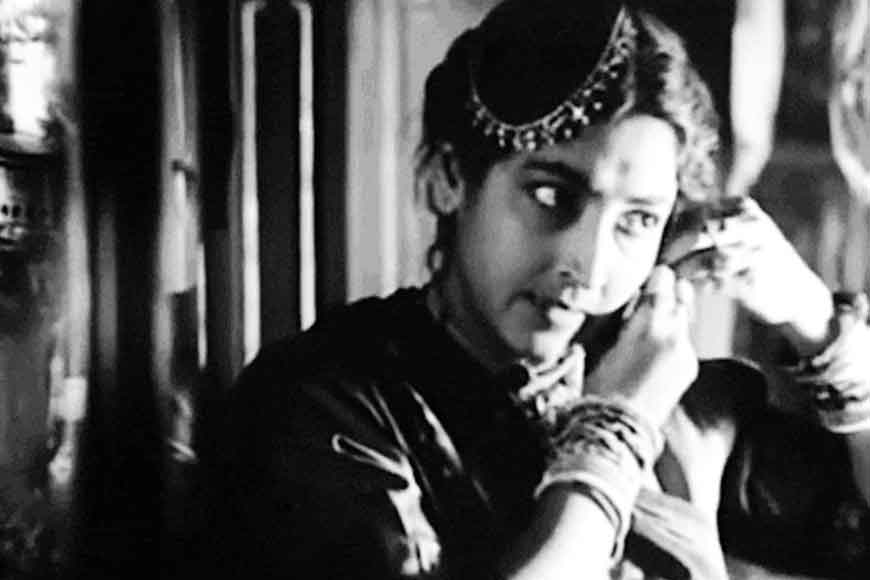
 Kanika Majumdar in Teen Kanya
1. Early Life and Background
2. Artistic Training and Theatre Roots
3. Career Highlights
Television Work
Film Career
Web Series
4. Acting Style and Public Persona
5. Personal Life and Privacy
6. Social and Cultural Impact
7. Awards and Recognition
Conclusion
Leena Manimekalai

1. Early Life & Background
Born : June 7, 1980 , Srivilliputtur, Tamil Nadu, India
Family:
Father: Wing Commander Manimekalai, a senior officer in the Indian Air Force. This placed the family in a prestigious, upper-middle-class, government-service background.
Mother: Rajalakshmi, a former college professor.
Caste Background: Tamil Brahmin (Iyer) – a socially and economically privileged upper caste. This is a key paradox in her life: she comes from caste privilege but dedicates her art to dismantling caste hierarchy.
Education:
Bachelor’s degree in English Literature.
Master’s in Journalism and Mass Communication from the University of Madras.
Further studies in film and television from York University, Canada.
2. Career: Art as Activism
Leena’s work blurs the lines between art and protest. She is not a mainstream commercial actress but a performance artist and filmmaker whose roles are often extensions of her activism.
Key Films & Projects
- "Sengadal" (The Dead Sea) (2011):A hard-hitting documentary-style feature on the struggles of Tamil Nadu’s coastal fisherfolk, highlighting state negligence, displacement, and human rights abuses. It faced censorship challenges but won international acclaim.
- "Maadathy: An Unfairy Tale" (2019):A lyrical, haunting film about a young girl from an "unseeable" Dalit community in Tamil Nadu. It critiques caste-based untouchability and gender violence and premiered at the Busan International Film Festival.
- "White Van Stories" (2015):A documentary investigating enforced disappearances in Sri Lanka and the Indian government’s role, showing her pan-South Asian political engagement.
"Pariah" (2023) – Her short film on menstrual stigma and caste pollution, which went viral for its raw portrayal.
Poetry & Performance
A published poet in Tamil and English, her poetry often explores gender, desire, and political resistance.
She performs her poetry at protests, literary festivals, and university events, merging spoken word with activism.
Acting Roles
She acts selectively, usually in independent or her own films, where her performances are intense and grounded. Notable appearances:
Played the lead in her own film "Sengadal".
Cameo roles in other independent Tamil films, often as characters symbolizing resistance.
3. Public Persona & Activism
Fierce Feminist Voice: Known for confronting misogyny in Tamil cinema and politics. She called out director Susienthiran for alleged sexual harassment and has been vocal about the #MeToo movement in India.
Anti-Caste Stance: Despite her Brahmin background, she is a vocal ally of Dalit-Bahujan movements, using her privilege to amplify marginalized voices. She describes her work as "caste accountability".
Political Engagements:
Supports Tamil Eelam (Sri Lankan Tamil) rights.
Criticizes police brutality, neoliberal policies, and Hindu majoritarianism.
Active in environmental and farmers’ rights movements.
Legal Battles: Has faced multiple police cases, defamation suits, and censorship battles for her outspoken views. She sees legal harassment as a badge of her resistance.
4. Controversies
"Kakkoos" (Toilet) Controversy: In 2017, she released a documentary on manual scavenging and faced legal threats and online abuse from dominant caste groups.
Social Media Battles: Regularly engages in heated debates on Twitter/X, calling out casteist and sexist remarks from public figures.
Funding Challenges: Many of her films have struggled to secure funding or distribution in India due to their political content, relying on international grants and festivals.
5. Awards & Recognition
International Film Festival of India (IFFI) – Official selection for "Sengadal".
Busan International Film Festival – Official selection for "Maadathy".
Kerala International Documentary Festival – Awards for her short films.
Sanskriti Award (2006) for social achievement.
Though not a mainstream award winner, she is highly respected in global activist and independent film circuits.
6. Personal Life
Marital Status: Unmarried; openly discusses her choice to remain single as a feminist stance.
Spirituality: Identifies as spiritual but anti-organized religion, often critiquing Brahminical rituals.
Style: Known for her distinctive look—unshaved body hair, minimal makeup, and traditional Tamil attire—which she uses to challenge patriarchal beauty standards.
7. Legacy & Significance
Bridge Between Art and Movement: She represents a rare breed of artist who is embedded in grassroots activism while maintaining international artistic credibility.
Voice of Solidarity: As a privileged-caste artist, she models how allyship can be practiced through art, though this also draws criticism for "speaking for" marginalized communities.
Inspiration: Considered an icon for young feminists, anti-caste activists, and independent filmmakers in Tamil Nadu and beyond.
Conclusion

1. Early Life and Background
Full Name: Latha Rangachari (born as Latha Chandrasekhar).
Birth: Born on November 29, 1957, in Madras (now Chennai), Tamil Nadu.
Family Background:
She hails from a well-educated, upper-middle-class Tamil Brahmin family.
Her father, S. V. Chandrasekhar, was a senior bureaucrat in the Indian government (Director-General of Doordarshan), and her mother was a homemaker.
Her sister, Vasanthi Chandrasekhar, is also a film producer.
Education: She attended Sacred Heart Matriculation School in Chennai and later studied at Ethiraj College, Chennai. She holds a degree in Mathematics.
2. Marriage of Rajinikanth
Meeting: Latha first met Rajinikanth in the late 1970s when he was a rising star. At the time, she was a college student and fan.
Marriage: They married in 1981 in a private ceremony. Their marriage initially faced some disapproval due to Rajinikanth’s non-Brahmin background (he belongs to the Marathi Deshastha Brahmin community, though some sources describe his origins as having Maratha or other influences; regardless, it was an inter-caste marriage at the time).
Family: They have two daughters:
Aishwarya Rajinikanth (b. 1981) – film director and producer, married to actor Dhanush (until their separation in 2022).
Soundarya Rajinikanth (b. 1984) – film director, producer, and graphic designer, married to actor Vishagan Vanangamudi.
Public Role: Latha has often been described as a stabilizing and private influence on Rajinikanth’s life, managing his early career decisions and personal affairs away from the spotlight.
3. Career in Film and Business
Film Production & Direction
Production Company: She founded the production house “Latha Rajinikanth Productions”.
Notable Films Produced:
“Veera” (1994) – starring Rajinikanth (also her production debut).
“Muthu” (1995) – a blockbuster that gained Rajinikanth a massive following in Japan.
“Baba” (2002) – a Rajinikanth-starrer with spiritual themes.
Direction: She directed the Tamil film “Jhansi” (2003), a historical drama starring Rambha and Jayaram. The film did not perform well commercially but showcased her interest in filmmaking.
Entrepreneurship
Founded “The Ashram”, a wellness and holistic health center in Chennai, reflecting her interest in spirituality and wellness.
She has been involved in philanthropy, supporting healthcare, education, and disaster relief through the Rajinikanth Charitable Trust.
4. Public Persona and Media Image
Private but Influential: Unlike many star wives, Latha has maintained a low public profile, rarely giving interviews or appearing at film events. She is known to be the backbone of the Rajinikanth family.
Spiritual Inclination: A devotee of Sathya Sai Baba, she is deeply spiritual, which has influenced family decisions and Rajinikanth’s own spiritual journey.
Stylish & Graceful: Often noted for her elegant and traditional style in public appearances.
Controversy: Faced media scrutiny in 2012 over allegations of financial irregularities related to her education business (“The Ashram” and associated ventures), which she denied. The issue was eventually resolved without legal conviction.
5. Legacy and Influence
Behind-the-Scenes Power: She played a crucial role in managing Rajinikanth’s early finances, career choices, and public image during his rise to superstardom.
Family Dynasty: Her daughters have followed her into film production and direction, making the Rajinikanth family a cinematic dynasty in Tamil Nadu.
Social Standing: As the wife of India’s biggest film star, she holds immense social clout in South Indian elite circles, though she exercises it discreetly.
6. Trivia
She was a national-level basketball player in school.
She worked briefly as a school teacher before marriage.
She is the sister-in-law of actor “Nepolean” (M. N. Rajan), who is married to her sister Vasanthi.
Her production “Muthu” was dubbed in Japanese as “Muthu: The Dancing Maharaja” and became a cult hit in Japan, expanding Rajinikanth’s global fame.
Conclusion
Latha Rajinikanth is far more than just a star wife—she is a film producer, director, entrepreneur, and the steady force behind Rajinikanth’s legendary career. While she intentionally stays out of the limelight, her influence on Tamil cinema’s first family and her own ventures in production and wellness mark her as a significant, if understated, figure in South Indian cultural and cinematic history. Her story is one of grace, privacy, and quiet power in an industry often dominated by glamour and noise.


.jpg)


Comments
Post a Comment
Thanks for feedback